Jaypore Highlights 700-Year-Old Tangaliya Weaving Tradition at Bharat Tex 2026
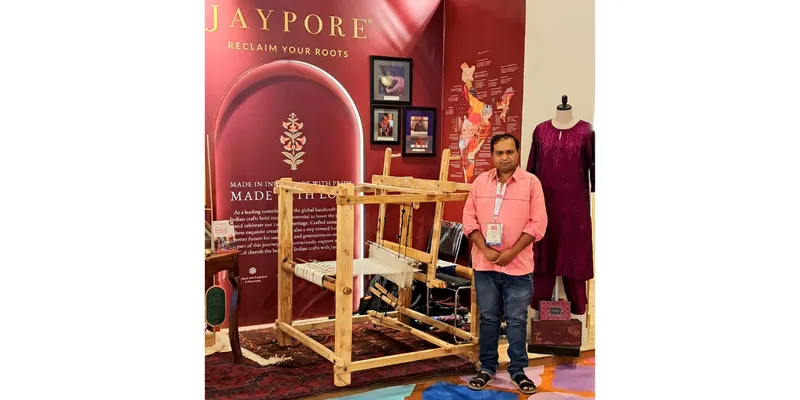
Fifth-generation Tangaliya weaver Shri Rathod Baldevbhai Jahabhai demonstrates Gujarat’s heritage craft through live loom presentation in New Delhi
Jaypore, the artisanal lifestyle brand from the house of Aditya Birla Fashion and Retail, presented an immersive craft experience at Bharat Tex 2026, featuring traditional Indian textile practices and artisan-led demonstrations. The showcase highlighted the 700-year-old Tangaliya weaving tradition of Gujarat through a live demonstration by fifth-generation weaver Shri Rathod Baldevbhai Jahabhai.
Jaypore presented a dedicated craft installation at Bharat Tex 2026, focusing on traditional weaving techniques, artisan communities and heritage textile practices from across India.
The central feature of the showcase was Tangaliya weaving, a 700-year-old indigenous craft from the Surendranagar region of Gujarat. The technique is associated with the Dangasia community, which historically created heavy, warm textiles such as shawls and wraps for pastoral Bharwad shepherds.
Live Demonstration of Tangaliya Weaving
The Tangaliya presentation featured Shri Rathod Baldevbhai Jahabhai, a fifth-generation weaver from Vastadi village.
Baldevbhai demonstrated the weaving process on a traditional pit loom, showing how raised danas (bead-like dots) are created directly within the weave. Unlike embroidery or printing applied after weaving, the dots are formed as part of the textile structure through the artisan’s weaving technique.
The demonstration showcased a process guided by experience and manual skill, without the use of templates or printed guides. According to Jaypore, creating a single Tangaliya piece requires 15 to 25 days of work.
Baldevbhai continues the weaving tradition of his father, Jaha Bhai, a master artisan who spent over 40 years working with warp and weft.
Jaypore Statement on Tangaliya Craft
Vandana Gupta, Creative Head, Jaypore, said:
"Tangaliya is a craft that gently commands you to slow down, to notice the quiet devotion resting within every single raised dot. Our journey with the weavers of Vastadi village began in 2024 out of deep reverence for master artisans like Jaha Bhai. Witnessing his son, Shri Rathod Baldevbhai, bring that generational muscle memory to the loom here at Bharat Tex epitomizes what Jaypore stands for. We view our brand not just as a curation, but as a vital, artisanal-first platform dedicated to bringing these incredible artisan clusters out of rural pockets and onto larger platforms. Our purpose is to honour this unbroken thread ensuring these rare, indigenous art forms are given the visibility they deserve to grow and find contemporary resonance, while remaining fiercely true to the hands that create them."
Showcase of Indian Craft Traditions
Along with Tangaliya, Jaypore displayed a range of traditional Indian crafts and textile techniques, including:
- Jamdani: Hand-loomed muslin from West Bengal known for intricate motifs created on fine fabric.
- Ikat: A resist-dye technique where yarns are tied and dyed before weaving to create geometric patterns.
- Handwoven Textiles: A collection representing regional looms and weaving traditions from different parts of India.
- Ajrakh: Kutch’s multi-stage hand-block printing craft recognized for indigo and madder hues.
- Chikankari: Lucknow’s traditional shadow-work embroidery technique.
- Dabu: Rajasthan’s mud-resist hand block printing method using earth-based resist patterns.
- Kantha: Bengal’s running-stitch embroidery tradition based on reuse, memory and storytelling.
- Shibori: Resist-dyeing and tie-dye techniques producing textured patterns on fabric.
- Dokra: The ancient lost-wax metal casting craft used for tribal and folk-art figurines.
Focus on Artisan Collaborations
Jaypore’s Bharat Tex 2026 presentation highlighted its collaborations with artisan clusters, focusing on traditional techniques while creating contemporary applications for heritage crafts.
The showcase connected traditional weaving practices with modern design approaches, featuring textiles created through processes passed down across generations.