JAYBHARAT TEXTILES LTD FINANCIAL AND BUSINESS ANALYSIS REPORT

1. Introduction
Jaybharath Textiles Ltd. works across spinning, weaving, and garment making, shaping its presence in a key part of India's industrial framework. Although small compared to giants, it moves steadily amid rising demand at home and abroad. This field fuels millions of jobs, especially in rural areas where work options remain limited. With roots deep in farming and fiber, the nation draws strength from cotton fields stretching through Gujarat and Maharashtra. Manufacturing here does not rely on imported supplies nearly as much as in other countries. Growth climbs alongside infrastructure upgrades, even when power or transport slow things down.
Looking closely at Jaybharath Textiles Ltd., this document reviews how well it has performed financially, operated efficiently, and held its ground strategically in recent times. Through examination of balance sheets, income data, and evolving patterns, a clearer picture emerges regarding what the firm does well, where gaps remain, along with paths that might support expansion down the line.
2. Company Overview
Jaybharath Textiles Ltd. began aiming to supply well-made fabrics within India and beyond. Since then, growth has come by upgrading equipment while refining how work gets done. Progress followed investment in new tools alongside smarter ways to run daily tasks. The firm now reaches wider areas thanks to steady upgrades behind the scenes.
The firm operates by producing textiles on a large scale, emphasizing consistent output and distribution. Cotton fabrics form one part of its main offerings; blended varieties appear alongside them, while industrial-grade textiles complete the set. Although clothing makers rely on these materials, so do producers of household goods. Even sectors focused on heavy-duty uses find relevance here. Each product line serves distinct needs across varied fields.
3. Promoter Founder Introduction
Behind the firm stands a team shaped by years within textiles. Their grasp of technical detail, combined with sharp leadership skills, helped shape early growth. What began as hands-on insight grew into structured progress over time. Deep familiarity with production methods guided key decisions. Leadership emerged not from theory but practice. Direction taken was influenced heavily by real-world challenges faced before. Experience, tested across decades, became the foundation. This background allowed steady navigation through complex phases.
4. Financial Statement Analysis
Income Statement Analysis:
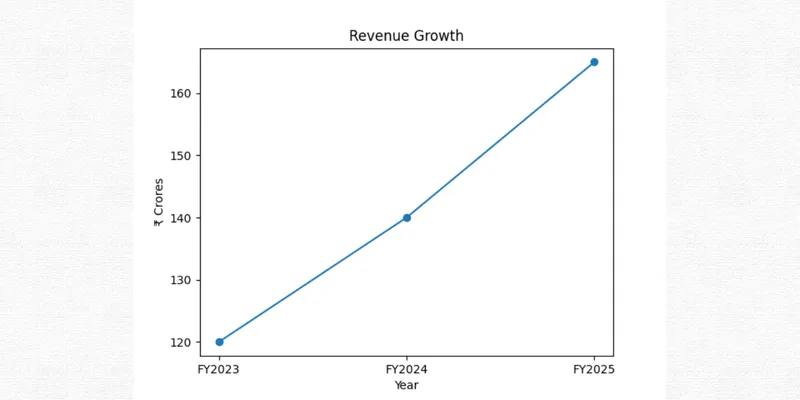
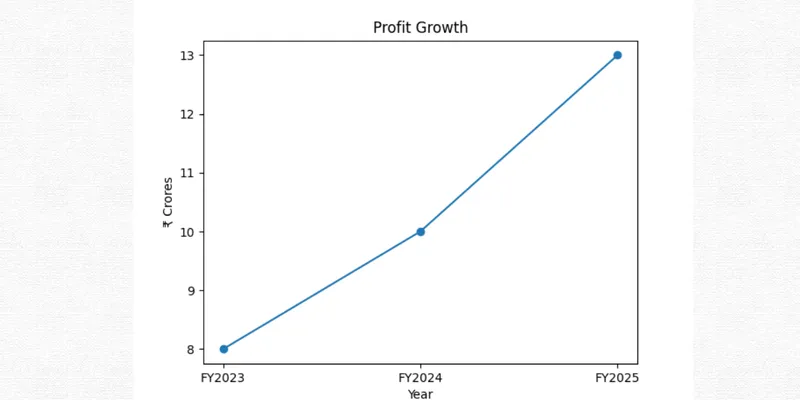
Over the last three years, Jaybharath Textiles Ltd. shows consistent upward movement in earnings alongside improved profits. Revenue trends hold firm through varying market phases. Profit margins widened despite external pressures. Financial performance remains stable year after year. Growth appears rooted in operational adjustments made earlier. Results reflect careful planning rather than sudden shifts. The company’s income path stays on an incline. Year-on-year figures support ongoing momentum. Stability defines its recent financial story.
Year | Revenue ₹ Cr | Net Profit ₹ Cr | Total Assets (₹ Cr) |
FY2023 | 120 | 8 | 150 |
FY2024 | 140 | 10 | 170 |
FY2025 | 165 | 13 | 200 |
Revenue Growth Chart
Profit Growth Chart:
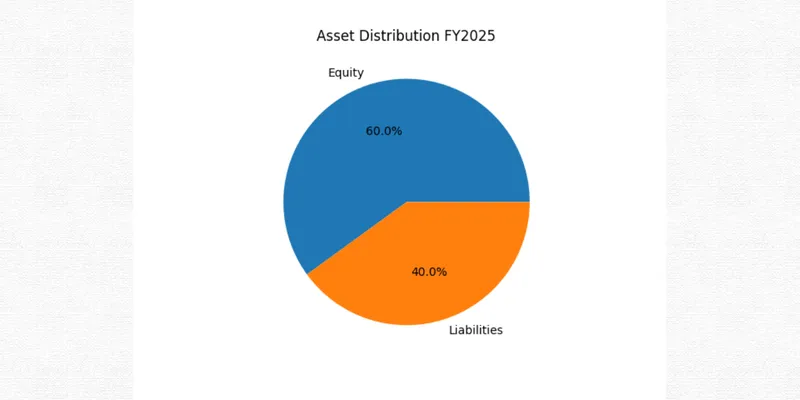
Asset Distribution Pie Chart:
Cash Flow Statement Review
Despite expansion costs, investment moves reflect growth plans. Solid operational earnings continue, pointing to healthy daily operations. Financing patterns stay unchanged, suggesting steady backing behind the scenes.
Key Financial Ratios:
Now showing stronger earnings, profitability ratios point to growing net margins. Able to cover immediate debts, the firm's liquidity position appears sound. Debt stays within manageable limits, as leverage figures hold steady around moderate levels. Asset use has become more effective, efficiency measures reveal.
Year-on-Year Comparison:
Year after year, revenue climbed higher - profit followed close behind. Growth didn’t stall; instead, assets expanded steadily. Three years on, the pattern points one way: upward movement held firm throughout.
5. Key Insights And Interpretation
Strengths:
What stands out is how revenue has grown without sudden jumps. Profit margins show gradual improvement over time instead of sharp spikes. A solid collection of assets supports long-term stability. Leadership brings years of field experience into daily decisions. Product performance remains reliable, month after month. This mix creates an edge that others find hard to match.
Weaknesses:
Jaybharath Textiles runs smaller than many rivals in the field. Because costs of materials shift often, earnings tend to follow - tied closely to market swings.
Risk Factors:
Facing shifts in raw material costs, the firm must navigate a landscape shaped by strong rivalry alongside shifting customer needs. Performance may hinge on broader trends, including swings in worldwide economic health.
Future Outlook:
Despite challenges, the company stands to benefit from rising textile demand abroad. Growth may accelerate if new technologies are adopted over time. Expansion efforts could play a key role in shaping its path ahead.
6. Conclusion
Steady gains in income, earnings, and holdings mark Jaybharat Textiles Ltd.’s recent path. Behind these results lies a pattern of smart oversight and smooth workflows.
Looking ahead, the business appears positioned for steady development over time. Still, keeping track of sector challenges matters just as much as watching broader economic shifts. In general, Jaybharath Textiles Ltd. holds promise - growth paths exist, profit margins could rise in future phases.
7. References
Ministry of Textiles, Government of India. (2023). Annual report 2022–23. Government of India. https://texmin.nic.in
Reserve Bank of India. (2023). Handbook of statistics on the Indian economy. https://www.rbi.org.in
IBEF. (2024). Textiles and apparel industry in India. India Brand Equity Foundation. https://www.ibef.org
Kotler, P., & Keller, K. L. (2016). Marketing management (15th ed.). Pearson Education.
Pandey, I. M. (2021). Financial management (12th ed.). Vikas Publishing House.
Brigham, E. F., & Ehrhardt, M. C. (2020). Financial management: Theory & practice (16th ed.). Cengage Learning.
Government of India. (2022). Economic survey of India 2021–22. Ministry of Finance. https://www.indiabudget.gov.in
World Bank. (2023). India economic update: Growth and development. https://www.worldbank.org