It’s the Machine Era…Upgrade to Safeguard & Magnify Textiles!!!


Mr Avinash Mayekar MD, Suvin Expo LLP
Machine Learning…loading! Our world is surrounded by automated systems; we wake up to the chirping sounds of alarms, and with another touch, the coffee maker starts brewing. As we head out for a morning walk, our smartwatch tracks our heart rate and calories burned, helping us meet our health goals. As we return, another touch and the hot water is all set for a refreshing bath. As we relax and sit back browsing on our phones, global news from all sectors appears. As we scroll through multiple notifications, right from bill payments to the important buyer mails, everything is just a click away. There is no denying that it is the era of automation; we have adopted technology in our lives, and the journey has only been rewarding, so why not the much-needed automation for our bread-and-butter sector, “Textiles”? Although we have adopted automation in certain areas of production, especially packing, online quality control & display of processing parameters, still the integrated IOT is what is still missing. If we see the overall textiles and apparel industry, only a few of the top export-focused clients have fully integrated systems and automated technology. Let us have a look at the major areas of technology automation for our textile industry:
Transformation in Manufacturing
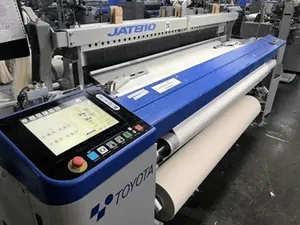
Textile engineering and technology have undergone major changes with the integration of automated signals, data transfer and Artificial Intelligence (AI), all aimed at increasing efficiency in production and high-speed delivery. Though all new machinery has auto-built-in operations, the Indian textile manufacturing industry has still not transformed to the fullest. Most of the textile units are still operating with a hybrid model of a few new automations in 25 – 30-year-old machinery. When it comes to old machinery, there are always issues of higher power consumption and a slower production rate. There are other factors also associated with the old machinery, which we will discuss in subsequent chapters. Our process house is equipped with age-old technologies, which is the major reason for India’s low penetration in the textile processed fabric. Another arguable topic under modernisation is waste management. To my knowledge, most of the mill owners do not agree that there is a scope for reducing waste in their mills. A third-party audit for observation would be a smart way towards the problem without any barriers or blind spots in this study. Helping him identify the sources of waste generation & in turn give innovative ideas for waste reduction & waste management.
Efficiency and Sustainability
Sustainability is no longer a fancy jargon for export orders or simply a mandate to oblige or an unnecessary task to keep on tackling. Sustainability is a vital decision maker today, set to grow its presence from now on. When it comes to sustainability practices, it cannot be a mere small contribution to the recycling of waste generated or sourcing from certified suppliers; it is far beyond that. Having an integrated monitoring system right from your supply chain for traceability, optimum inventory management, ensuring resource optimisation, and logistic control are all major steps towards sustainability. Apart from this, the most essential elements are our machinery, which is sustainable. So, upgrading to modern technology that is sustainable will ensure a reduction in operating costs as it will provide energy-efficient systems and also save water, dyes and finishes requirements in operations. It also helps in recycling of the effluent with ZLD and other mandates; the technology with optimum ratios is a must today. Also, the auto error correction helps in eliminating the breakages and faulty production with automated signals for immediate tracking and control monitoring of the entire process without much manual intervention. Apart from this, the switch over to renewable energy like solar or wind, is an essential step nowadays, as ROI on such changes is very high, and it drastically reduces the power cost. Old textile plants, be it spinning, weaving, or finishing, have huge roof areas which are open spaces used only for covering purposes. This unused space on the roof can be studied for putting up solar panels, thereby making maximum space utilisation with energy generation. Moreover, in certain regions, wind energy is available and can be used to convert it into a power source at a much cheaper cost. Some of the textile units have taken advantage of both the energies, wind as well as solar, and are minting money against the competition.
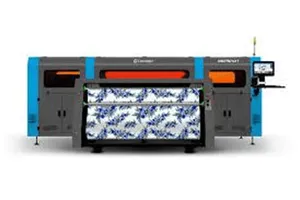
Sustainable technology like digital printing has also seen major penetration in the market. With lightweight, digital prints trending, a green focus campaign for digitally printed clothes will give a major boost to the sector. Apart from this, innovation in textile waste recycling technology is the much-needed transformation for today. Development of new techniques for waste recycling and making our process optimised with recycled textiles are some of the innovations in the light, considering the rising need for sustainable garments. Most of the renowned brands are demanding that all their products have a minimum 25% recycled fibres by 2030, which means a lot needs to be done in India, where we are yet to kick-start our recycling initiatives to gain some recognition. What we are doing is most of the use of recycled PET bottles to extract PET recycled fibres, which is a question mark as the bottles are not coming from textile industry.
Workforce and Skills
The requirement of skilled labour always remains the major challenge; although one may find skilled labour in textiles-dominated regions, there always remains a challenge of enhancing efficiency as well as managing the workforce during the farming season, festivals & marriages. Here is where technology can play a crucial role with ERP & MIS systems developed, linked with blockchains, the entire textile unit can be monitored and operated from remote locations like the head office, with the system generating day by day report for all your departments from shop floor, production hall, inventory, accounts, new customer enrolment to all the compliance management system. Many generic ERP solutions, as well as customised ERP solutions, are available for the textile industry. An ERP solution helps in integrating the operational processes and establishes synergies between various resources of the textile industry. Automated systems are also being developed for effective communication between the production floor and other supervisory control systems. Nowadays, operating and process-related data is being captured from the machines and analysed in BI software for operation analysis and further productivity improvements. BI reports are being published for the top management and are used for various decision-making processes. We got a good response on the use of WINSOFT software in one of our clients in Zimbabwe to integrate their Spinning, Weaving, & Processing and reduce manpower considerably. Today 100% precision is what is aimed for. An Error is something that can’t be avoided, but something that can be rectified. Moreover, the auto error detecting technology helps in minimising the errors by discontinuing the process at the very instant when a defect is detected, so that it can be rectified & a zero defect product can be delivered.
AI & Robotics

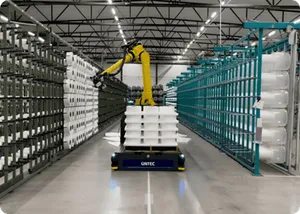
In India’s textile world, where Industry 4.0 is also still not in full operation, talking about AI & robotics would be considered an alien concept. However, AI is far rooted in the system than we understand. AI has already seen its contribution in design to material efficiency through the software integrated into the CAD system. AI’s presence in fabric checking and sampling is the most important contribution as it helps in identifying the defects, wrong weave patterns, inconsistent colouration, or loose fibre ends. With an AI-integrated colour mixer in the process house, one can make the exact colour 100% accurate to the design with a fraction of a second of sample feed. As far as smart textiles are concerned, AI is the booster for their demand, as with AI, their accuracy in temperature sensing, reacting to environmental stimuli, and property change in terms of colour or design have all been enhanced, providing real-time parameter processing. Apart from this, many design houses are using AI to predict consumer behaviours, market trends, blend traditional design with modern art and predict future demands and market requirements. Robotics also plays a major role in inventory stacking and warehouse storage systems. Apart from this, in garmenting, where the production efficiency is more critical. Price-sensitive robotics can be the game-changer strategy.
Conclusion:
Technology transformation is the need of the hour, and as we are witnessing the magic of AI from helping farmers to increase the yield of cotton with right and accurate weather prediction and seed management systems and expected to instruct the right harvesting time and quality management of cotton crops. Similarly, it can have complete control over logistic management for all types of raw materials to finished goods destinations with suggestions on cost & time. The textile machine segment will also soon see major penetration on Industry 4.0 & 5.0 in the coming days, using much logical and appropriate technological enhancement with automatic functionalities of doffing & transfer of cans, bobbins & cones. Already, auto piecing machines and auto doffers are in place to avoid manual intervention and deterioration of quality. Robotics and AI will further boost the business model with synchronisation of all variable factors and will bring a sense of complete customer satisfaction from placing an order to execution with visual bonding and feedback on traceability & sustainability. Let us wait for some time to see the magic of technology taking over all the limitations and fulfilling the dreams of our textile & apparel business.