Israel-India FTA Talks Gain Momentum as Negotiations Advance
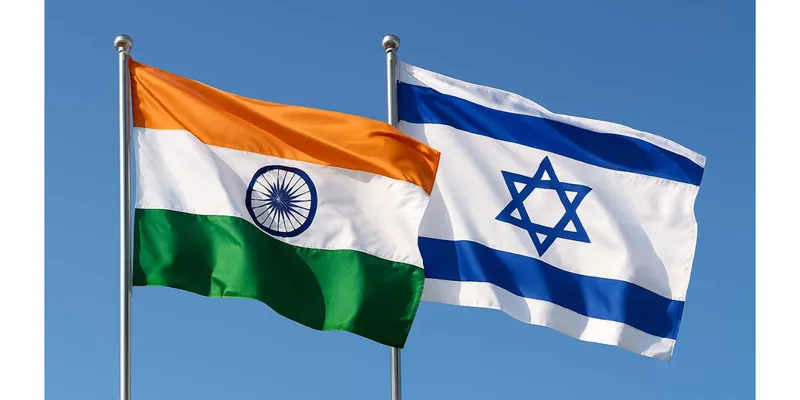
Israeli delegation to visit India in January ahead of formal negotiations; both sides target $100 billion in bilateral goods trade by 2030.
India and Israel are moving forward with plans for a proposed free trade agreement (FTA), with a team of Israeli officials expected to visit India in January for discussions before formal negotiations begin. The development follows the signing of the terms of reference (ToR) for the agreement on November 20. Alongside the FTA, both countries already have a Bilateral Investment Treaty (BIT) in place.
A team of officials from Israel is scheduled to visit India in January to hold discussions before the launch of official rounds of negotiations on the proposed free trade agreement between the two countries.
Officials indicated that discussions on the structure and framework of the negotiations are expected to be a key focus during the visit. India and Israel signed the terms of reference (ToR) for their proposed free trade agreement on November 20, setting the stage for the next phase of bilateral trade engagement.
In addition to the FTA initiative, the two countries have already signed a Bilateral Investment Treaty (BIT). Together, the FTA and BIT are expected to facilitate greater market access, investment flows, and trade cooperation.
According to official data, bilateral trade between India and Israel reached $3.62 billion in 2024-25. India's exports stood at $2.14 billion, while imports were valued at $1.48 billion.
Officials also stated that the second round of negotiations between India and the Russian-led Eurasian Economic Union (EAEU) is scheduled for February. The first round of discussions on the India-EAEU FTA took place in November.
The terms of reference for the India-EAEU FTA were signed on 20 August 2025. The agreement is supported by an 18-month work plan designed to help Indian businesses diversify markets, including MSMEs, farmers and fishermen. Services and investment-related issues will also be examined as negotiations progress.
India and the EAEU are aiming to increase goods trade to $100 billion by 2030 from the current level of around $70 billion. The EAEU comprises Armenia, Belarus, Kazakhstan, and Kyrgyzstan, although approximately 99% of India-EU trade with the bloc is conducted with Russia.
Trade between India and Russia remained relatively limited until the conflict in Ukraine in 2022 led to a significant increase. Global energy market disruptions contributed to India's higher imports of Russian crude oil, resulting in a widening trade deficit. The deficit rose to $58.9 billion in 2024-25 from $6.61 billion in 2021-22.
Russia has already accelerated approvals for Indian marine exports and is considering further relaxations. To address the trade imbalance, India is seeking quicker approvals for exports of additional products and the removal of non-tariff barriers. Negotiators are also expected to address regulatory overlaps among EAEU member countries during the discussions.