Interview with Ashish Kumar: Leading Sutlej Textiles Towards a Sustainable Future
-2-800x400.webp?2026-02-24T20:39:48.202Z)
 (1)-800x1114.webp?2026-02-24T20:39:53.916Z)
Mr Ashish Kumar
CEO & Whole-Time Director,
Sutlej Textiles and Industries Ltd
The TVC Media Team had the privilege of speaking with Mr Ashish Kumar, CEO & Whole-Time Director of Sutlej Textiles and Industries Ltd., at Heimtextil 2026. With over 25 years of domain expertise in advanced materials, technical textiles, legacy textiles, and apparel, Mr Kumar brings a wealth of experience from leadership roles at DCM Shriram Industries, Kaybee Group, and Arvind Ltd. Currently managing Sutlej's Advanced Materials Business, Denim Vertical, and Lifestyle Apparel divisions, he is recognised for his ability to build strategic relationships and drive sustained growth. In this conversation, Mr Kumar shares insights on Sutlej's sustainable innovations, market strategies, and vision for the home textile industry.
-800x450.webp?2026-02-24T20:39:52.378Z)
Could you tell us about the products Sutlej is showcasing at the exhibition?
Sutlej has three key businesses in its textile portfolio: yarn, fibre—specifically recycled bottles converted into fibre—and home textiles. At Heimtextil, we're presenting our complete home textile portfolio, which extensively utilises our own upstream yarn and fibre. The central theme of our showcase is sustainability and how we're integrating it into our entire collection. This focus is gaining significant traction as the industry evolves.
Sustainability has been a buzzword in the industry for quite some time. How is Sutlej advancing sustainability, particularly through the digital passport we noticed at your stall?
Sutlej has been in business for almost seven decades, and while sustainability is becoming a buzzword now, we've been quite active in social sustainability and environmental initiatives for years. Our units have zero liquid discharge, so we were ahead of the curve in that regard.
To bring transparency to our sustainability efforts, we've introduced a digital passport. Each of our products features a QR code that anyone can scan to understand the product's environmental footprint—covering energy consumption, waste generation, and overall environmental impact. We're one of the first companies in home textiles to implement this initiative, and our customers and brands have responded very positively.
-800x1422.webp?2026-02-24T20:39:51.170Z)
Is this digital passport powered by your own software, or do you work with external partners?
We've partnered with a third party because it's crucial that our sustainability claims are verified. The framework comes from an external provider, while we supply the data. We work with a company called Greenstitch, which helps us create the gate-to-gate footprint, or what we call the digital passport.
Home textiles are often considered more design-oriented than material-oriented. What materials do you primarily use, and what innovations are you bringing to this show?
Market demand largely dictates our approach, and our product portfolio is highly design-centric. We have a large team of designers who create thousands of designs. We employ artists who actually sketch and draw by hand, and we have the technical expertise to convert these hand paintings into motifs that can be woven into our fabrics. Design is intrinsic to all our offerings.
On top of that, we're incorporating sustainable fibres, which adds another layer to our design-powered products.
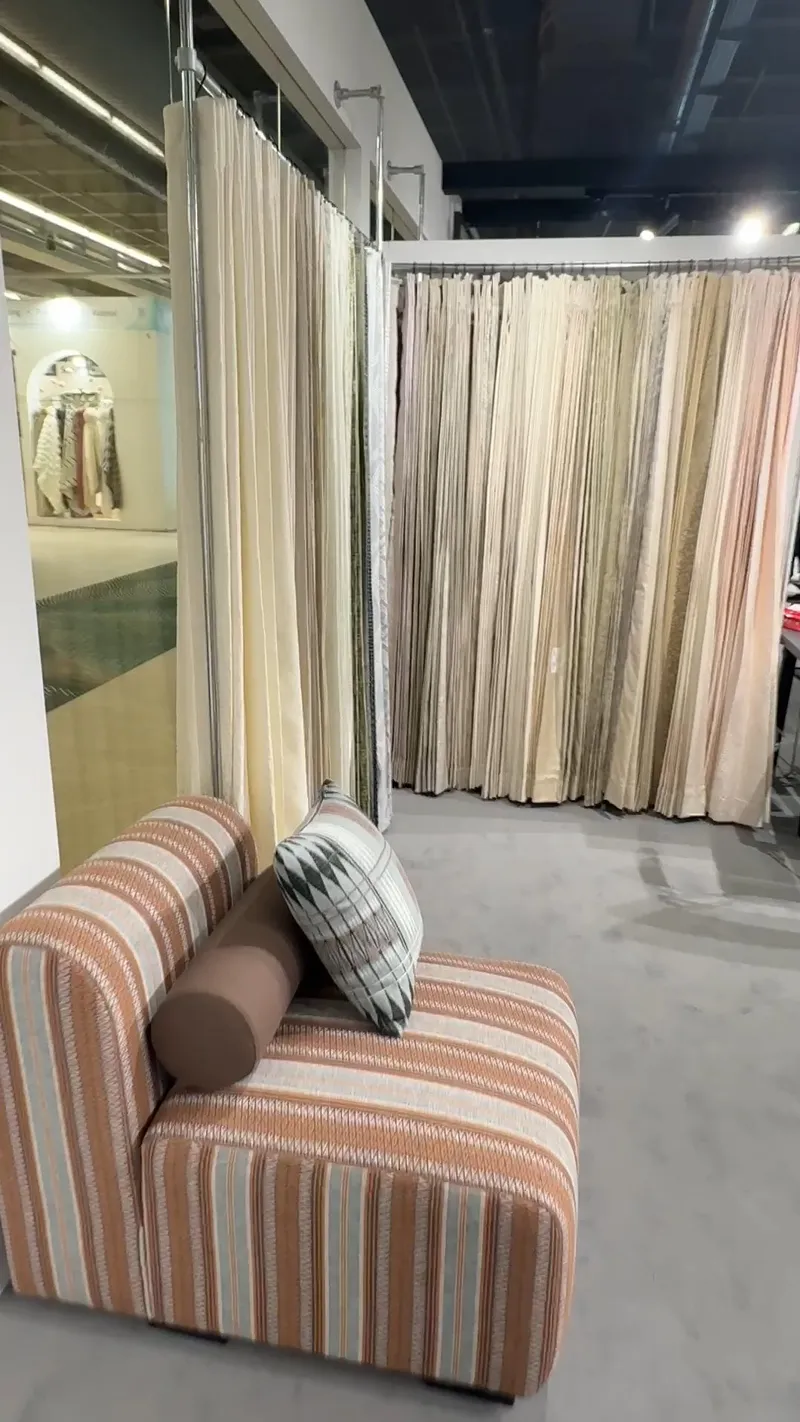
Which design from your 2026 collection would you say customers shouldn't miss?
While all our designs are equally good, the current trend is moving toward surface ornamentation with muted colours—designs where the colour play is soothing to the eyes. That's what we're focusing on and where we're seeing the most traction.
Given the current geopolitical uncertainties, including US tariffs and ongoing conflicts, what is the buyer sentiment in this category?
The geopolitical uncertainty is certainly a concern for buyers. The main issue is the lack of clarity about how long these conditions will continue. Once there's certainty, our customers will be better positioned to plan.
That said, certain categories haven't seen any decline despite the tariffs. Our efforts to diversify into different segments have yielded positive results, and our home textile business is set to grow year-on-year, even under current circumstances.
 (1)-800x602.webp?2026-02-24T20:39:49.467Z)
Many brands heavily dependent on the US market have been affected. How has Sutlej navigated this, especially with your domestic presence?
Our design-first philosophy, combined with product and market diversification, has been key. We operate in a category that's complex to replicate, which increases customer stickiness. We're not in the mass market or medium-end segment, and that positioning has helped us navigate these complex times.
What is your vision for the future of the home textile category?
If you look at India specifically, this category is hard to replicate. It's not easy to shift supply chains to alternative sourcing destinations, unlike fashion garments, where change is more profound.
While we can't control external circumstances, we can control our response. As a country, we're inherently blessed with a strong cotton supply chain, and our category is difficult to replicate. If we continue to deliver good designs at reasonable prices, the value proposition becomes very compelling, and that ultimately drives market success.
What trends have you observed at Heimtextil 2026, even though it's just the first day?
It's a bit early to say definitively, but from what we've seen so far, there's more neutrality in colour themes emerging. Customers are definitely looking at sustainability at a much deeper level.
Another trend we've noticed is that customers want to work with fewer vendors but go deeper with them. Vendors who can offer an integrated play might have an edge over pure converters in this sector.
-800x1422.webp?2026-02-24T20:39:48.831Z)
We've seen many startups entering the home textile industry. As an industry leader, what advice would you give them?
We welcome competition. Startups bring fresh perspectives to the industry, which is valuable. We encourage them to develop a deeper understanding of the entire industry before diving in.
Startups will likely introduce more digital interventions, which can benefit end customers—we welcome that. However, I must say it's a complex industry, and it will take time for new entrants to really understand the details before they can effectively engage.
Any message for those who haven't visited Heimtextil 2026?
Heimtextil is an excellent platform. It not only helps you refresh your contacts but also provides valuable market insights into emerging trends. From an exposure standpoint, it recharges your perspective on what's happening across the industry, allowing you to go back to the drawing board and create more meaningful product offerings for customers.
I would definitely say that if you're in the home textile space and you're missing Heimtextil, you're missing something significant.