Interview Responses for- Who Gets to Define Sustainable Fashion? A Global South Perspective on Repair
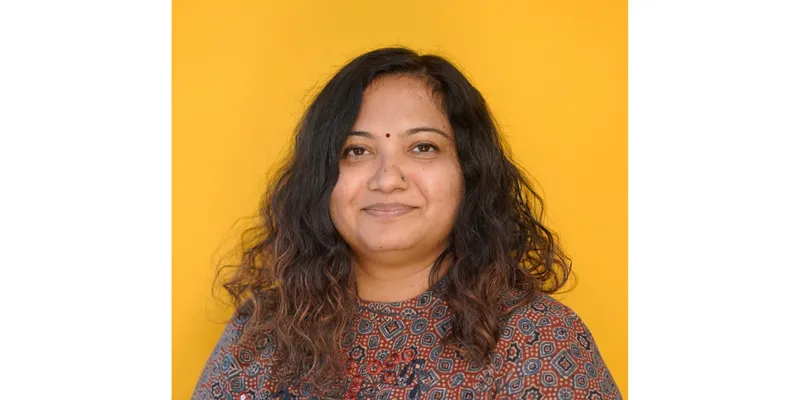
By Prof Risha Roy, Associate Professor and Lead, Sustainable Fashion and Textile Design and Co- lead, Transdisciplinary Design, Anant National University
1. Your work looks at repair and mending as cultural practices rather than simply techniques for extending garment life. What can the global fashion industry learn from traditional repair cultures of the Global South?
Repair has never been a sustainable strategy in the global south. Long before anyone used the words sustainable or circular, our grandmothers, the neighbourhood tailors or our local repairer or rafoogar, were mastering this concept in ordinary household settings. This distinction matters as today the industry treats repair as a service that needs to be purchased. On the contrary, it was very much that these cultures treated cloth as something that needed to move through a long chain of relationships.
A well-worn sari would become a child’s initial clothing, then a quilt or a godhari, then probably a floor cloth. The value gradually declines rather than collapsing the moment the garment is no longer fashionable, and nothing in that chain needs a recycling plant; it is dealt with by human hand, adapted to a need.
Speaking of human hands, repairing is a skilled work. The rafoogars of Najinabad have restored kani and pashmina shawls, similar to the rafoogars of Kashmir. The heritage knowledge can make a tear disappear completely. This is a conservation-grade expertise which is largely missing from the industry’s sustainable narrative. A visible mend signals care, continuity and valuing the material culture rather than poverty.
A word of caution, we should not romanticise this, as much of the work is driven by unpaid labour and done by women. We need to ensure the continuity of the heritage intelligence.
2. The fashion industry is increasingly talking about circularity. In your view, what are the biggest gaps between the concept of a circular fashion economy and its actual implementation on the ground?
According to the Materials Market Report 2025 – Textile Exchange, the global fibre production rose from roughly 58 million tonnes in 2000 to 132 million tonnes in 2024 and is projected to reach 169 million tonnes by 2030. The largest gap is arithmetic. Recycled fibres are at 7.6 per cent, and most of that is polyester from PET bottles. The textile-to-textile recycling is negligible. This is a circular system challenge as we are looking to solve a volume problem with a material solution through circular systems.
The new-age blended fabrics, bonded seams and mixed trims make it challenging to take apart and segregate. The runway designs are grand, and then we ask recyclers to perform miracles. The recyclers of post-consumer textile waste are an informal network consisting largely of women and children from marginalised communities. They are part of the circular economy, yet they find no mention in policy documents and face health and income risk without any protection.
In the measurement or the scale of the initiatives, we usually account for the tonnes recycled but not the garment years extended. Repair and reuse are the highest value circular strategies and the least measured.
3. Repair, reuse and repurposing have traditionally been part of Indian textile and clothing cultures. Why have these practices declined, and how can the industry bring them back in a contemporary way?
Clothing has become affordable, while labour is comparatively more expensive. A new t-shirt costs less than an hour of a tailor’s time. Easy access to ready-made garments has displaced the neighbourhood tailors, who were inherently part of the repair ecosystem. Lately, repair has acquired a stigma, as disposable incomes have increased, a visible mend signals scarcity rather than thrift. As I shared earlier, blended materials, especially those with elastane/lycra, are stretchable fabrics and more difficult to mend invisibly than organic materials like cotton, wool or silk. This has significantly contributed to the decline in the transmission of hereditary skills. There are barely a dozen rafooagars living around the peripheries of Najibabd, and the next generation could not make a living from it.
To bring back these practices, it requires economic intervention rather than just the feeling of nostalgia. Firstly, repair needs to be recognised as a valuable trade with formal training and certification, with dignified wages, rather than being informal work. Secondly, incorporating repair where purchase happens, for example, jewellery repairers are usually based around jewellery stores. Brands should offer an in-store repair option or a facility for doorstep mending, which has a quick turnaround. Thirdly, a policy framework supporting repair should be introduced. France subsidises mending through a repair bonus at workshops, and their main challenge is the shortage of trained repairs rather than consumer willingness. In India, it’s the opposite. We have tailors in every neighbourhood. Fourth, teach it. I run a dedicated repair and mending course precisely so that designers stop treating mending as somebody else’s problem.
4. How can fashion brands design garments differently from the beginning so that they are easier to repair, alter, reuse and eventually recycle?
Repairability is decided at a pattern-making stage rather than at the end of the garment’s life.
Starting with material simplicity- mono material, reduced usage of elastane/lycra, making it easier to recycle and repair. For the construction, the usage of mechanical joinery rather than adhesive or bonded seams, adding a generous amount of seam allowance and letting out margins can be useful techniques. Indian tailoring always had room to grow. A piece of clothing would be able to last a minimum of three body shapes. The high-wear garments should incorporate modularity. For example, cuffs, collars and pockets can be easily replaced. Reinforcing stress points in a garment, like the crotch seam and side seams, is mostly where the garment fails at the seam, not in the fabric.
Supply the means to repair. Many clothes come with an extra button. Similarly, add a small piece of matching fabric and a length of thread. Cost-wise, it’s not much, but it greatly increases the chances that a repair can actually happen. The Care label tells us how to care but never really how to mend, added guidance, accurate fibre content and, most importantly, a digital product passport. The EU - Eco Design Delegated Act for textiles will be in place by 2027. This will soon be a condition of market access.
Finally, design for a second life alongside the first, a strategy on how panels can be recut and a new garment created.
5. There is growing consumer interest in sustainable fashion, but price, convenience and fast-fashion trends often influence purchasing decisions. How can brands encourage consumers to value longevity over constant newness?
The whole burden should not be placed on the consumer. Consumers respond to price and convenience because they are industry-driven conditions. The most practical way to take care of a garment is to facilitate frictionless returns, which today are quick, free and heavily subsidised. Alteration should be a service offered, rather than a favour. Buy-backs and resales ensure a garment has a residual value, changing the relationship of how people treat it. A relook at how people see pricing, for example, a garment at Rs 5000 and worn over 200 times is far cheaper than one worn 800 times and worn 2 times. The brands should promise durability, which is very evident in upcoming sustainable brands as they assure multi-year guarantees and free mending at the end of a product’s life. Establishing emotional connections is vital, too. Garments carrying names, memories, alterations and visible mends are usually not easily discarded. Emotional durability via personalisation is a sustainability strategy disguised as a service.
Lastly, the problem is not people wanting new clothes, but that the system has made disposability a default setting.
6. Your research also examines women entrepreneurs working in slow fashion. What role can women-led businesses and artisan communities play in creating more sustainable and resilient fashion supply chains?
The case studies undertaken reflect a similar pattern: the women-led slow fashion enterprises tend to work in small batches. Made to order, selective sourcing of local material and maintain continuity with the supplier. These choices help build better resilience, better management of unsold inventory, less exposure to demand shocks and less working capital trapped in stock. Overproduction is the fashion industry’s central financial and environmental risk, and these small businesses simply don’t generate it. A lot of the core philosophy of the business models is to have inbuilt maintenance in the garments they produce and not bolt it on afterwards. Surplus fabric becomes a value-added product line, artisans are engaged year-round instead of working only during a frantic season and services like alteration and mending are offered for personalisation.
Women are an integral part of India’s circular economy. In the informal textile waste ecosystem, many livelihoods depend on collection, sorting and redistribution and much of the work is led by women from marginalised communities. In recycling clusters like Panipat, women make up a substantial part of it. The task is not to invite women in; they are already a part of it. It is to move them from invisible, unprotected labour to recognised roles with contract, safety and working capital.
7. Traditional artisans possess generations of knowledge about materials, techniques, repair and resource efficiency. How can the fashion industry collaborate with these communities without exploiting or commercialising their knowledge?
Being honest and transparent about the exchange is a great way to start. When a brand engages with an artisan community, it is buying knowledge and labour. However, they usually pay only for the labour.
In practise
Attribution - Name the artisan and their community on the product.
Compensation- For the design contribution and not just at per piece rate. Royalty on the technique or motif used.
Long-term commitment - Predictable working orders throughout the year and not just season-based. This makes it lucrative for young artisans to take up the craft.
Co-creation - ‘Inspired’ is a laundering phrase. Motifs, techniques and structures that come from a community need to be co-created with equal sharing of aspects within the community. Communities can collectively decide what stays within the community and what can be shared. Geographical indicators and collective trademarks support only if the benefit reaches the maker.
I conduct a course called Cultural Appreciation and Appropriation, which sensitises the young minds to become better co-creators. I also conduct the same with artisans. What sustains this relationship is not a framework but repeatedly showing up and sharing the upside.
8. From your perspective as an educator, what skills and mindset should the next generation of fashion and textile designers develop to address challenges such as textile waste, overconsumption and climate change?
Firstly, a designer must understand materials and gain system literacy. They should also have an understanding of fibre chemistry, water consumption, energy mapping, what happens to garments at the end of life and what can and can’t be processed. They should also understand how material selection alters the sustainability outcomes.
The second skill they should gain is knowing the garment construction well, which will help them with cut patterns, garment construction and mending. One can never design for repair if one has never repaired. In my repair and mending course, students understand the value system and what truly needs repair.
Lastly, there is numeracy and regulatory literacy, extended producer responsibility basics of life cycle assessment, green washing terminologies and digital product passport. Within a few years, this will govern market access, and designers will need to be future-ready for this change.
The mindset, however, is a bit challenging to teach. Sustainability is a choice made to create conscious products. Designers must see themselves making decisions on quality, longevity and end of life. The young design graduates should have the ability to ask whether a product needs to exist at all, rather than focusing on making it look more desirable.
9. Sustainability is increasingly influenced by technology, AI and new materials. How can we ensure that technological innovation complements traditional textile knowledge rather than replacing it?
There are genuine areas of crossover, for example, automated fibre identification and sorting address bottlenecks in textile-to-textile recycling. Traceability and DPP can make repair information travel with garments. Better demand forecasting reduces the overproduction, which is a contributor to the single largest source of waste in the industry, and community-controlled archives (digital) can hold intangible knowledge and techniques carried by diminishing craft practitioners.
The risks are also equally clear. The generative tools flatten out the details of the surface pattern, robbing it of the intricate techniques and their meaning. The dataset is built on these craft traditions without proper consent or any benefit-sharing.
The technology should help raise the value of human skill rather than act as a substitute for it. Use machines for dangerous and risky tasks such as shredding, chemical processing and harmful sorting, and build consent and revenue sharing into any dataset.
10. Looking ahead, if you could change one fundamental thing about the current fashion system to make it genuinely more sustainable, what would you change, and why?
I would like to discuss the link between revenue and the number of units sold. As shared earlier, the global fibre production has doubled since 2000. The recycled content is not growing as a share of that. Textile-to-textile recycling: 1 per cent. No collection or recycling facility can be built quickly enough to catch it. The attempts are to make a rising flood circular rather than turning off the overproduction tap.
Brands should be made financially responsible for the entire lifecycle of a product they place in a market, and the pricing should be determined by how durable the product is, whether it is repairable and mono material. The pricing should increase if the product is not consciously designed. The European Union is already moving in this direction, but this needs to be globally implemented. The revenue from this can be directed to fund repair infrastructure and support informal labour that is engaged with this sector.
This single change can alter behaviour and attitude towards making a product durable and profitable. It funds tailors and repairs and shifts the burden away from the consumer, who is blamed for a system they did not design.