Innovation, Sustainability and Diversification Emerge as Key Priorities for India’s Denim Industry
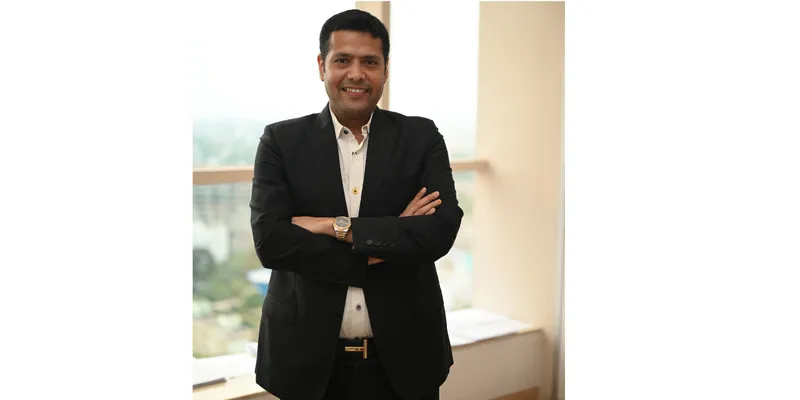
Anuj Jalan outlines technology adoption, export diversification and sustainable manufacturing as pathways for strengthening India’s position in global denim
India, the world’s second-largest denim fabric producer after China, has an installed capacity estimated at 1.6–1.7 billion metres per annum and ranks third in denim exports, with a global share of about 23 per cent by value. However, volatile raw material prices, high input costs, global competition, tariffs, domestic market pressures and rising sustainability requirements continue to challenge manufacturers.
According to Anuj Jalan, Managing Director, Tandhan Denim, Indian denim manufacturers need to focus on innovation, sustainability and market diversification to address these pressures and build long-term global competitiveness.
Cost Pressures and Global Competition
Price volatility remains one of the key challenges for Indian denim manufacturers. Cotton, polyester and spandex prices continue to fluctuate, while domestic cotton can often be 10% costlier than imported alternatives. Spandex and polyester used in denim production are also 25–30% more expensive in India than in competing countries, putting pressure on mill margins.
Besides, Indian denim exporters are facing relatively high overseas tariffs, making them lesscompetitive against Bangladesh and Vietnam, not to mention geopolitical tensions and trade barriers that further erode India’s cost advantage in key foreign markets.
Within India, market saturation and competition from the unorganised sector are additional concerns. The unorganised segment accounts for nearly 60% of production, with smaller units operating with lower overheads. Organised mills, meanwhile, face higher compliance and operating costs while competing on price.
Sustainability-related expenditure is another factor. Stricter environmental requirements, including Zero Liquid Discharge (ZLD) mandates, require substantial investment in water treatment and sustainable finishing technologies. Manufacturers therefore have to manage the cost of compliance alongside affordability.
Technology and Innovation
Jalan identifies technology adoption as one route to improving efficiency and reducing waste. AI-driven demand forecasting, 3D virtual sampling and sustainable finishing technologies such as laser and ozone treatments can support these objectives.
Vertical integration, covering activities from cotton farming to finished garments, can also help manufacturers manage input costs and strengthen quality control.
Diversifying Export Markets
Reducing dependence on the US market is another proposed strategy. Manufacturers can explore markets across Africa, Latin America and Southeast Asia to reduce exposure to tariff-related risks.
Agile supply chains and shorter lead times can also help denim manufacturers respond more effectively to fast-fashion and e-commerce channels.
Building Stronger Domestic Brands
With domestic demand underperforming, manufacturers can focus on premiumisation and differentiation through design, sustainability credentials and storytelling.
Collaboration with designers and lifestyle brands can provide additional avenues for developing revenue streams while creating differentiated denim products.
Sustainability as a Competitive Factor
Sustainable manufacturing is increasingly linked to global market requirements. Waterless dyeing, recycled fibres and energy-efficient machinery are among the practices that can help manufacturers address environmental expectations.
Government incentives for green manufacturing can also be used to help offset the costs associated with the transition.
Jalan also highlights policy advocacy and industry collaboration as areas requiring attention. Rationalised input taxes, streamlined GST processes and temporary relief on import duties for critical raw materials could help reduce cost pressures. Industry bodies can support knowledge-sharing around best practices and emerging technologies.
Tandhan Denim’s Design-Led Manufacturing Approach
Tandhan Denim, based in Kolkata, is positioning itself around manufacturing scale, product development and sustainability. Led by Anuj Jalan, Managing Director of Tandhan Group, the company is developing a denim manufacturing platform serving progressive Indian brands, Bangladesh’s export garment ecosystem and select global buyers.
For Tandhan, transformation extends beyond adding machinery or production capacity. The company is seeking to change how an Indian denim mill is perceived in global fashion markets by placing greater emphasis on product development, design understanding and fabric identity.
This approach also affects internal processes, with discussions extending beyond specifications and delivery timelines to fabric direction, innovation, wash potential, sustainability and changing denim consumer requirements. The company aims to develop relationships in which customers in New York, Tokyo, Dhaka or Delhi view Tandhan as a long-term product partner rather than only a supplier.
Large-Scale Denim Manufacturing in Eastern India
Tandhan Denim operates from Bagnan, Howrah, near Kolkata, and is described as the only large-scale denim manufacturing mill in Eastern India. Its annual production capacity is reported at around 20–22 million metres.
While Eastern India has an established textile and craftsmanship culture, modern denim manufacturing has historically been concentrated in other clusters. Tandhan aims to demonstrate that denim innovation and quality can also be developed outside these traditional manufacturing locations.
The company identifies access to raw material networks, skilled and trainable manpower and the opportunity to build outside established systems as factors associated with its location.
Over the coming years, Tandhan wants its operations to contribute to greater attention towards Eastern India as part of India’s denim manufacturing landscape.
Responding to Changing Denim Requirements
Tandhan sees opportunities for a mill model combining manufacturing capabilities with product development and innovation. The denim market is seeing demand for comfort-oriented fabrics, performance blends, lightweight constructions, sustainable processes and materials offering greater wash and fashion versatility.
Brands are also increasingly seeking development partnerships rather than purely transactional supplier relationships. These partnerships require mills to respond quickly, understand consumer trends and participate in product creation.
Tandhan is developing these capabilities while focusing on consistency, reliability and transparency for brands seeking long-term supply partnerships.
Combining Craftsmanship with Technology
At Tandhan, traditional denim craftsmanship and technology are treated as complementary. Fabric texture, weave character and the way denim develops through ageing and fading continue to depend on material and process knowledge.
At the same time, consumer requirements increasingly include comfort, performance, sustainability, versatility and new aesthetics. The company therefore combines traditional denim characteristics with modern fabric development, innovative blends, advanced finishing techniques and product development.
A key manufacturing feature is a 22-box Morrison rope-dyeing range from the USA, described as among the world’s longest. The system enables deep and consistent indigo and other shades.
Sustainability Measures
Tandhan Denim's sustainability approach focuses on practical measures including improved water efficiency, responsible raw material options, reduced chemical loads in treatments and finishing, and greater supply-chain transparency.
Its sustainability infrastructure includes a Zero Liquid Discharge (ZLD) plant, where water is treated, recovered and reused on-site through reverse osmosis and multi-effect evaporator systems instead of being released into the natural environment.
The company also uses recycled fibres and develops fabric directions based on natural fibres and lower-impact dyeing approaches. Investments in cleaner processing, water recovery and expanded renewable and advanced energy solutions are aimed at supporting a lower-carbon future.
In compliance and traceability, the company aligns with ISO and ZDHC standards, with an emphasis on measurable progress and traceability.
These efforts are structured under the “PQR” framework—Process, Quality, Responsibility—which connects engineered production, international-standard testing and sustainability.
Product Innovation and Fabric Development
Product innovation forms a central part of Tandhan’s growth strategy, with emphasis on developing versatile fabrics rather than simply increasing the number of products.
The mill focuses on denim offering a premium look and feel, depth of colour and wash versatility. It is particularly known for darker denim shades, where colour richness and depth are important, as well as fabrics that can produce multiple wash looks and shade variations from a single base fabric.
This approach provides brands with greater flexibility in product development.
Hand feel and finishing are also key considerations. Construction, processing and finishing techniques are used to develop fabrics with an elevated physical feel alongside their visual characteristics.
Target Markets and Business Development
Tandhan’s immediate focus is the Indian domestic market, particularly progressive mid-to-premium brands, private-label manufacturers and export-oriented garment factories seeking product development capabilities and reliable supply partnerships.
Bangladesh is an important market because of its proximity and established garment manufacturing ecosystem. Tandhan supplies factories there that cater to international denim brands and sees further potential in developing these relationships.
The company is also supplying customers in North Africa, many of whom manufacture for European brands. This provides exposure to international product expectations, quality requirements and changing denim trends.
Rather than targeting every market segment, Tandhan is focusing on customers seeking quality, premium fabric aesthetics, wash versatility, consistency and collaborative product development.
Participation at shows including Denims and Jeans India in Bangalore has also provided exposure to demand for differentiated denim products in and from India.
Cross-Sector Experience Influencing Leadership
Anuj Jalan’s experience across textiles, energy and industrial solutions informs his approach to managing the denim business. His textile experience contributes an understanding of product, process and craftsmanship, while his work in energy and industrial solutions brings an emphasis on systems thinking, efficiency, resource management, long-term planning and operational discipline.
Trust, consistency and long-term relationships are common themes across these sectors. In denim, these factors are similarly important because the industry relies heavily on long-term business relationships.
Cross-sector experience also supports the exchange of ideas between industries, with approaches from one sector potentially informing work in another.
Quality, Relationships and Continuous Innovation
For Tandhan, quality, relationships and continuous innovation are interconnected.
Consistency in shade, construction, performance and fabric feel is essential to denim quality. Reliable quality forms the foundation for maintaining long-term business relationships.
At the same time, customer relationships require responsiveness, an understanding of requirements, collaborative product development and support beyond fabric supply.
Continuous innovation is also necessary as consumer preferences, fashion trends, wash directions and performance expectations change. Tandhan is seeking to develop these three areas together through quality manufacturing, customer relationships and ongoing product development.
Long-Term Vision for Indian Denim
Jalan’s long-term ambition is for Tandhan Denim to be recognised as one of the most innovative and respected denim mills from India, with strong global relevance.
Beyond developing the company, the objective is to contribute to an Indian denim ecosystem that is more design-led, innovation-driven, quality-focused and globally connected.
The broader belief is that Indian manufacturing can move beyond being associated primarily with scale and develop greater recognition for product thinking and creativity. Tandhan also aims to contribute to new opportunities for Eastern India as part of this evolution.
Ultimately, the company seeks to build an organisation trusted by brands, respected within the industry and valued by its people.