Industry Meet Highlights Need to Decarbonise Textile Processing Clusters in Tamil Nadu
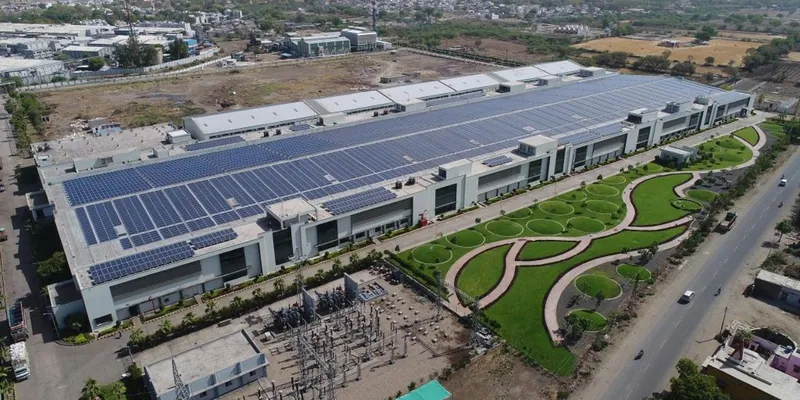
Experts call for adoption of electrification, real-time technologies and cluster-based collaboration to support decarbonisation in textile processing.
Industry representatives and stakeholders discussed pathways to decarbonise textile processing at a meeting titled "Future-Proofing Textile Manufacturing" held in Coimbatore on Thursday. The discussions focused on technology adoption, electrification, infrastructure, trade and sustainability measures for Tamil Nadu's textile processing sector.
The textile clusters in Coimbatore and nearby regions should adopt technologies that have already been piloted for real-time data collection so that the entire cluster can advance together in decarbonisation, Nirmala Raja, Managing Director, Rajapalayam Mills, and Chairperson, Ramco Community Services, said during the meeting titled "Future-Proofing Textile Manufacturing" held in Coimbatore on Thursday.
She said the textile processing industry requires heat for several manufacturing activities and noted that it can be generated using electricity instead of fossil fuels. However, she stated that the industry should remain open to technologies already piloted in textile units, examine proof-of-concept initiatives and work collectively as a cluster for improved outcomes. She added that these initiatives should also remain affordable.
Ravi Sam, Vice-Chairman of the Cotton Textiles Export Promotion Council (TEXPROCIL), said the textile industry developed in the western districts of Tamil Nadu largely because of the availability of raw materials, manpower and power at competitive costs. He observed that while raw material and manpower are no longer readily available, the industry has urged the Tamil Nadu government to ensure reliable power supply at competitive prices.
Suresh Manoharan, Secretary of the Perundurai SIPCOT Textile Processors Association, said the association is working with Vasudha Foundation to gradually reduce dependence on fossil fuels in textile processing by adopting electrification.
He said the foundation is supporting the Perundurai textile processing cluster by connecting industrial units with technology providers and identifying funding opportunities to bridge viability gaps.
According to K. Selvaraju, Secretary General of the Southern India Mills' Association (SIMA), while free trade agreements have enabled the removal of tariff barriers for Indian exporters, non-tariff barriers continue to remain a concern.
He also said that marine discharge of treated textile processing effluent is a viable solution when compared with zero liquid discharge.
Srinivas Krishnaswamy, Chief Executive Officer of Vasudha Foundation, said the organisation had released Climate Plans for four districts and four cities in Tamil Nadu, including Coimbatore and The Nilgiris.