Industry Leaders Urge Scrap Trade Collaboration Pre-BRS 2025
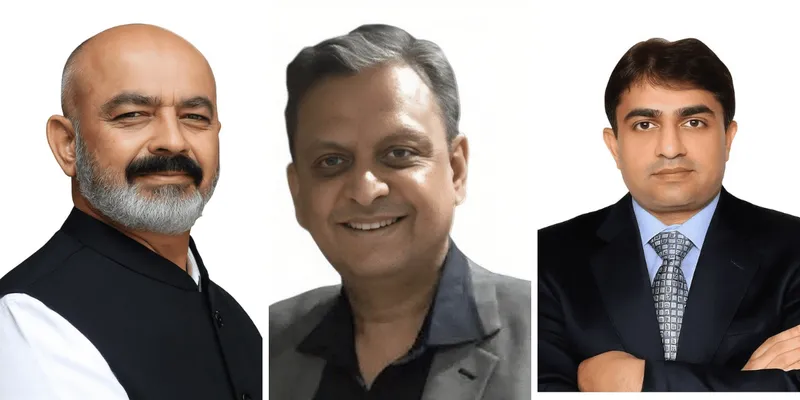
As a lead-up to the Bharat Recycling Show (BRS) 2025, Media Fusion and Crain Communications hosted an engaging pre-event webinar titled “Navigating Challenges in the Metals Scrap Trade: Regulations, Compliance, and Global Forces.” The session brought together top industry leaders, policymakers, and stakeholders to discuss critical issues facing India’s non-ferrous metals scrap sector, with an emphasis on regulatory frameworks, compliance challenges, and pathways to align with global sustainability standards.
Dr. Anupam Agnihotri, Director of JNARDDC, Ministry of Mines, highlighted that major aluminium producers are already adopting innovations like small modular reactors, digital tools, and green compliance to meet international climate targets. He projected that by 2030–35, “green aluminium” or zero-emission production will become the global benchmark, posing competitiveness challenges for MSMEs unless they upgrade technical capacity and infrastructure. He stressed that India must focus on integrating renewable energy, nuclear power, and hydrogen while offering policy support to MSMEs to bridge this gap.
Discussing preparedness for the EU’s Carbon Border Adjustment Mechanism (CBAM), Dr. Agnihotri noted that while its immediate effect may be limited, long-term decarbonization efforts are crucial for maintaining competitiveness. He urged industry players to move beyond GST and import duty concerns and actively engage in data sharing, standardization, audits, and energy efficiency improvements.
Mr. Sandeep Jain, President of Bombay Metal Exchange & MD of Laurel Wires, emphasized breaking silos across the recycling value chain. He called for a common industry platform to track scrap flows, promote best practices, and streamline compliance. He highlighted that joint investments in modern scrap processing infrastructure and collective advocacy can enhance efficiency and scalability, ultimately positioning India as a global recycling leader.
On tax reform, Mr. Jain reiterated that industry bodies are united in seeking a reduction of GST on scrap to 5%, alongside the option of introducing a reverse charge mechanism (RCM) and existing 2% TDS to create a more transparent and fraud-resistant tax framework.
He also spoke about the upcoming Extended Producer Responsibility (EPR) compliance framework, revealing that a CPCB-managed portal for non-ferrous metals will go live by April 2026. Registration will be mandatory and role-based, with support available to users to ensure smooth implementation.
Adding to the conversation, Mr. Sandeep Vakharia, Hon. Secretary of Bombay Non-ferrous Metal Association, cautioned that the EU’s planned 2027 export restrictions on scrap to non-OECD countries could threaten 30–40% of India’s scrap imports unless India strengthens data collection and hazardous waste reporting. He urged swift policy action to secure raw material availability and prevent future shortages.
Mr. Jaimin Patel, Asst. Director, NABCB, reinforced that collaboration, standardization, and accredited quality systems are essential for reducing compliance burdens and improving India’s global standing as a trusted recycling hub.
The discussion concluded by emphasizing the need for a resilient, transparent, and collaborative framework that balances trade, compliance, and sustainability priorities. This sets the tone for the Bharat Recycling Show (BRS) 2025, scheduled for November in Mumbai, which will bring together stakeholders to showcase innovations, address challenges, and chart actionable solutions for a greener and more competitive recycling future.