Industrial Textiles Market Report: 25–40% Durability Gains and 12–18% Cost Savings
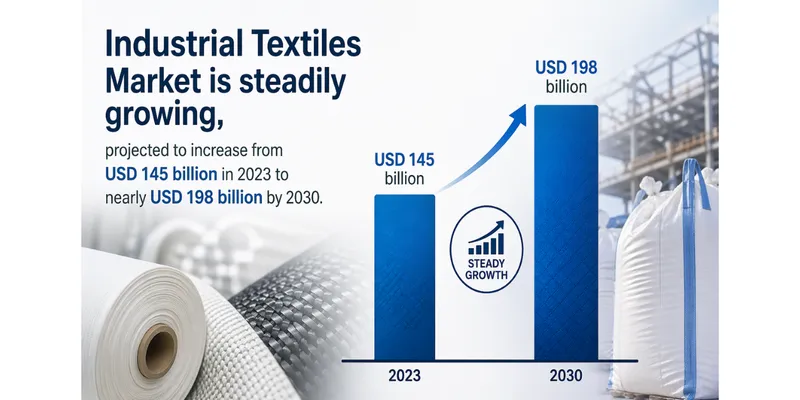
The global Industrial Textiles Market is experiencing consistent and measurable growth, largely fueled by demand in the construction, automotive, and healthcare industries. Insights from Dataintelo indicate that the market was valued at roughly USD 145 billion in 2023 and is projected to reach about USD 198 billion by 2030, with an anticipated CAGR of around 4.5%. This growth highlights the rising use of high-performance materials known for their enhanced durability and cost-effectiveness compared to traditional options.
Recently, the market has followed a steady path. It grew from almost USD 138 billion in 2021 to USD 142 billion in 2022, reflecting a steady annual growth rate of 3–4%. By 2025, the market is expected to surpass USD 158 billion, driven by infrastructure development and industrial growth in emerging economies.
Key Statistics at a Glance
• Market size (2023): USD 145 billion
• Forecast (2030): USD 198 billion
• CAGR: ~4.5%
• Asia-Pacific share: ~42%
• Construction segment: ~24%
• Automotive segment: ~18%
• Cost savings in construction: 12–15%
1. Segment Performance and Demand
Industrial textiles are utilized in various industries, with construction being the primary driver of demand. As of 2023, the construction sector represented approximately 24% of the market, growing nearly 5% each year. These materials are often employed in road building and insulation, enhancing efficiency and lowering long-term expenses.
The automotive industry accounts for about 18%, leveraging lightweight materials that decrease vehicle weight by 15–20% and enhance fuel efficiency by around 5–7%. Meanwhile, healthcare applications are steadily increasing, with demand rising by about 5– 6% each year since 2021, fueled by the need for hygiene and medical textiles.
2. Regional Growth Insights
The Asia-Pacific region leads the market, holding approximately 42% of the share, thanks to robust industrial growth in nations such as China and India. This area is expanding at an annual rate of about 5%, outpacing the global average.
North America comprises nearly 25% of the market and is experiencing a steady growth rate of 3–4%. In contrast, Europe represents around 20% of the market, influenced by sustainability initiatives and a greater use of recycled materials.
3. Measurable Benefits and Efficiency Gains
Industrial textiles provide distinct, measurable benefits compared to conventional materials. In the construction industry, they can cut project expenses by 12–15% and enhance the longevity of infrastructure. For instance, geotextiles can boost the durability of roads from 10 years to approximately 14 years, thereby reducing the need for maintenance.
Moreover, these materials offer 25–30% increased durability, making them ideal for rigorous industrial uses. The decreased maintenance needs and extended service life can lead to total savings of up to 20% in certain projects.
4. Future Outlook (2026–2030)
In the coming years, the market is projected to expand steadily, aiming for approximately USD 165 billion by 2026. Annual growth is anticipated to remain stable at around 4–5%, driven by rising demand from the construction and automotive sectors.
Meanwhile, emerging applications like smart textiles are expected to grow a bit quicker, at around 7% CAGR, although they currently make up a smaller portion of the overall market.
Conclusion
The Industrial Textiles Market is steadily growing, projected to increase from USD 145 billion in 2023 to nearly USD 198 billion by 2030. The Asia-Pacific region holds the largest share at 42%, with key segments such as construction expanding at approximately 5% each year. This industry demonstrates consistent growth supported by data.
Notable advantages, including cost savings of 12–15% and enhanced durability of 25–30%, explain the rising preference for industrial textiles across various sectors. Overall, the market’s outlook is characterized by steady growth, significant efficiency improvements, and robust demand globally.
Read A Full Report: https://dataintelo.com/report/industrial-textiles-market-report