Industrial Parks and Technology Centres Proposed to Strengthen India’s Manufacturing Ecosystem
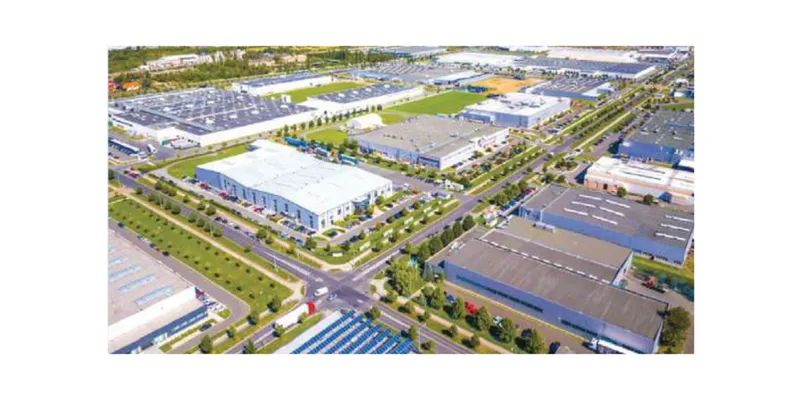
Proposed industrial parks and advanced technology centres aim to support manufacturing, innovation, MSMEs, skill development, and integrated industrial growth across India.
India’s industrial sector has witnessed significant expansion over the past decade, supported by policy reforms, infrastructure development, and manufacturing-focused initiatives. According to the article, the Government of India continues to promote industrial development through Mission Mode projects, Free Trade Agreements (FTAs), and manufacturing ecosystems designed to strengthen domestic production and global competitiveness.
The article states that India's growing network of FTAs is expected to support trade across sectors including agriculture, energy, oil, critical minerals and manufacturing while creating opportunities for skilled manpower and industrial expansion.
It also highlights that India has emerged as a major skill hub, with industrial parks and cluster-based manufacturing adopting plug-and-play infrastructure to improve productivity, ease of manufacturing, packaging standards, and quality benchmarks.
Industrial Parks to Support Integrated Manufacturing
The article notes that initiatives such as the PM Mega Integrated Textile Region and Apparel (PM MITRA) under the National Technical Textiles Mission (NTTM) are supporting integrated textile manufacturing infrastructure.
It also refers to programmes such as Samarth (Scheme for Capacity Building in Textiles Sector), which focuses on skill development and employment generation within the textile industry.
The article mentions the BHAVYA (Bharat Audyogik Vikas Yojna) framework, describing it as a plug-and-play industrial development model intended to support integrated manufacturing infrastructure, digital connectivity, and industrial investments.
According to the article, industrial parks are expected to improve innovation, productivity, domestic manufacturing, exports, and contribute towards the objective of Aatmanirbhar Bharat.
Regional Industrial Parks Planned Across India
The proposed industrial parks are planned across different regions based on local strengths and natural resource availability. The article states that parks are also proposed in tribal regions to encourage local industrial development, employment generation, productivity, and value-added manufacturing.
The proposed parks are expected to include:
- Common testing facilities
- Sewage Treatment Plants
- Centres of Excellence
- Environmental clearance support
- Shared industrial infrastructure
The article states that these facilities are intended to support manufacturing, supply chains, technology transfer, knowledge sharing, skill development, IP protection, testing, certification services, and collaboration between industry, government, and academia.
It further mentions that nearly 100 industrial parks are proposed under the BHAVYA framework with participation from stakeholders through the PPP model.
Technology Centres Focus on Advanced Manufacturing
The article states that India is also planning advanced multi-sector technology centres, with one proposal focusing on Auto Nagar in Belagavi, Bengaluru.
According to the article, these centres are expected to include:
- Industrial training facilities
- Skill development centres
- Research and innovation laboratories
- Advanced testing and instrumentation facilities
- Technical education institutions
The proposal aims to strengthen local manufacturing ecosystems, create employment opportunities, and support the vision of "Kalpana to Siddhi for Viksit 2047."
Manufacturing Mission Framework
The article states that the Government intends to encourage industrial investment through smart manufacturing infrastructure and MSME-focused technology centres.
It notes that the proposed "Manufacturing Mission" is centred around five key elements:
- Money
- Material
- Method
- Mechanism
- Manpower
According to the article, these initiatives are intended to strengthen industrial competitiveness, support research and innovation, improve buyer-seller interactions, and enhance India's manufacturing ecosystem.