Industrial Mixers: Innovations and Trends Driving Manufacturing Efficiency
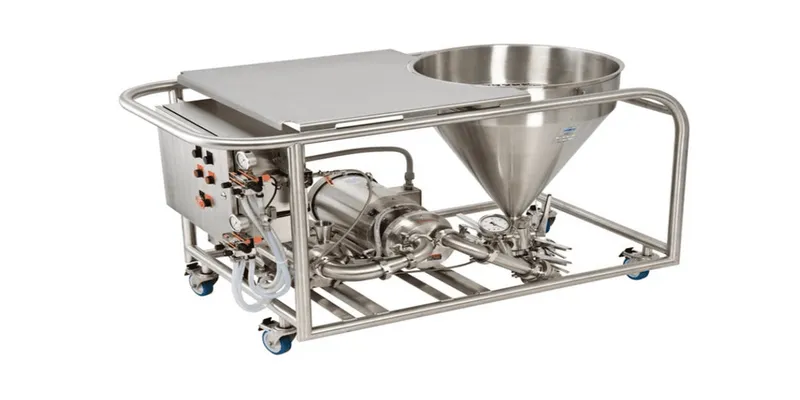
The industrial mixers market is a dynamic and vital segment of the global manufacturing industry, which plays a key role in numerous sectors including food and beverage, pharmaceuticals, chemicals, and cosmetics. These machines, designed to blend raw materials into homogenous products, are fundamental in ensuring consistent product quality and increasing production efficiency.
The global industrial mixers market is expected to grow significantly, rising from US$ 2,839.4 million in 2025 to US$ 4,297.7 million by 2032. This growth is projected to occur at a CAGR of 6.1% during the forecast period from 2025 to 2032.
The market for industrial mixers has witnessed substantial growth over the past few years, driven by technological innovations, advancements in manufacturing processes, and a growing demand for customized solutions.
Technological Advancements and Innovations
One of the most significant drivers of the industrial mixers market is the continuous technological innovation. With a growing emphasis on automation and digitization, industrial mixers have become increasingly sophisticated, offering enhanced performance and capabilities. These innovations allow manufacturers to achieve higher precision in their blending processes, improve efficiency, and reduce operational costs.
For instance, the development of smart mixers, integrated with Internet of Things (IoT) capabilities, has transformed traditional mixing operations. These smart systems can monitor and control the mixing process in real-time, providing operators with insights into the status of the machine and the product being processed. This results in better control over the process, reducing human error and improving overall quality consistency studied by Persistence Market Research. Furthermore, the ability to remotely control and monitor mixers offers the advantage of reducing downtime and increasing operational efficiency, which is crucial in today’s fast-paced manufacturing environments.
Customization and Application-Specific Solutions
Another notable trend in the industrial mixers market is the demand for customized and application-specific solutions. As industries continue to evolve, there is a growing need for mixers that are tailored to meet the unique requirements of different applications. For instance, the food and beverage industry often requires mixers that can handle a variety of ingredients with varying consistencies, from liquids to powders. In pharmaceuticals, the need for precise mixing of active pharmaceutical ingredients (APIs) in the formulation process is critical to ensure the safety and efficacy of medications.
Manufacturers are responding to this demand by offering industrial mixers with a wide range of specifications, sizes, and functionalities. For example, some mixers are designed to handle high-viscosity materials, while others are built to process delicate ingredients without causing degradation.
Automation and Industry 4.0 Integration
The rise of Industry 4.0 and smart factories is another key factor influencing the industrial mixers market. Industry 4.0 is characterized by the use of cyber-physical systems, IoT, artificial intelligence (AI), and data analytics to create more efficient and flexible production environments. Industrial mixers are increasingly being integrated into these smart systems, allowing for better data collection, analysis, and optimization of the mixing process.
For example, the integration of AI algorithms into industrial mixers enables predictive maintenance. By analyzing real-time data from sensors embedded in the mixer, AI can predict when a part is likely to fail, allowing manufacturers to perform maintenance before a breakdown occurs. This proactive approach reduces downtime and maintenance costs, contributing to improved productivity and cost-efficiency.
Moreover, the implementation of automated control systems in industrial mixers ensures consistent and repeatable mixing processes. These systems can adjust the mixing parameters based on feedback from sensors, ensuring that each batch meets the desired specifications without the need for manual intervention.
Market Drivers and Growth Prospects
The industrial mixers market is benefiting from several key drivers that are contributing to its growth. One of the primary drivers is the increasing demand for high-quality products across industries such as food and beverage, pharmaceuticals, and chemicals. As consumers demand more complex, tailored products, manufacturers are investing in advanced mixing technologies to meet these expectations.
Another driver is the growing focus on sustainability. In response to environmental concerns, manufacturers are exploring ways to reduce energy consumption and minimize waste during the mixing process. Energy-efficient mixers, along with the use of recyclable materials and eco-friendly designs, are becoming more prevalent in the market. This is not only helping manufacturers meet sustainability targets but is also appealing to environmentally conscious consumers and businesses.
In addition to sustainability, regulatory compliance is a significant factor driving the adoption of advanced mixing technologies. For instance, the pharmaceutical industry faces stringent regulations regarding the formulation and mixing of drugs, which has led to the demand for mixers that ensure precise control over the process. Similarly, the food and beverage industry is subject to strict quality control standards, which require mixers that can deliver consistent and reliable results.
Key Players and Market Competition
The industrial mixers market is highly competitive, with numerous players offering a wide range of products and solutions. Leading manufacturers are constantly innovating to maintain their competitive edge, focusing on enhancing the functionality, reliability, and efficiency of their mixers. Some of the key players in the market include:
- Schenck Process
- SPX FLOW
- Charles Ross & Son Company
- GEA Group
- Heinkel Process Technology
- Amixon
- Pfaudler
These companies are investing heavily in R&D to develop new and improved mixers, with a focus on automation, energy efficiency, and customization. Strategic partnerships and acquisitions are also common in the market, as companies look to expand their product offerings and enter new geographical regions.
Conclusion
The industrial mixers market is experiencing significant growth, driven by innovations in technology, increasing demand for customized solutions, and the ongoing trend towards automation and Industry 4.0 integration. As industries continue to demand more efficient, precise, and sustainable mixing processes, the market for industrial mixers is set to evolve further.