India’s Textile & Apparel Industry Expected to Require 14 Million Additional Skilled Workers by 2030: AMHSSC
Industry Consultation Highlights Growing Workforce Demand, Export Opportunities and Future Skilling Priorities
India's textile and apparel sector is projected to require nearly 14 million additional skilled workers by 2030, according to discussions at the Industry Consultation Workshop organised by the Apparel, Made-Ups & Home Furnishing Sector Skill Council (AMHSSC) at Hyatt Regency, New Delhi on Thursday. The event brought together government representatives, industry leaders, exporters, manufacturers and training partners to discuss future workforce requirements and skill development strategies.
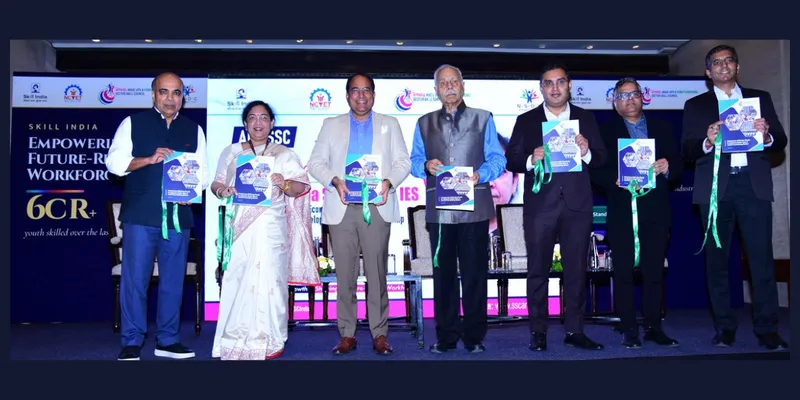
The Apparel, Made-Ups & Home Furnishing Sector Skill Council (AMHSSC) organised an Industry Consultation Workshop at Hyatt Regency, New Delhi, bringing together policymakers, industry leaders, exporters, manufacturers and training partners to discuss the future skill requirements of India's textile and apparel industry.
The workshop was inaugurated by Ms Manisha Sensarma, Senior Economic Advisor, Ministry of Skill Development and Entrepreneurship, in the presence of Shri Premal Udani, Chairman, AMHSSC, Shri Ashish Srivastava, CEO, AMHSSC, Shri Lalit Thukral, Chairman, Noida Apparel Export Cluster, along with other industry representatives.
The discussions focused on the expanding workforce requirements of India's textile and apparel sector as it prepares to meet growing domestic and international demand.
According to government and industry projections shared during the workshop, the sector currently employs nearly 46 million people. Employment is expected to increase to around 60 million by 2030, creating demand for approximately 14 million additional skilled workers over the decade.
Participants also reviewed growth prospects for the domestic apparel market. India's apparel market is projected to reach USD 130–150 billion by 2030, growing at a 10–12 per cent compound annual growth rate (CAGR), supported by increasing consumer demand for differentiated products, fashion trends and value-oriented offerings.
Addressing the workshop, Ms Manisha Sensarma, Senior Economic Advisor, Ministry of Skill Development and Entrepreneurship (MSDE), said:
“The future of India's workforce depends on stronger partnerships between government and industry. Industry must play a central role in identifying skill requirements, developing curriculum, establishing Centres of Excellence, upgrading ITIs through the PM SETU initiative, and shaping a flexible skilling ecosystem that responds to changing market demands. Together, we can create a workforce that is globally competitive and industry-ready. Continuous upskilling in AI and emerging technologies will be essential to enhance productivity and competitiveness.”
Speaking at the event, Shri Premal Udani, Chairman, AMHSSC, said:
“The apparel sector is India's second-largest employer after agriculture, and with new Free Trade Agreements creating fresh opportunities, the demand for skilled workers is set to rise significantly. Our industry consultations and Skill Gap Study will help align skilling efforts with industry needs, ensuring a steady pipeline of productive and job-ready talent.”
Shri Lalit Thukral, Chairman, Noida Apparel Export Cluster, highlighted the need for trained manpower, stating:
“The foremost challenge for manufacturers today is access to trained, job-ready workers, particularly as factories adopt new machinery and higher quality standards. Reliable workforce data and a direct pipeline to skilled talent, he added, would be critical as new trade agreements open export markets.”
Commenting on export opportunities, Shri Ashish Srivastava, CEO, AMHSSC, said:
“The India-UK Free Trade Agreement marks a significant milestone for India's textile and apparel industry, opening new export opportunities and enhancing the global competitiveness of Indian manufacturers. As the sector expands into new international markets, the demand for a highly skilled workforce will grow correspondingly. Initiatives such as Bharat Tex 2026 will further position India as a preferred global sourcing destination, making industry-aligned skilling essential to support sustainable growth and export competitiveness.”
The workshop concluded with stakeholders committing to strengthen industry-led skill development initiatives, align training programmes with emerging technologies and market requirements, and support workforce readiness for the next phase of growth in India's textile and apparel sector.