India’s Payment Revolution 2025: UPI Growth & Cash Balance
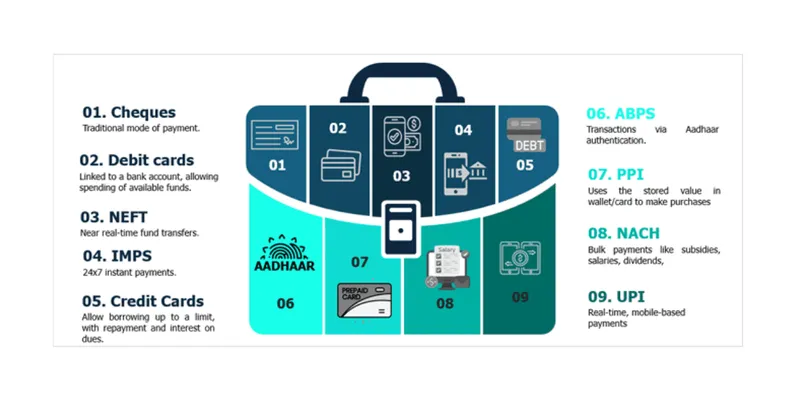
CareEdge Report Highlights India’s Hybrid Payment Model with UPI-Led Digital Surge and Persistent Cash Usage
CareEdge Advisory’s latest analysis reveals that India’s retail payment system is now 99.8% digital, led by UPI’s rapid growth, yet cash retains a 50% share in consumption, shaping a resilient hybrid economy.
India’s payment landscape continues to undergo a major digital transformation, with 99.8% of retail transactions now processed digitally, according to a new report by CareEdge Advisory. The near disappearance of cheques and other paper-based instruments marks a decisive shift toward a tech-driven economy powered by UPI, internet penetration, and widespread smartphone adoption.
Between FY23 and FY25, UPI transactions surged at a 49% CAGR, reaching 54.9 billion transactions in Q1 FY26 alone, as digital adoption deepened across Tier 2 and Tier 3 cities. However, despite the rapid rise of digital payments, cash continues to maintain a 50% share of India’s Private Final Consumption Expenditure (PFCE)—reflecting a hybrid payment ecosystem where both digital and cash coexist.
Digital Expansion and UPI’s Global Reach
Led by the National Payments Corporation of India (NPCI) and regulated by the Reserve Bank of India (RBI), India’s retail payment system is now a blend of legacy and next-gen platforms, including UPI, IMPS, NEFT, AePS, and NACH.
UPI alone now serves 491 million individuals and 65 million merchants, accounting for nearly 50% of global real-time digital payments, with recent expansion into France marking its first European footprint.
While credit cards remain popular for e-commerce and high-value purchases, debit cards and prepaid payment instruments (PPIs) are declining due to the convenience and cost-efficiency of UPI.
Financial Inclusion and Connectivity: The Key Growth Drivers
India’s Financial Inclusion Index rose from 53.9 in March 2021 to 67 in March 2025, driven by government-backed initiatives, improved digital infrastructure, and affordable mobile internet access. Internet tele-density climbed from 60.7% in March 2021 to 70.9% in June 2025, expanding UPI’s addressable base across rural and semi-urban markets.
“UPI transactions have registered phenomenal growth, underpinned by internet and smartphone penetration across smaller cities. However, its zero-MDR framework challenges long-term sustainability,” said Tanvi Shah, Senior Director, CareEdge Research.
“India’s payment ecosystem is evolving into a hybrid model, where digital and cash channels coexist, ensuring resilience and inclusion,” added Kalpesh Mantri, Assistant Director, CareEdge Research.
The Future: Hybrid, Secure, and Inclusive
Even as India moves towards a cash-light economy, cash continues to play an essential role in maintaining inclusivity and reliability—particularly in rural markets and during disruptions such as natural disasters or system outages. CareEdge emphasizes that the next phase of UPI’s growth will depend on monetization through value-added services, including micro-credit, merchant analytics, and fintech collaborations, to ensure both accessibility and economic sustainability.