India's Manufacturing Growth Faces Labour Shortage as Factory Hiring Struggles
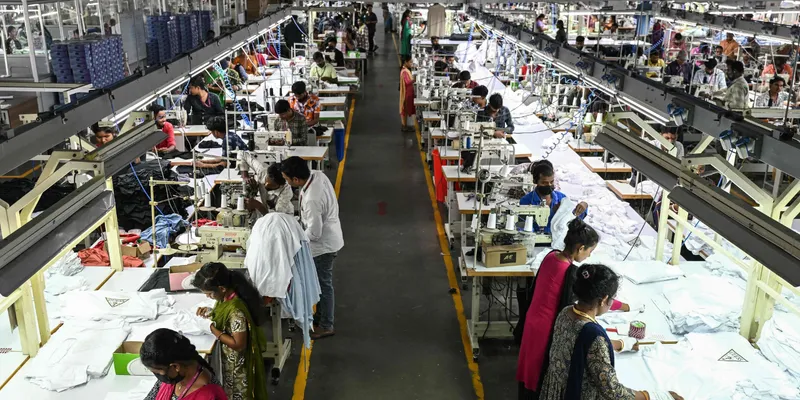
As industrial investment rises, manufacturers across sectors report persistent workforce shortages that could affect India’s long-term manufacturing ambitions.
India’s expanding manufacturing sector is encountering a growing shortage of workers, creating challenges for factories seeking to increase production. As industries scale operations, employers across multiple regions are finding it increasingly difficult to recruit and retain labour, according to a report published by HT Mint.
India’s efforts to strengthen manufacturing as a driver of economic growth are increasingly being challenged by a shortage of workers across factory floors. As industrial investments continue to rise, manufacturers in several sectors are reporting difficulties in hiring enough employees to meet production requirements.
The report highlights that garment manufacturers in cities such as Bengaluru and Tiruppur are struggling to recruit workers despite repeated efforts through labour contractors. Factory owners say they are unable to fill vacancies even after increasing recruitment attempts.
According to the report, India’s factory workforce has expanded significantly over the past two decades. However, labour availability has not kept pace with industrial expansion. While manufacturing capacity continues to grow, the availability of workers is emerging as a constraint.
The report notes that workers, particularly younger people, are increasingly choosing employment in sectors such as logistics, e-commerce, delivery services and other informal occupations instead of factory jobs. These sectors often provide greater flexibility, daily wage payments and different working conditions, influencing employment preferences.
Data cited in the report indicates that manufacturing employment has risen substantially over the years, yet the sector continues to face recruitment challenges. The shortage is particularly visible in labour-intensive industries such as textiles, garments and electronics.
Industry executives quoted in the report state that productivity is also affected when factories operate below optimal staffing levels. Companies are often required to leave production lines partially idle because of insufficient manpower.
The report discusses India's demographic advantage but notes that the availability of a young population alone does not guarantee sufficient industrial labour. It highlights the importance of attracting workers into formal manufacturing employment through better working conditions, skill development and improved productivity.
The article also compares India's manufacturing performance with several Asian economies, indicating that manufacturing contributes a smaller share to India's GDP than in countries such as China and Vietnam. It suggests that increasing factory employment will be important for achieving long-term manufacturing goals.
The report states that India may require an additional 10–12 million incremental manufacturing sector workers over the next five years to sustain its targeted industrial growth.
It further notes that India had approximately 18.5 million workers employed across industrial factories as of 2023, compared with 8 million in 2001.
According to the report, India's productivity gap with China remains substantial despite improvements since 2000. It cites a productivity gap of approximately $30,000 per worker.
The article concludes that expanding formal manufacturing employment, improving workforce participation and strengthening skill development will be important for supporting India's industrial ambitions while addressing the current labour shortage.