India's BRICS Summit 2026 awaits Strategic Opportunities in Global Fashion
By Dr Vidhu Sekhar P
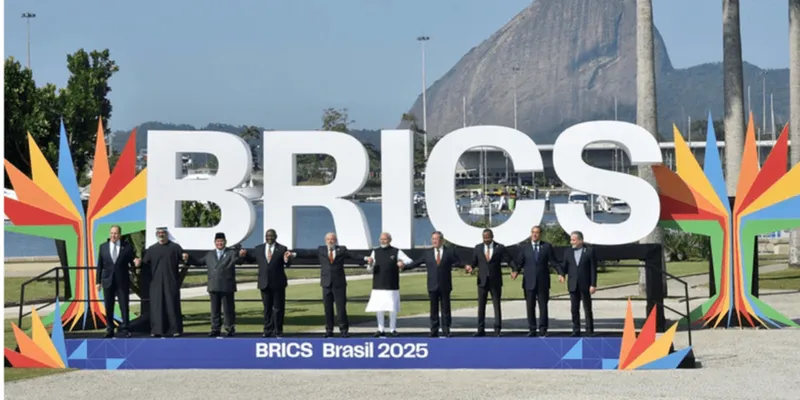
India is all set to host the 18th BRICS Summit in 2026 and it is poised to create significant opportunities for the textile, apparel, handloom, and handicraft sectors. The leaders of BRICS nations at their summit in Rio de Janeiro have unanimously extended their full support to India’s Chair ship, scheduled to be held in 2026. The endorsement came in a joint declaration issued at the conclusion of the 17th BRICS Summit held on 5th July 2025 in Brazil to the Indian Prime Minister Narendra Modi.
The BRICS economic bloc has undergone significant expansion since its inception. Initially comprising Brazil, Russia, India, and China, the group welcomed South Africa in 2010. A major expansion in 2024 added four new members like Egypt, Ethiopia, Iran, and the United Arab Emirates. Indonesia became the organization's latest member in January 2025. Beyond its core membership, BRICS has established partnerships with numerous countries and continues to attract interest from others seeking to join its ranks.
The BRICS group, with its mix of major producer and consumer nations, offers Indian textiles and apparels an expanded export opportunity. Recent years have seen Indian apparel exports to BRICS nations rise significantly—woven apparel exports increased by approximately 10%, and knitted apparel exports grew by 23% in early 2024 compared to the previous year. Exports to Russia alone jumped by 65% from January to April 2024 over the same period in 2023. Hosting the summit will likely strengthen these trade ties and open new markets within the bloc.
With the strategic market access, sustainability focus, investment opportunities, and global recognition, these industries are well-positioned to benefit from the BRICS summit and further the goals of Make in India on the world stage.
The New Development Bank (NDB) of BRICS has the potential to finance sustainable textile projects, such as recycling and green cotton production. NDB financing can accelerate India’s shift to a modern, sustainable textile sector by providing capital for green technologies, supporting recycling and circular economy initiatives, reducing environmental impact, and aligning Indian textiles with global market expectations.
NDB fund can further enable large-scale adoption of advanced, eco-friendly technologies of water-efficient dyeing, energy-saving machinery, and digital supply chain management. The fund transition can switch to organic and regenerative cotton farming for investments in better irrigation, organic fertilizers, and training for farmers to improve sustainable yields. With their support, Indian textile companies can upgrade to meet global sustainability certifications (e.g., GOTS, OEKO-TEX), which are increasingly required by international brands and retailers. This enhances India’s reputation as a supplier of sustainable textiles. This could help India to scale up the textile sector that aligns with global trends in sustainability, making textiles more competitive worldwide.
Over reliance on routine supply chains has put exporters in a fix that had resulted in unstable access to raw materials and technologies. The Indian presidency can accelerate the discussion further on securing and diversifying supply chains for critical materials and technology, reducing over-reliance on any single country.
Like the Indian Presidency of G-20 summit, this too has potential to bring handloom and handicraft sectors to the centre stage. As the government has revised its target and renewed policy attention, handloom exports can increase production. Summit provides a platform to showcase India’s rich heritage to global buyers and policymakers, potentially leading to new export orders and international collaborations.
Potential Impacts of India’s BRICS Presidency
Artisan empowerment initiatives such as export timeline extension and duty-free input imports can bring India into the global spotlight from the BRICS summit. This can speed up to connect more weavers and craftsmen to international markets and customers. With tax exemptions, infrastructure upgrades, and targeted initiatives, the 'Make in India' program has gained momentum. The BRICS summit can foster a conducive environment for industrial growth and investment. The summit can leverage opportunities to attract foreign investment, facilitate technology transfer, and foster joint ventures, driving economic growth and collaboration. (Author is Assistant Professor at National Institute of Fashion Technology, Ministry of Textiles, Govt. of India)