India–New Zealand Conclude Free Trade Agreement in Record Nine Months, Strengthening Bilateral Economic Ties
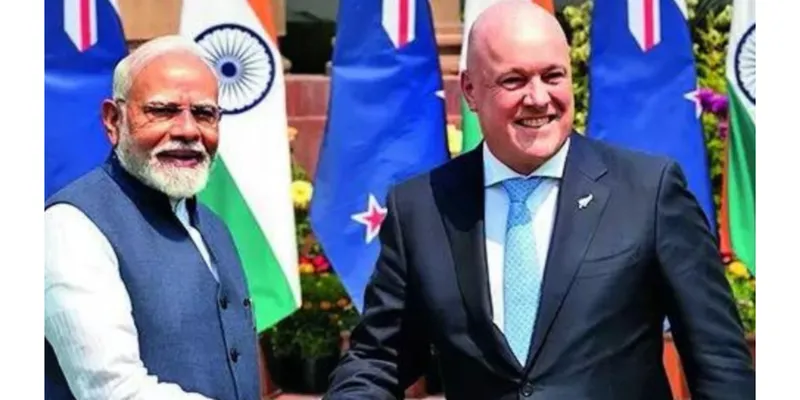
World Trade Centre Mumbai and the All India Association of Industries (AIAI) have welcomed the successful conclusion of the Free Trade Agreement (FTA) negotiations between India and the Republic of New Zealand. The landmark agreement was officially announced on December 22, 2025, by Prime Minister Narendra Modi and New Zealand Prime Minister Christopher Luxon.
Finalised in a record nine months, the agreement marks a significant milestone in India’s trade engagement with the Indo-Pacific region. It reflects the shared resolve of both countries to deepen economic integration, expand market access, and foster long-term, sustainable growth through closer bilateral cooperation.
Welcoming the development, Dr. Vijay Kalantri, Chairman, World Trade Centre Mumbai and President, All India Association of Industries, said,
“The India-New Zealand FTA represents a comprehensive framework designed to unlock unprecedented opportunities across goods, services, investment, and people-to-people engagement. This aligns seamlessly with India's broader strategic objectives under the Viksit Bharat 2047 vision and reaffirms India's position as a key economic partner in the Asia-Pacific region”.
Highlighting the broader strategic value of the agreement, Dr. Kalantri added,
“Though the tariff rate has come down from an average of 2% to nil, the agreement is noteworthy for its commitment on investments, mobility of students and professionals and recognition to regulators, etc which will pay us rich dividends in the long term. Further, restricted market access for dairy and certain key agricultural products will protect our farmers”.
Emphasising the confidence such trade frameworks signal to global markets, Dr. Kalantri said,
“such treaties give signals and show confidence that India is ready to play its part to accelerate global trade and expand its export destinations. This is not merely a trade agreement; it is a blueprint for partnership that will deepen the civilisational and economic bonds between our two democracies”.
Under the agreement, New Zealand will provide duty-free access across 100 per cent of its tariff lines, while India will open approximately 70 per cent of its tariff lines. The pact also includes a commitment by New Zealand to invest USD 20 billion in India over the next 15 years.
In addition, consensus has been reached on student mobility and post-study work visas for STEM graduates and skilled professionals, creating new visa pathways across nearly 5,000 skilled occupations. These provisions are expected to strengthen talent exchange, education linkages, and long-term people-to-people engagement between the two countries.