Indian Manufacturers Seek Zero Customs Duty on Key Raw Materials Ahead of Budget 2027-28
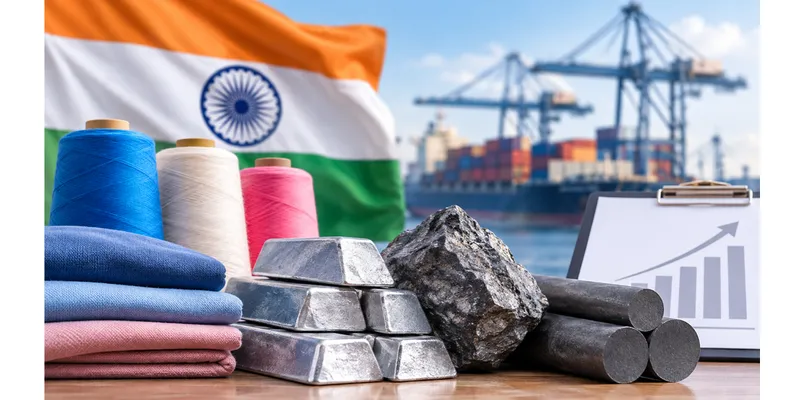
Aluminium, textile and chemical industry associations seek lower import duties on essential inputs, citing rising production costs and pressure on MSME competitiveness.
Indian manufacturers are urging the government to reduce import duties on raw materials and intermediate goods in the Union Budget 2027-28, as high input costs continue to affect domestic production and export competitiveness. Industry associations across aluminium, textiles, chemicals and other manufacturing segments have raised concerns over uneven customs duties, particularly the burden on micro, small and medium enterprises (MSMEs).
Industry Seeks Lower Import Duties on Raw Materials
Manufacturers are seeking changes to the customs duty structure for essential production inputs, arguing that imported finished products sometimes attract lower tariff rates than the raw materials used by domestic manufacturers.
Industry associations have highlighted the cost implications of high and uneven duties on inputs, particularly for downstream producers and MSMEs. The demands cover several sectors, including aluminium, textiles, chemicals and export-oriented manufacturing.
The requests come as the Finance Ministry begins preparations for the next Union Budget, scheduled to be presented on 1 February 2027. Industry bodies are meeting ministry officials and submitting their recommendations ahead of the budget exercise.
According to the schedule issued by the Department of Economic Affairs on 23 September, pre-budget consultations with ministries and departments began on 12 October and are scheduled to conclude on 13 November.
Cotton Import Duty Exemption Extended Until December 2026
The government has already introduced temporary customs duty relief for certain sectors.
Cotton imports were exempted from customs duties from 1 June 2026. The exemption, which was initially scheduled to end on 31 October, has been extended until 31 December to improve raw-material availability for the textile industry.
Aluminium Industry Demands Zero Basic Customs Duty
In a joint pre-budget representation to Finance Minister Nirmala Sitharaman, the Aluminium Extrusion Manufacturers Association of India (ALEMAI) and other industry bodies have requested a reduction in the basic customs duty (BCD) on primary aluminium.
Their proposal seeks to bring the duty on primary aluminium under tariff heading 7601 down from 7.5% to zero.
The industry associations argue that the existing duty structure places downstream manufacturers, particularly MSMEs that depend on aluminium as a key raw material, at a cost disadvantage.
Jitendra Chopra, president of ALEMAI, which represents more than 200 aluminium extrusion manufacturers across India, said the high cost of procuring raw materials had contributed to the closure of around 20 factories over the past three years, resulting in the loss of nearly 50,000 jobs.
"India has an installed aluminium extrusion capacity of 3 million tonnes, but the industry is currently operating at just 40% of capacity. Reducing customs duty on primary aluminium and aluminium scrap would lower input costs, improve capacity utilisation and help revive closed factories, creating employment opportunities," Chopra said.
He added that the proposed duty rationalisation could generate an additional ₹4,400 crore in domestic taxable value addition and ₹792 crore in goods and services tax (GST) revenue at an illustrative rate of 18%.
According to Chopra, this would be equivalent to the customs revenue currently collected on primary aluminium imports.
PHDCI Calls for Lower Duties on Graphite Electrodes and Steel Inputs
Industry body PHDCI has also sought a reduction in basic customs duty on graphite electrodes from 7.5% to zero.
The organisation cited the importance of graphite electrodes in electric arc furnace steelmaking and the absence of a viable substitute for this application.
PHDCI president Anil Gupta outlined the need for a revised customs duty structure covering essential industrial inputs.
"A rationalized customs duty framework for inputs such as molybdenum, ferro-alloys, graphite electrodes and steel scrap, while supporting domestic recycling and resource efficiency, can improve cost competitiveness, strengthen downstream industries and facilitate transition towards more efficient steel production," Gupta said during a pre-budget meeting.
Budget 2027-28 Consultations Gain Importance for Manufacturing Industries
Industry associations are seeking changes to import duties across key raw materials and intermediate goods ahead of the upcoming budget.
The aluminium industry's proposal focuses on primary aluminium and aluminium scrap, while PHDCI has highlighted graphite electrodes and other steelmaking inputs. The textile industry has also received temporary relief through the extension of the cotton import duty exemption until 31 December 2026.
With pre-budget consultations scheduled to conclude on 13 November, manufacturers are placing their recommendations before the government, focusing on input costs, domestic manufacturing and the competitiveness of downstream industries.