Indian Exporters See Competitive Edge Despite New US Tariffs, Raise Concerns Over Textile Input Sourcing
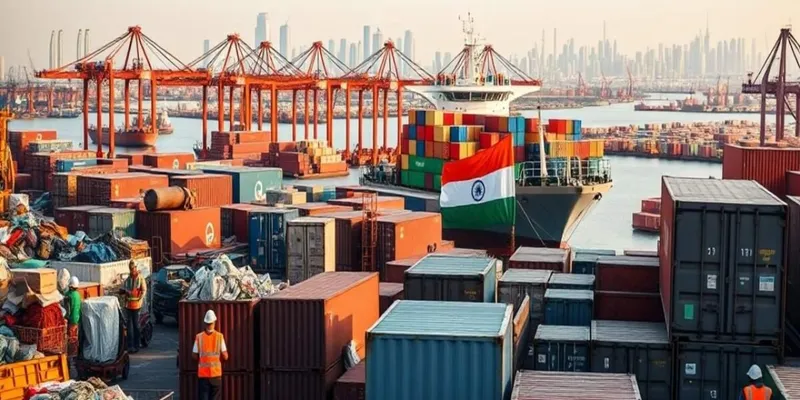
Exporters say India remains relatively well positioned under the new US tariff regime, while textile tariff-rate quotas for competing countries could affect sourcing patterns.
After the United States imposed a 10% tariff on India under a Section 301 investigation, Indian exporters stated that the country continues to retain a relative competitive position, particularly when compared with China and Vietnam, which are subject to a 12.5% tariff.
At the same time, textile exporters highlighted concerns over the newly announced textile tariff-rate quotas (TRQs) for Bangladesh, Cambodia, Indonesia, and Malaysia. They said the policy could reduce sourcing of cotton, yarn, and other intermediate goods from India as these countries begin importing more inputs from the United States.
SC Ralhan, President of The Federation of Indian Export Organisations (FIEO), said that Indian exporters largely maintain their relative competitiveness because competing suppliers face a similar tariff incidence in the US market.
He further stated:
“More importantly, Indian exporters could benefit from trade diversion in several product segments where competing countries are subject to the higher 12.5% tariff. Even a differential of 2.5% can influence sourcing decisions in highly competitive markets, particularly where Indian exporters can offer quality products, reliable deliveries and stable supply chains.”
The report noted that the Office of the United States Trade Representative (USTR) has established textile tariff-rate quotas (TRQs) for Bangladesh, Cambodia, Indonesia, and Malaysia, allowing these economies to import US cotton and textile goods for final manufacturing.
According to the report, no such TRQ has been announced for India.
The article also noted that Bangladesh, one of India's key competitors and a major importer of Indian cotton and fibre, could increasingly source input materials from the United States under the new arrangement. The USTR stated that the TRQs would allow specified volumes of textiles and apparel from Bangladesh, Cambodia, Indonesia, and Malaysia to enter the United States free of Section 301 tariffs for an initial period of three years. After that period, imports would begin attracting the 10% Section 301 tariff.
Commenting on the development, Confederation of Indian Textile Industry (CITI) Chairman Ashwin Chandran said:
“The tariff imposition on the issue of forced labour is unfortunate as it does not indicate an expiry date, causing reputational risks, and CITI looks forward to the Indian government taking up this issue with the US given the detrimental impact it could have on textile and apparel exports from India.”
He further added:
“A window has been opened for textile and apparel exports from these countries to enter the United States free of the Section 301 tariffs. This differential treatment risks diverting sourcing orders for textile and apparel items away from India.”