Indian Exporters Monitor USTR Review and Bilateral Trade Negotiations
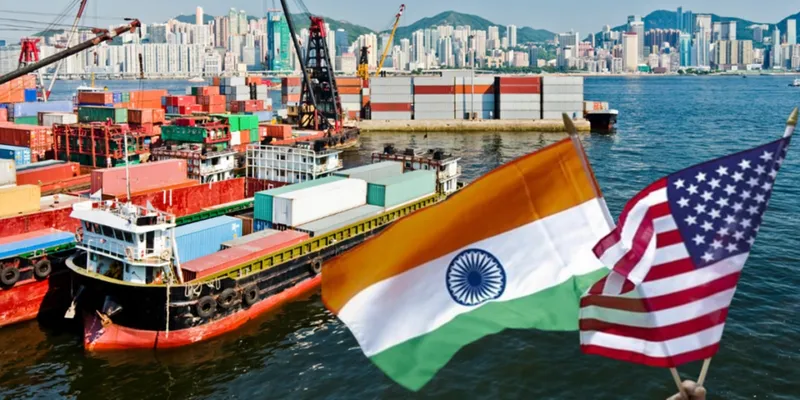
Exporters seek competitive tariff positioning as India-US trade discussions continue
Indian exporters are closely tracking the ongoing investigations by the Office of the United States Trade Representative (USTR) and parallel negotiations on a bilateral trade agreement between India and the United States. Industry stakeholders believe the outcome could influence India's competitive position relative to other exporting nations.
Indian exporters are following developments related to the USTR’s investigations and the ongoing discussions on a bilateral trade agreement between India and the United States. Industry representatives expect that the negotiations could help India secure a competitive advantage over some of its rival exporting countries.
While exporters are not particularly concerned about the latest proposal to impose a 12.5% tariff on 54 countries, they are focused on the possibility of a similar levy being applied to China.
Several industry representatives have questioned the findings behind the proposal and maintained that India is not a country that permits goods produced through forced labour.
“India has a robust legal framework governing labour standards and committed to responsible business practices. Any concern can be addressed through constructive dialogue. Since India and the US are actively engaged in BTA negotiations, we are confident both sides will work together to strengthen trade ties and arrive at a mutually beneficial outcome,” said Ajai Sahai, director general, Fieo.
“India’s footwear and leather sector is not a forced labour risk, it is a formal, employment-intensive, women-inclusive and globally audited manufacturing sector. Any additional US tariff will punish compliant Indian MSMEs and workers, while weakening the China+1 sourcing opportunity that American buyers themselves are seeking,” added Puran Dawar, chairman of Dawar Group, an Agra-based leather goods exporter.
Industry sources also indicated that some exporters are advancing shipments to ensure goods reach the United States before the current 10% tariff regime concludes.
“With the current longer route that ships have to take there is a 10-15 day window available,” said an industry source.
For many Indian businesses, trading conditions have remained relatively stable since the US Supreme Court struck down reciprocal tariffs in late February and a uniform additional levy of 10% came into effect for all countries.
“We are seeing good demand from the US as there is a level-playing field. If the new tariffs are across the board, we do not have much to worry about as we can manage,” said a leading garment player.
Industry representatives noted that, unlike the previous year when businesses relied on discounts to sustain operations, American buyers are currently absorbing the higher costs, which are being passed on to consumers.
“Demand is not hit because of the higher prices,” added another garment exporter.
While exporters generally view a bilateral trade agreement positively, many are seeking assurances that India will retain a comparative advantage over competing manufacturing hubs such as China, Vietnam and Bangladesh, particularly in traditional sectors including textiles and footwear.
Trade Snapshot
According to Commerce Department data:
India-US Trade ($bn)
- India's Exports (2024-25): 86.5
- India's Imports (2024-25): 45.3
- India's Exports (2025-26): 87.3
- India's Imports (2025-26): 53.5
India's Imports from US ($bn)
- Mineral oil: 17.3
- Pearls & stones: 6.8
- Electrical machinery: 5.6
India's Exports to US ($bn)
- Electrical machinery: 25.7
- Pharma: 8.7
- Machinery: 7.2