Indian Cotton Federation Highlights Cotton Yield, Pricing and Policy Priorities at 47th AGM
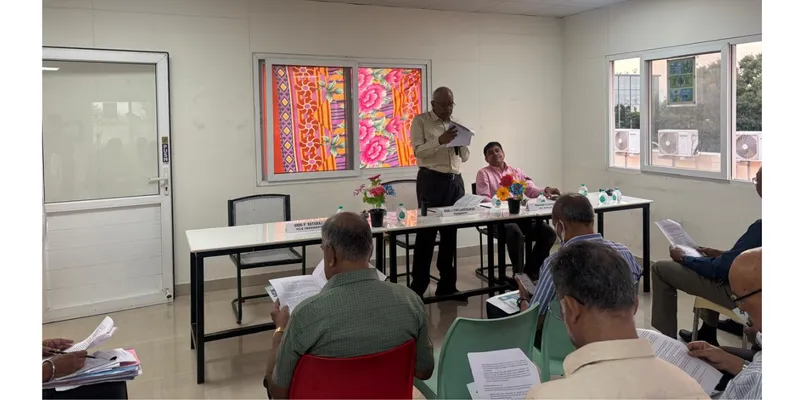
ICF President J. Thulasidharan outlines challenges for the 2026–27 cotton season and calls for policy alignment, technology adoption and higher productivity
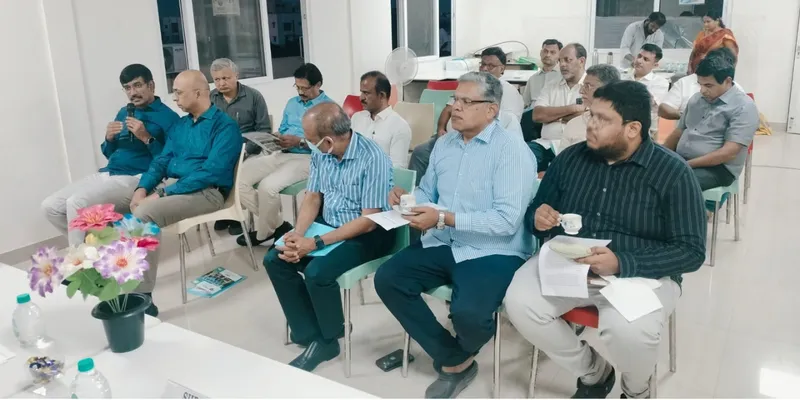
The Indian Cotton Federation (ICF) held its 47th Annual General Meeting in Coimbatore on 30th September 2026, marking the close of the 2025–26 cotton season and the beginning of the 2026–27 marketing year. Addressing members, ICF President Shri J. Thulasidharan reviewed developments across the domestic and international cotton markets and outlined policy priorities for the new season.
The address covered cotton prices, production, export competitiveness, productivity, testing infrastructure, policy engagement and the Federation’s financial position, while also presenting a strategic vision to increase Indian cotton production from 320 lakh bales to 500 lakh bales.
Global and Domestic Market Conditions
According to Thulasidharan, the 2025–26 cotton season was marked by raw material price fluctuations, weather-related factors and higher production and logistics costs.
The continuing 50% tariff imposed by the United States on Indian textile and apparel shipments has placed pressure on downstream exporters. At the same time, progress on bilateral trade agreements has created new market access opportunities. Free Trade Agreements with the United Kingdom and the European Union have opened preferential access to nearly USD 465 billion in combined overseas retail markets.
On the domestic side, cotton production for 2025–26 stabilized between 320 and 325 lakh bales, supported by steady arrivals from Maharashtra and South India.
Domestic cotton prices increased by nearly 25% over the past two months, with rainfall deficits in Gujarat and Telangana and concerns over standing crops cited as contributing factors. In contrast, global ICE cotton benchmarks declined from earlier averages of 86 cents to around 80–82 cents.
The divergence between domestic cotton prices and international futures has put pressure on spinning mill margins and downstream export competitiveness.
Productivity Remains a Key Challenge
Thulasidharan highlighted productivity as a major structural concern for the Indian cotton sector.
India’s national average cotton yield has declined from 565 kg per hectare in 2013–14 to around 430+ kg per hectare today. He emphasized the need to address this decline as the sector seeks to strengthen its long-term viability.
ICF Activities During 2025–26
The Federation outlined several initiatives undertaken during the year to support stakeholders and modernize the cotton value chain.
ICF expanded its central Testing Laboratories with new testing instruments and technical personnel to strengthen fibre evaluation capabilities.
The Federation also conducted specialized workshops for ginners, traders and laboratory technicians, with a focus on modernizing processing standards and reducing contamination.
ICF participated in Bharat Tex 2026, held from 14–17 July 2026 at Bharat Mandapam in New Delhi. During the event, the Federation interacted with more than 6,000 international delegates from 130 countries.
The Federation also continued discussions with the Ministry of Textiles, Ministry of Agriculture and Cotton Corporation of India on issues including minimum support price (MSP) mechanisms, raw cotton import-duty exemptions and the distribution of high-yield certified seeds.
Five Policy Priorities for 2026–27
The ICF President outlined five areas requiring policy attention to support the national “Farm to Fashion” objective of building a USD 350 billion textile economy with USD 100 billion in annual exports by 2030.
1. GST Harmonization:
The Federation called for GST rates to be rationalized to a uniform 5% across the textile value chain to address inverted duty anomalies.
2. Quality Control Orders:
ICF called for pragmatic implementation of QCO norms covering natural and man-made fibres, with the objective of maintaining domestic quality standards without disrupting supply chains.
3. Duty-Free Cotton Imports:
The Federation proposed complete, or 100%, duty relief on raw cotton imports during periods of domestic shortage.
4. Working Capital Financing:
ICF proposed preferential, low-interest credit windows for seasonal cotton procurement by ginners and spinning mills.
5. Cotton Technology Missions:
The Federation called for faster implementation of Mini-Missions on cotton research, particularly to support high-density planting and yield-improving agronomy.
Vision to Increase Production to 500 Lakh Bales
Looking ahead, the Federation has outlined a strategic objective of increasing cotton production from around 320 lakh bales to 500 lakh bales.
Thulasidharan highlighted three areas for focused action.
The first is climate and pest management. Recurring pest infestations, including pink bollworm challenges across northern cotton-growing belts, underline the need for direct industry-farmer programmes. The Federation also highlighted drip irrigation, precision agriculture and resilient cultivation techniques.
The second area is end-to-end digital traceability. With global apparel markets increasingly seeking information on fibre origin, environmental footprint and ethical provenance, ICF is supporting digital traceability, AI-driven grading and transparent logistics.
The third area is collaborative value creation across the cotton chain. The Federation urged growers, ginners, merchants and spinners to focus on long-term risk management, contract farming and soil health rather than short-term spot-market speculation.
Federation Reports Financial Turnaround
The Federation also reported progress in its internal governance and financial position.
ICF conducted its 7th Biennial Conference on 21st–22nd August 2026. Thulasidharan acknowledged the organizing committee and Vice President Shri P. Nataraj, Managing Director of M/s KPR Mill Ltd., for their leadership in organizing the conference.
The Federation stated that it has fully settled its State Bank of India overdraft facilities and outstanding COVID-19 emergency loan accounts. It now operates with positive cash flows and surplus deposits.
To oversee the management of these reserves, the Board will table a resolution at the AGM to formally constitute a dedicated Finance Sub-Committee responsible for treasury and audit operations.
Looking Ahead
Concluding his address, Thulasidharan described cotton as a key component of India’s rural economy and industrial manufacturing sector. He called for the combination of agronomic practices, modern technology and shared accountability across the value chain to strengthen the sector’s future.
He thanked the office bearers, managing committee and members of the Federation for their support before inviting Vice President Shri P. Nataraj to address the gathering.