India-US Trade Deal Not Imminent as India and US Continue Negotiations
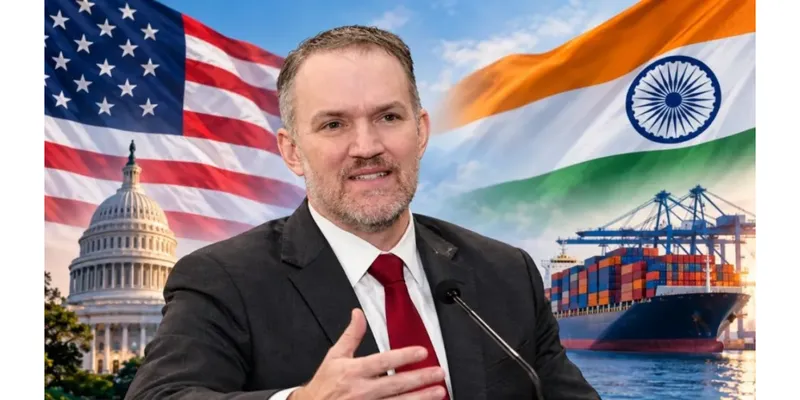
USTR Jamieson Greer says talks are in the final stages, while market access, tariffs, Russian oil and other issues remain under discussion
Negotiations between India and the United States on a bilateral trade agreement continue, but an announcement is not imminent, according to United States Trade Representative (USTR) Jamieson Greer.
Speaking after the G20 Trade Ministers’ Meeting in Milwaukee, Greer said the two sides had identified the remaining issues and were continuing discussions. He described the negotiations as being in the “short strokes”, referring to the concluding phase of the talks, while cautioning that there was no immediate agreement.
Greer also said he had a constructive discussion with Indian Commerce and Industry Minister Piyush Goyal during the G20 meeting, while officials from both countries continued negotiations.
Tariffs and Trade Measures Add Uncertainty
The negotiations are taking place amid changes in the US tariff framework and additional trade investigations.
The US has initiated Section 301 investigations involving issues including forced labour and excess industrial capacity. The tariff situation has also been affected by the US Supreme Court's decision concerning President Donald Trump's emergency tariffs, adding uncertainty to the tariff structure that could ultimately apply under a bilateral agreement.
Another issue is India's continued purchase of Russian oil. The Lindsey O. Graham Sanctioning Russia and Iran Act of 2026 gives the US president authority to impose tariffs of up to 100% on countries, including India and China, that continue purchasing Russian oil and gas.
The issue has become part of the wider India-US trade discussions, with India maintaining that its energy sourcing decisions are linked to national energy requirements.
Market Access Remains a Key Issue
Market access is another important area in the negotiations. India has indicated flexibility on reducing duties on US industrial and agricultural products, while maintaining positions on sensitive agricultural areas, including genetically modified maize and soybean and dairy products.
The US has also raised concerns about India's trade surplus and market-access conditions. According to recent reporting, agricultural access, Russian oil purchases and the bilateral trade imbalance remain among the issues complicating the negotiations.
The negotiations therefore extend beyond tariff reductions to include broader questions concerning market access, trade balances and regulatory measures.
India's Trade Surplus With the US Has Declined
India's bilateral trade surplus with the US has also changed during the period of higher tariffs.
The supplied analysis states that India's trade surplus declined 42% year-on-year between September 2025 and February 2026, when US tariffs of 50% were in place. It further states that the surplus declined 21% year-on-year to $14.7 billion during April-August 2026.
India's exports to the US have remained relatively subdued, while imports from the US have increased, particularly in areas including petroleum products and electronic components.
The broader trade relationship remains significant for India, with the US continuing to be its largest export market. Reuters reported that India's exports to the US reached $42.79 billion between April and August 2026.
Large Purchases and Investment Also Part of Discussions
The negotiations have also included discussions around India's purchases of US products and investments in the United States.
The analysis cites a proposal involving purchases worth $500 billion of American energy, information and communications technology and other products, along with large investments in the US.
Indian companies have also announced investments in the US. The Indian Express reported that Mesabi Metallics, an Essar Group company, announced an $18 billion investment to build an integrated steel company in the United States.
India Looks to Broaden Trade Partnerships
With the India-US negotiations continuing, India is also pursuing trade agreements with other major economies.
The analysis points to the India-European Union trade agreement concluded on January 27, which has not yet been signed into force, as well as India's objective of concluding a trade agreement with Canada by the end of the year.
India is also expected to continue pursuing bilateral and regional trade agreements as it seeks to diversify its trading relationships amid changes in global trade patterns.
For textile and apparel exporters, the outcome of the India-US negotiations will be significant because tariff levels and market-access conditions can influence India's competitiveness in the US market. The current negotiations, however, remain unresolved, with both sides continuing discussions on the remaining issues.