India, US Begin Four-Day Talks to Finalise Interim Trade Agreement
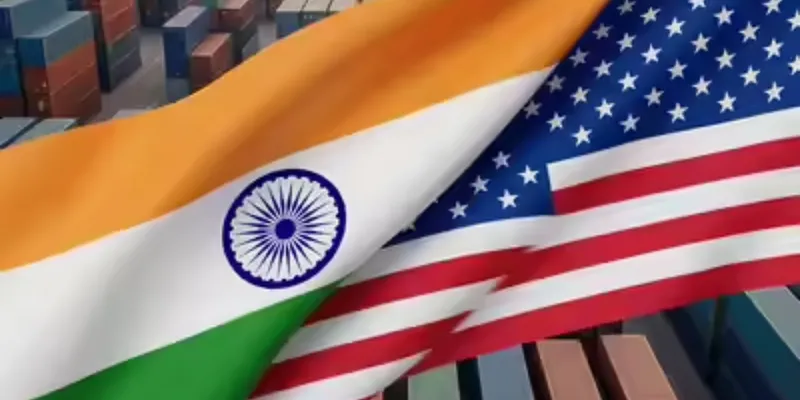
Chief negotiators meet in New Delhi as both sides work on the legal framework and remaining provisions of the proposed trade pact
India and the United States have commenced four days of trade negotiations in New Delhi aimed at finalising the details of the proposed interim trade agreement. The discussions follow the framework agreed upon by both countries on February 7 and are expected to address the remaining elements of the deal before its formal conclusion.
The chief negotiators of India and the United States began a four-day round of trade discussions in New Delhi on Monday to finalise the details of the proposed interim trade agreement.
The US delegation is being led by chief negotiator Brendan Lynch, while India is represented by Darpan Jain, Additional Secretary in the Department of Commerce.
According to the Commerce Ministry, the negotiations are intended to complete the details of the interim agreement and advance discussions under the broader bilateral trade agreement (BTA). Key areas under discussion include market access, non-tariff measures, customs and trade facilitation, investment promotion, and economic security alignment.
On February 7, India and the United States issued a joint statement outlining the contours and framework of the first phase of the bilateral trade agreement, also referred to as the interim trade agreement. The current discussions are focused on finalising the legal text and operational details of that framework.
Under the agreed framework, the United States had committed to reducing tariffs on India to 18 per cent from 50 per cent and had removed the 25 per cent tariff imposed on Indian goods linked to purchases of Russian oil. The remaining 25 per cent tariff was proposed to be reduced to 18 per cent under the arrangement.
Subsequent developments in US trade policy affected the negotiation timeline. On February 20, the US Supreme Court ruled against President Donald Trump’s reciprocal tariffs, which had been imposed under the 1977 International Emergency Economic Powers Act (IEEPA).
Following that ruling, the US President announced a 10 per cent tariff on all countries for a period of 150 days beginning February 24. As a result, a scheduled meeting between the chief negotiators of India and the United States in February was postponed.
Negotiations resumed in April when an Indian delegation led by Darpan Jain visited the United States from April 20–23, 2026. The current visit by the US delegation from June 1–4 is intended to continue those discussions.
The changing tariff environment in the United States is expected to influence the ongoing negotiations, with both sides likely to review aspects of the agreement framework.
Under the proposed framework, India has offered to eliminate or reduce tariffs on a range of US industrial goods and agricultural products, including dried distillers grains (DDGs), red sorghum for animal feed, tree nuts, fresh and processed fruits, soybean oil, wine and spirits, and additional products.
India has also indicated its intention to purchase US$500 billion worth of US energy products, aircraft and aircraft parts, precious metals, technology products, and coking coal over the next five years.
The meeting is considered significant as India currently enjoys a comparative advantage over many trading partners. However, with all US trading partners now subject to a uniform 10 per cent tariff, both countries are examining adjustments to the trade framework.
In March, the Office of the United States Trade Representative (USTR) launched unilateral Section 301 investigations against several countries, including India, relating to excess capacity and allegations involving forced labour in global supply chains.
India has rejected the allegations and requested that the investigations be withdrawn, stating that the initiation notice did not provide sufficient rationale to support the claims.
The United States was India’s second-largest trading partner during 2025-26. India’s exports to the US increased 9.92 per cent to $87.3 billion during the fiscal year, while imports rose 15.95 per cent to $52.9 billion. India’s trade surplus with the US declined to $34.4 billion in 2025-26 from $40.89 billion in 2024-25.