India-UK Trade Deal: Key Benefits, Market Access and Compliance Measures for Businesses
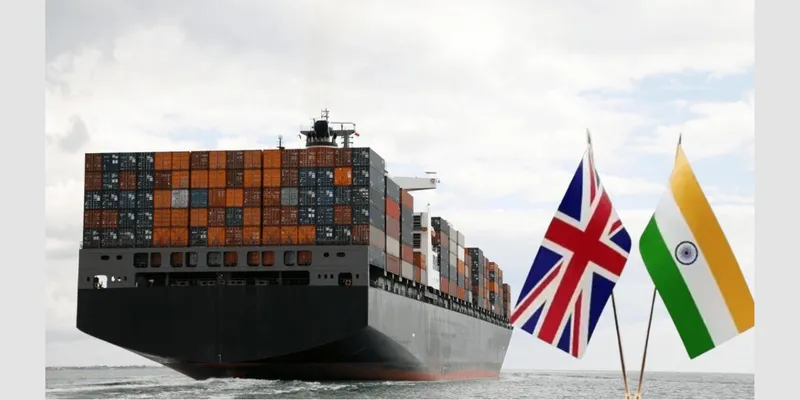
The India-UK Comprehensive Economic and Trade Agreement (CETA) introduces tariff reductions, expanded market access, rules of origin, and new opportunities across goods, services and investment.
The India-UK Comprehensive Economic and Trade Agreement (CETA) has officially come into force. The agreement outlines provisions related to market access, compliance requirements, services, investment and broader trade cooperation between India and the United Kingdom.
Market Access for Indian Exports
India has secured zero-duty market access for nearly 99% of its exports, covering almost 100% of trade value. Products benefiting from duty-free entry include garments, footwear, marine products, gems and jewellery, engineering goods and processed foods—products that currently face import duties of 4–16% in the UK.
In return, India will reduce or eliminate tariffs on 90% of its tariff lines, with 85% becoming fully duty-free over a decade. Textiles, leather, marine products, gems, engineering goods and auto components are identified among the sectors expected to benefit, while British whisky, automobiles and machinery receive phased access to India.
The India-UK CETA represents the first comprehensive free trade agreement for India with extensive coverage across multiple areas, combining tariff liberalisation with commitments covering goods, services and several other areas relevant to bilateral trade.
Impact on Automobiles and Alcoholic Beverages
The agreement provides for tariff reductions, quotas and phased market opening for automobiles and alcoholic beverages.
For passenger vehicles, import duties will reduce from 110% to 10%, with implementation through tariff-rate quotas and phased concessions. The EV (electric vehicle) segment receives concessions from the first year, while measures are structured to support India's domestic EV industry.
The ICE tariff-rate quota begins at a lower level and increases to 37,000 units by year five, while whisky duty is reduced in phases, reaching 75% by year five and 40% by year ten.
Rules of Origin and Compliance
The agreement includes Rules of Origin (RoO) that specify only products manufactured in the UK qualify for preferential tariff treatment, preventing third-country goods from obtaining benefits through minimal processing.
For products such as vehicles, exporters are required to provide a Valid Certificate of Origin. For tariff-rate quota (TRQ) products, a separate TRQ Certificate from the Directorate General of Foreign Trade, valid for 12 months, is required.
The agreement also allows self-certification of origin and requires businesses to correct non-compliant goods within 48 hours. Documentation and data retention systems remain necessary to minimise denial of preferential treatment at the border.
Beyond Tariff Reductions
CETA extends beyond tariff provisions through 31 chapters covering goods, services, investment, digital trade, financial services, intellectual property, government procurement, innovation, sustainability and MSME support.
The agreement also includes government procurement opportunities in transport, green energy and infrastructure for UK bidders, with a 20% local content safeguard.
Mobility provisions include temporary entry for Indian workers on UK assignments without additional social security payments, provisions for three-year stays, an annual quota of up to 1,800 Indian chefs, yoga instructors and classical musicians, and other mobility measures.
Integration with Global Supply Chains
CETA supports deeper integration between India and global supply chains while providing calibrated market access. The agreement is designed to strengthen long-term business relationships and facilitate trade between companies in both countries.
Lessons for Future Trade Agreements
The India-UK agreement combines tariff liberalisation with long implementation periods, tariff-rate quotas for sensitive products, phased reductions and parallel regulatory cooperation. The framework also incorporates detailed provisions covering digital trade, intellectual property, procurement and administrative procedures relevant to implementation.
India has set a target of $100 billion in trade with the UK by 2030, compared with the current trade value of $55–60 billion.