India-UK Trade Agreement Comes Into Force, Implementation Phase Begins
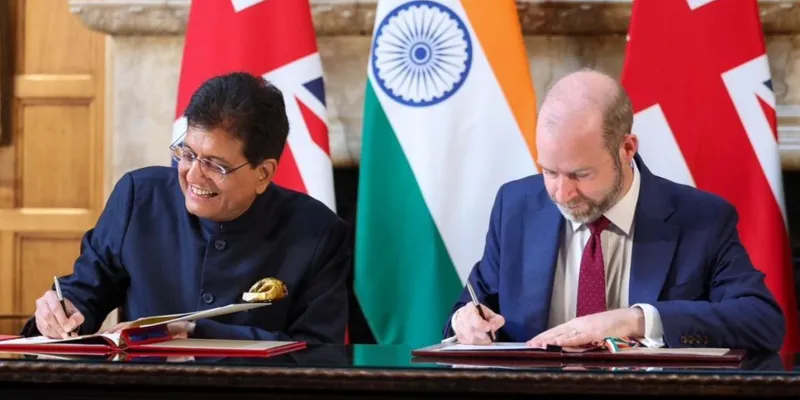
With duty-free access for nearly 99% of India's tariff lines, the India-UK trade pact now shifts focus from negotiations to execution and trade outcomes.
The India-UK Trade Agreement became operational on July 15, bringing into effect one of the most significant bilateral trade arrangements between the two countries. Following more than three years of negotiations and over fourteen rounds of discussions that concluded in 2025, attention now shifts from signing the agreement to ensuring it delivers results in terms of trade, investment and employment.
Under the agreement, nearly 99 per cent of India's tariff lines will now enter the UK duty-free. At the same time, India has begun reducing tariffs on around 90 per cent of British goods. A parallel Double Contribution Convention will prevent workers on short-term assignments from paying social security contributions in both countries, providing relief for Indian professionals working in the UK.
Labour-intensive Indian industries, including textiles, leather, footwear, marine products, gems and jewellery, receive immediate duty-free access to the UK market, where exports previously faced tariffs ranging from 4-16 per cent. The change is expected to benefit employment-intensive manufacturing centres in states such as Tamil Nadu, Gujarat and Punjab.
For the UK, the agreement lowers India's import duty on Scotch whisky from 150 per cent to 75 per cent immediately, with a further reduction to 40 per cent over the next decade. The pact also provides phased market access for automobiles, machinery and financial services.
According to London's estimates, the agreement could increase UK GDP by approximately £4.8 billion over the long term. While India has secured near-immediate market access for exports to the UK, its tariff reductions will be implemented gradually, providing domestic industries with an adjustment period.
Automobile imports under the agreement will remain subject to quotas, limiting benefits primarily to a small number of luxury vehicle manufacturers rather than the broader market. Several sensitive products, including dairy, apples, sugar, gold and smartphones, remain largely outside the scope of tariff concessions.
The agreement has also attracted attention over certain policy issues. Civil society groups associated with the Forum for Trade Justice have expressed concerns that the Comprehensive Economic and Trade Agreement (CETA) framework relies on voluntary rather than compulsory licensing for medicines, which they believe could affect India's public health flexibilities under WTO rules.
Questions have also been raised regarding digital trade provisions that may restrict India's ability to seek source code access for imported software, prompting discussions around regulatory and security considerations. In the UK, farm groups have expressed concerns that Indian antimicrobial-use standards could affect competition for British livestock producers.
Beyond tariff reductions, several non-tariff factors may influence the agreement's effectiveness. These include Britain's tightening steel regulations, its carbon border measures, and compliance with rules of origin, areas that Indian MSMEs will need to navigate as exports expand.
The agreement's long-term impact will depend on implementation processes such as customs registration, origin certification and the extent to which exporters are able to utilise the market access provisions. While July 15 marks the agreement's official commencement, its economic outcomes will be determined through its execution in the years ahead.