India-UK FTA: A New Dawn for Indian Textiles
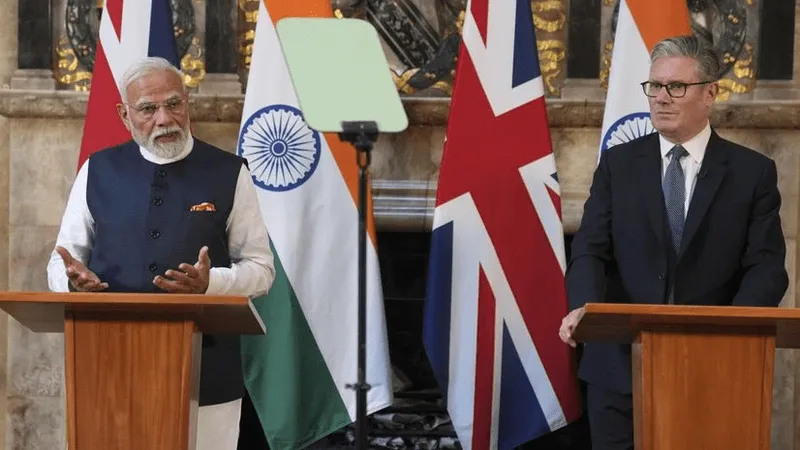
The signing of the Comprehensive Economic and Trade Agreement (CETA) between India and the United Kingdom marks a watershed moment in bilateral trade relations between the world's fourth and sixth largest economies. For India's textile industry, this agreement represents nothing short of a transformation, eliminating decades-old tariff barriers and creating unprecedented access to one of the world's most sophisticated fashion markets.
Understanding the India-UK FTA: The Foundation
The India-UK CETA, signed in the presence of Prime Minister Narendra Modi and UK Prime Minister Sir Keir Starmer, strengthens economic integration between the world's fourth and sixth largest economies. With bilateral trade at $56 billion, both countries target doubling this figure by 2030. The agreement provides duty-free access to the UK market for 99% of India's exports, covering nearly 100% of trade value. Commerce and Industry Minister Piyush Goyal called it "a milestone in trade relations," emphasising how it will "unlock tariff-free access on 99% of Indian exports to the UK, advancing the 'Make in India' initiative."
The Textile Sector: From Disadvantage to Opportunity
India's textile sector stands among the biggest beneficiaries of this agreement. The industry, which faced significant tariff disadvantages in the UK market, will now compete equally with countries like Bangladesh and Pakistan that previously enjoyed preferential access. The UK imports approximately $26.95 billion worth of textiles annually, yet India currently supplies only $1.79 billion. With tariff elimination of 9-12% across 1,143 textile product categories, Indian exporters are positioned to capture significantly larger market share. Mr. Rajeev Gupta, Joint Managing Director of RSWM Ltd., explains: "This pragmatic agreement removes the 9-12% tariff disadvantage, allowing Indian exporters to compete head-on with zero-duty countries like Bangladesh and Pakistan. It reflects growing trust in India's manufacturing capabilities and lays the groundwork for transformative export growth and greater integration with global fashion supply chains."
Market Projections and Growth Potential
Industry analysts project India could gain at least 5% additional UK market share within 1-2 years. This translates to substantial export growth across ready-made garments, home textiles, carpets, and handicrafts. Mr. Ramesh Agarwal, Whole-Time Director of Rupa & Company Limited, notes: "With the UK being a global fashion hub, duty-free access will enhance the competitiveness of Indian products, enabling a level playing field with countries like Bangladesh, Vietnam, and China. We see this as supporting India's larger goal of becoming a major global source for textiles."
Sector-Specific Opportunities
The RMG sector, forming the backbone of India's textile exports, benefits significantly from duty elimination. UK fashion retailers now have compelling economic incentives to source from India. India's strengths in home textiles align well with UK consumer preferences, while growing demand for technical textiles presents new opportunities for manufacturers investing in advanced materials.
Industry Response and Investment Plans
The textile industry's response has been overwhelmingly positive, with companies announcing expansion plans. Mr. Suketu Shah, CEO of Vishal Fabrics Ltd., reflects: "This development supports our direction toward international markets. It makes our products more competitive and encourages further investment in innovation, quality, and capacity." Companies are focusing on capacity expansion, quality enhancement through modern machinery, sustainability initiatives, and strengthening R&D capabilities for UK market preferences.
Sustainability and Environmental Considerations
The FTA brings sustainability challenges alongside opportunities. Mr. Narendra Makwana, CEO of GreenStitch, provides perspective: "The UK–India FTA could unlock £2.9 billion in new textile exports - an 85% increase but with projected 1.4 million tonnes of CO₂e added annually." UK retailers face mounting pressure from net-zero goals and ESG requirements. Makwana adds: "Without measurable improvements in emissions, water use, and circularity, suppliers may gain market access but miss preferred partnerships. Those investing in cleaner production and verified impact data stand to win market leadership."
Implementation Timeline and Market Entry Strategy
The FTA's benefits will not materialise overnight. The agreement requires ratification and implementation procedures that are expected to be completed by the end of 2026. However, industry experts anticipate that UK buyers will begin preliminary groundwork and supplier scouting activities much earlier. The Clothing Manufacturers Association of India (CMAI) notes: "Of course, the 0% duty will only come into place around the end of 2026 (after all necessary approvals and procedures are in place), yet, buyers will start their scouting and preliminary ground work fairly soon." This timeline provides Indian manufacturers with a crucial window to prepare for market entry, invest in quality improvements, and establish relationships with UK buyers and retailers.
Challenges and Preparedness
The textile industry faces challenges in maximizing FTA benefits. UK markets demand high standards for product quality, safety, and compliance. Success requires efficient supply chain management, reliable delivery schedules, and design innovation capabilities that resonate with UK consumer preferences beyond just cost competitiveness.
Industry Leadership Perspective
Dr. Mukesh Kansal, Chairman of CTA Apparels, provides a comprehensive view of the agreement's significance: "The India–UK Free Trade Agreement marks a landmark moment for India's textile and apparel sector. The removal of import duties offers Indian exporters a competitive edge in a mature and high-value market like the United Kingdom." He emphasises the broader implications: "This agreement is poised to unlock higher export volumes, stimulate capacity expansion, and attract new investments into the industry. It provides a timely impetus to manufacturers aiming to strengthen their presence in global supply chains."
Employment and Economic Impact
The FTA is expected to generate significant employment opportunities across India's textile manufacturing hubs. States like Tamil Nadu, Karnataka, Gujarat, Maharashtra, and Andhra Pradesh, which house major textile clusters, are likely to see increased investment and job creation. The agreement's impact extends beyond direct manufacturing employment to include ancillary services such as logistics, quality control, design, and marketing. Small and medium enterprises (MSMEs), which form a significant portion of India's textile sector, are expected to benefit particularly from the simplified trade procedures and market access provisions.
Looking Ahead: Strategic Imperatives
As the industry prepares to capitalise on FTA opportunities, key imperatives include continued investment in technology and innovation, integrating sustainability as a competitive advantage, building UK market intelligence and customer relationships, and collaborative approaches between industry associations, government, and companies to address common challenges.
Conclusion
The India-UK FTA represents a transformative opportunity for India's textile sector, offering unprecedented access to a sophisticated global market. The elimination of tariff barriers positions Indian manufacturers to compete effectively with traditional suppliers. Success requires combining competitive pricing with quality, innovation, sustainability, and reliable service delivery. As Rahul Mehta, Chief Mentor of CMAI, observes: "Duty-free imports from the UK will raise the bar for Indian Brands and Retailers to up their quality, service, and Brand propositions - benefiting the Indian Consumer." For an industry long aspiring to a greater global textile trade share, the India-UK FTA provides the platform to turn aspiration into reality. The next few years will determine how effectively India's textile sector leverages this historic opportunity to achieve its full potential in the global marketplace.