India-UK Free Trade Agreement Set to Take Effect on July 15, Expanding Bilateral Trade Opportunities
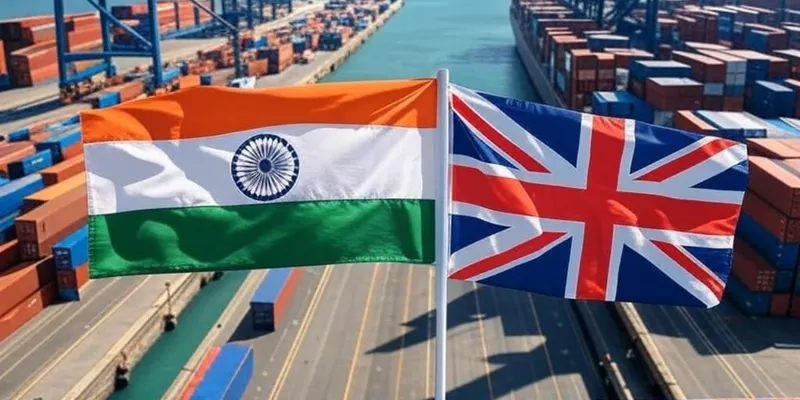
New trade framework introduces tariff reductions, customs cooperation, digital trade provisions, and sector-specific market access across 30 chapters
Trade agreements play an important role in facilitating cross-border commerce, but some agreements have wider economic implications due to the range of sectors they cover. The India-United Kingdom Free Trade Agreement (FTA), formally known as the Comprehensive Economic and Trade Agreement (CETA), is presented as one such agreement, covering a broad range of trade and investment provisions.
India remains the fastest-growing economy in the G-20 and is projected to become the world's third-largest economy within the next five years. The agreement is expected to provide preferential market access for businesses in both countries. According to the article, the FTA is forecast to increase Indian GDP by £5.1 billion, UK GDP by £4.8 billion, and expand bilateral trade by £25.5 billion annually over the long term.
Bilateral trade between India and the United Kingdom reached £48 billion in 2025. From July 15, businesses in both countries will be able to trade under the provisions of the agreement.
Nearly three years of negotiations preceded the conclusion of the agreement. The article states that it is the most economically significant trade agreement completed by the United Kingdom since leaving the European Union and one of the most comprehensive trade agreements concluded by India.
Under the agreement, 99% of U.K. tariff lines will become duty-free for Indian products, while India will remove or reduce tariffs on 90% of its tariff lines for U.K. products.
For India, the agreement is expected to support labour-intensive sectors such as textiles, leather, jewellery, while also contributing to increased exports in services including IT and finance.
For U.K. exports to India, tariff duties are estimated to decline by around £400 million when the agreement comes into effect, increasing to approximately £900 million in later phases. Industries including aerospace, automotives, medical devices, and whiskies are expected to benefit.
The agreement consists of 30 chapters, covering areas including customs procedures, digital trade, services, anti-corruption measures, gender, development, labour, and environmental commitments.
The article notes that improved customs provisions are intended to help goods reach markets more quickly, particularly benefiting small and medium-sized enterprises (SMEs) by reducing administrative procedures.
The services chapter provides market access across key sectors and is intended to offer greater predictability for businesses operating between India and the United Kingdom.
The agreement also includes India's first standalone chapters on anti-corruption, gender, and development, alongside labour and environmental commitments incorporated into a trade agreement.
At the same time, the agreement maintains protections for domestic sectors. India retains protections for dairy products and edible oils, while the United Kingdom continues protections covering sugar, milled rice, pork, chicken, and eggs.
The article states that businesses in both countries are encouraged to explore procurement opportunities, review supply chains under the new rules of origin, and prepare for implementation as the agreement enters into force on July 15.