India-UK CETA Comes Into Force, Expanding Trade and Market Access Across Key Sectors
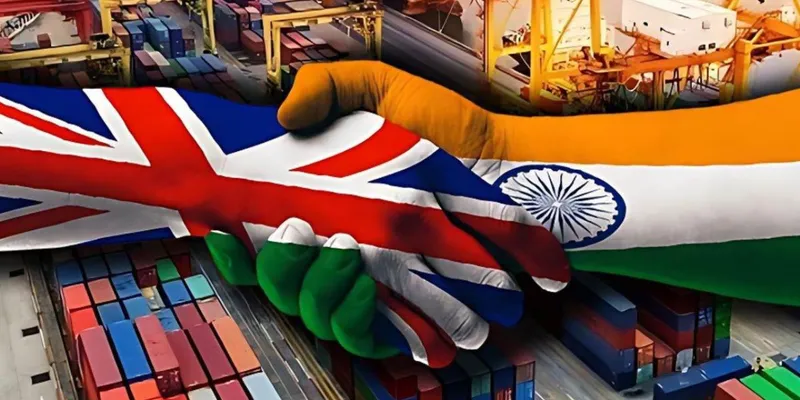
The India-UK Comprehensive Economic and Trade Agreement (CETA) introduces tariff concessions, wider market access, mobility provisions and new opportunities for goods, services and investments.
India and the United Kingdom have officially brought the Comprehensive Economic and Trade Agreement (CETA) into force, marking a new phase in bilateral trade relations. The agreement covers goods, services, investments, professional mobility and regulatory cooperation, while providing tariff concessions across multiple sectors.
India and the United Kingdom on Wednesday formally brought into force the Comprehensive Economic and Trade Agreement (CETA), a bilateral trade agreement aimed at expanding trade, increasing investment and strengthening economic cooperation.
The agreement is expected to accelerate bilateral trade, improve market access for Indian businesses and create opportunities across manufacturing, services and professional sectors. It is accompanied by the Double Contribution Convention (DCC), a separate social security agreement that exempts eligible Indian professionals on temporary assignments in the UK from making local social security contributions. The exemption period has also been extended from three years to five years. The trade pact itself does not include the DCC.
Negotiations for the agreement began in 2021 under the India-UK Enhanced Trade Partnership Roadmap 2030. Following 14 rounds of negotiations, both sides concluded the talks in May 2025, signed the agreement in July 2025, and finalised the accompanying social security pact in February 2026.
A key feature of the agreement is the UK's decision to eliminate customs duties on a broad range of Indian exports. Products covering up to 70 per cent of tariff lines—including processed foods, seafood, engineering goods, auto components, leather products, footwear, textiles, garments, chemicals and several other manufactured goods—will receive duty-free access to the British market.
However, products such as dairy products, cereals, millets, edible oils, oilseeds, apples and several vegetables remain outside the scope of the agreement.
The timing of the agreement is considered significant as India continues to diversify its export markets. Britain imported merchandise worth nearly $929 billion in 2025, while Indian exports to the UK accounted for only $15.2 billion, representing a relatively small share of the UK's total imports. The UK also imported global merchandise exports valued at $934 billion.
Industry participants expect sectors where India's manufacturing capabilities align with Britain's import demand to benefit from the agreement.
Among the expected beneficiaries are textile and apparel exports, with India exporting garments worth $6.3 billion worldwide last year. Food processing companies may also benefit from improved export prospects for vehicles, motorcycles and components, although exporters will continue to comply with the UK's technical standards and regulations.
The chemical, pharmaceutical and engineering sectors are also expected to see increased opportunities. India currently has a limited presence in the UK cheese market, but the agreement is expected to improve pricing competitiveness.
Beyond merchandise trade, CETA expands opportunities in the services sector. British companies receive market access across 137 service sub-sectors, while Indian companies operating in information technology, financial services, engineering, healthcare, education, consulting, telecommunications and other professional services gain expanded opportunities.
The agreement also includes temporary movement provisions for business visitors, intra-company transferees, independent professionals and contractual service providers. Under the agreement, the UK has also created an annual quota of 1,800 Indian chefs, yoga instructors and classical musicians.
The accompanying Double Contribution Convention is expected to provide savings for Indian companies with overseas operations by preventing double social security contributions for employees on temporary assignments.
Another feature of the negotiations relates to steel exports. According to the Ministry of Commerce, about 85 per cent of India's steel shipments to Britain will remain outside the scope of the UK's safeguard measures. Products that fall under the restrictions will continue to receive access through tariff quotas and other agreed arrangements.
The government expects the agreement to generate gains across multiple sectors of the economy. Export opportunities are expected to expand for farmers, food processors and seafood exporters, while labour-intensive industries such as textiles, leather and footwear could see increased export opportunities. MSMEs, start-ups, women-led enterprises and professional service providers are also expected to benefit through improved integration into UK supply chains and greater access to one of the world's largest consumer markets.