India Should Focus on Export Competitiveness Rather Than Tariff-Driven Trade Concessions: Dr. Vijay Kalantri
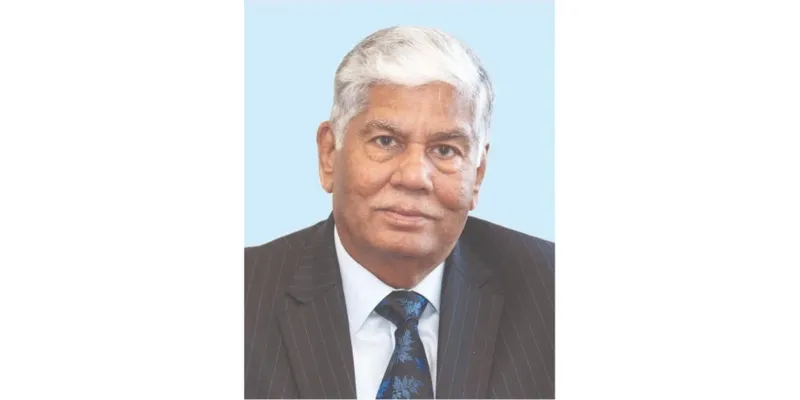
AIAI President cautions against disproportionate concessions in a potential US trade agreement, calls for stronger domestic industries, market diversification and MSME resilience
India should assess the long-term economic implications of a potential trade agreement with the United States rather than prioritising immediate tariff reductions, according to Dr. Vijay Kalantri, Chairman, MVIRDC World Trade Center Mumbai and President, All India Association of Industries (AIAI). Responding to recent tariff developments involving the United States Trade Representative (USTR), he emphasised the importance of export competitiveness, reciprocal trade arrangements and stronger domestic industrial capabilities.
Concerns Over Proposed US Tariffs on Indian Exports
Dr. Vijay Kalantri has called for a careful assessment of India's trade negotiations with the United States, particularly in view of proposed tariff changes and the potential concessions involved in a bilateral trade agreement.
His remarks follow the USTR investigation into structural overcapacity under Section 301 of the US Trade Act, 1974. The proposed tariff on India stands at 25%, which could be reduced to 17% following the conclusion of a bilateral trade agreement.
Dr. Kalantri said trade agreements should be based on mutual economic interests, reciprocity and long-term commercial benefits rather than immediate tariff considerations that could lead to disproportionate concessions.
Marginal Tariff Advantage Raises Questions Over Trade Concessions
Commenting on India's potential competitive position against other exporting countries, Dr. Kalantri said:
“Even if India secures a trade agreement with the United States at a tariff rate of 17%, its competitive advantage over countries such as Bangladesh and Indonesia, which could attract a tariff of 18% under their respective trade agreements, would be a mere one percentage point. India must carefully assess whether the concessions sought in return for such a marginal competitive advantage are commensurate with the long-term interests of its domestic industry, agriculture and exporters,” Dr. Kalantri observed.
He also raised concerns about the growing use of tariffs in economic and geopolitical negotiations. According to him, frequent changes in trade policies can undermine WTO rule-based multilateralism, affect business confidence, disrupt global supply chains and increase uncertainty for exporters and investors.
Export Market Diversification Supports India's Trade Performance
Despite global economic uncertainty and changing tariff conditions, India's export performance over the preceding two quarters has demonstrated resilience, Dr. Kalantri noted.
He attributed part of this performance to the depreciation of the rupee, which has supported export competitiveness to some extent. However, he identified the diversification of India's export markets as another important factor supporting export performance.
He added that India should focus on strengthening its structural competitiveness rather than depending solely on exchange rate movements to support exports.
MSME Resilience and Industrial Capabilities Remain Key Priorities
Dr. Kalantri said the prevailing uncertainty in global trade presents an opportunity for India to strengthen domestic manufacturing capabilities and expand its presence in both established and emerging markets.
He emphasised the need for appropriate policy support, broader market diversification and a comprehensive strategy to improve the resilience of exporters, particularly micro, small and medium enterprises (MSMEs).
Concluding his remarks, he said:
“India must use the present global trade uncertainty as an opportunity to strengthen its domestic industrial capabilities and expand its presence across emerging and established markets. With appropriate policy support, market diversification and a comprehensive strategy to make exporters, particularly MSMEs more resilient, India can withstand external tariff pressures and sustain its export growth. Export competitiveness and diversification must remain central to India’s long-term economic ambitions,” Dr. Kalantri concluded.