India Must Focus on Execution to Become the World’s Trusted Textile Manufacturing Hub
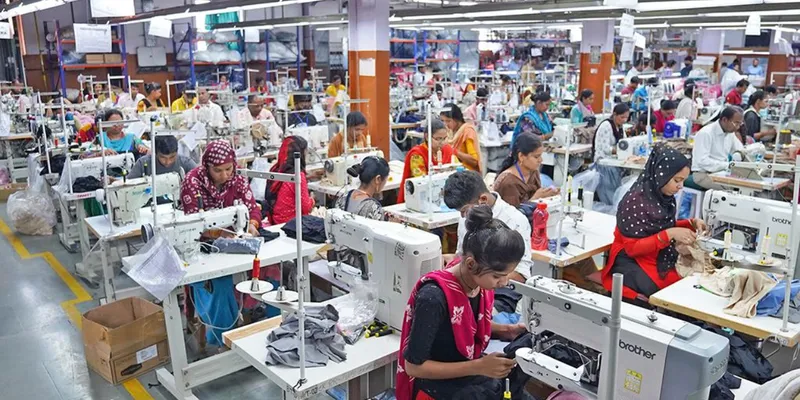
ASSOCHAM’s Updeep Singh Chhatwal says India’s complete textile value chain, policy support and global supply chain shifts present a major opportunity, provided execution keeps pace with ambition.
As global supply chains continue to diversify, India has an opportunity to strengthen its position as a preferred textile manufacturing destination. According to Updeep Singh Chhatwal, Chairman, ASSOCHAM National Council on Textiles and Technical Textiles, the next phase of growth will depend not only on capacity but also on execution, investment and policy certainty.
Global supply chains are undergoing significant changes, with international buyers increasingly looking for manufacturing partners that offer resilience, diversification and reliability. Against this backdrop, India has the opportunity to strengthen its role in global textile manufacturing, although its current textile and apparel exports remain at approximately USD 37 billion, below the sector's long-term potential.
According to Updeep Singh Chhatwal, India already possesses many of the essential elements required for growth, including a complete textile value chain, established manufacturing capabilities, a large domestic market and a young workforce. However, he notes that these advantages alone are insufficient without investment, policy certainty and effective execution.
-300x300.webp?2026-07-16T07:57:34.101Z)
India has set a target of achieving USD 100 billion in textile and apparel exports by 2030-31 while expanding into a USD 350 billion textile economy. Reaching this objective would require one of the largest investment cycles in the sector's history.
The country's textile and apparel industry is currently valued at approximately USD 194 billion, comprising exports of around USD 37 billion and a domestic market of nearly USD 157 billion. Achieving the 2030-31 vision would require creating almost USD 156 billion in additional market opportunities over the next five years, representing structural transformation rather than incremental growth.
Industry assessments indicate that nearly USD 60 billion in fresh investment may be required across the textile value chain, covering fibre and spinning, weaving, processing, garmenting and technical textiles. Beyond increasing exports, such investment could generate employment, strengthen rural economies, expand manufacturing capabilities and improve India's participation in global value chains.
The article notes that textile competitiveness is no longer determined solely by production cost. Global buyers now evaluate sourcing destinations based on reliability, compliance, sustainability, traceability, resilience and execution capability. As a result, long-term buyer confidence has become a key competitive advantage.
The changing global sourcing landscape presents India with an opportunity to position itself not only as a larger textile producer but also as a trusted manufacturing partner. This opportunity is supported by three developments occurring simultaneously.
First, policy initiatives such as PM MITRA, Production Linked Incentive (PLI) schemes and continued support for technical textiles indicate recognition of textiles as a strategic manufacturing sector.
Second, administrative reforms aimed at simplifying compliance, improving infrastructure and enhancing the ease of doing business are intended to strengthen investment competitiveness.
Third, companies across the textile value chain are evaluating capacity expansion, technology upgrades and sustainability initiatives, reflecting industry readiness for investment.
The article states that strong political leadership, governance and industrial investment together can create manufacturing ecosystems capable of delivering sustained growth over future decades.
Recent trade agreements and ongoing negotiations are also addressing long-standing market access challenges. The India-UK FTA, along with negotiations involving the European Union and other key trading partners, is expected to improve India's access to international markets. However, the article notes that preferential tariffs alone are insufficient without competitive supply chains capable of converting market access into exports.
Raw material competitiveness also remains a priority. The article highlights the need for continued reforms through mechanisms such as RoSCTL and RoDTEP, along with predictable export policies, to offset embedded taxes and improve export competitiveness amid rising domestic costs.
The article further emphasises the importance of strengthening India's textile machinery ecosystem. It states that while India continues to import significant volumes of advanced machinery, greater emphasis should be placed on domestic manufacturing of textile machinery through foreign direct investment, technology partnerships and phased localisation.
Technical textiles are identified as another major growth area. Applications ranging from geotextiles and filtration fabrics to defence and industrial solutions are expected to create opportunities for India to expand its presence in high-value manufacturing.
The article concludes that the "China Plus One" strategy is increasingly influencing sourcing decisions, with global buyers prioritising resilience, diversification and trusted manufacturing partners. It notes that India's opportunity extends beyond increasing export volumes to becoming a dependable manufacturing ecosystem capable of meeting global demand through sustained policy support, investment and execution.