India May Raise Export Tax Refund Outlay to ₹2 Trillion
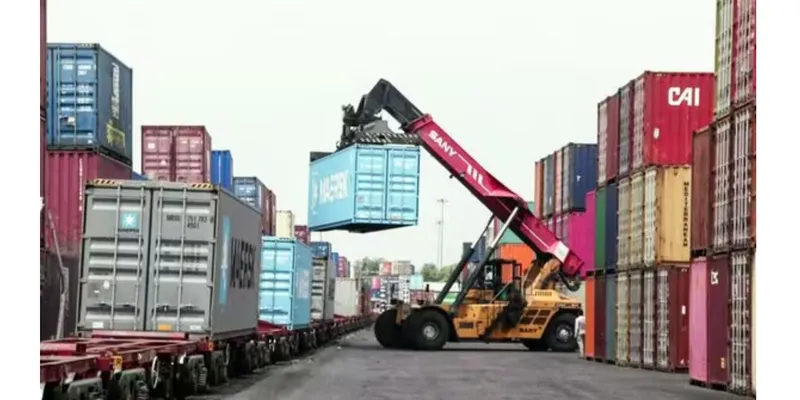
Centre considers higher RoDTEP and RoSCTL allocations over five years
The Centre is preparing to increase allocations under two key export tax refund schemes, with the combined outlay proposed to reach almost ₹2 trillion over the next five years.
The programmes involved are the Remission of Duties and Taxes on Exported Products (RoDTEP) and the Rebate of State and Central Taxes and Levies (RoSCTL). The move is aimed at easing exporters’ liquidity pressures while providing support amid geopolitical conflicts, according to three people aware of the deliberations who spoke to Mint.
Under the proposal, the Commerce and Industry Ministry is seeking a RoDTEP corpus of more than ₹1.3 trillion for the five years through FY26. The Textiles Ministry is seeking a nearly 50% increase in RoSCTL allocation to ₹65,000 crore.
The proposals from the Commerce and Textiles ministries are likely to be placed before the Cabinet for approval within a month, according to the people cited.
RoDTEP and RoSCTL expenditure
Budget documents show expenditure under the two schemes over the recent financial years as follows:
Financial Year | RoDTEP (₹ crore) | RoSCTL (₹ crore) |
|---|---|---|
FY22 | 12,017 | 9,176 |
FY23 | 13,175 | 7,659 |
FY24 | 15,019 | 8,033 |
FY25 | 18,313 | 8,565 |
FY26 | 18,233 | 10,000 |
RoDTEP provides refunds of duties and taxes that are not otherwise refunded, while RoSCTL covers the rebate of state and central taxes and levies for eligible textile and apparel exports.
Exporters seek greater predictability
The proposed increase assumes significance as exporters, particularly small and medium-sized businesses in labour-intensive sectors, continue to deal with higher logistics costs and supply-chain disruptions.
The government expects exporters to increase dispatches in the coming years, supported by recent free trade agreements with economies including the UAE, the UK and the EU once the West Asia conflict abates, according to the people cited.
The objective is to keep exports zero-rated in line with global practices, under which exports are not supposed to carry domestic taxes. Eligible exporters receive refunds ranging from 0.3% to about 4.5% of the freight-on-board value of consignments under RoDTEP, and from 7% to 8.2% under RoSCTL, depending on the products, according to industry executives.
Export bodies have been seeking more predictable and enhanced rates under the two schemes to help exporters price contracts more effectively.
RoSCTL rates are often revised downwards when budget allocations fall short, creating uncertainty for the industry. A larger committed outlay for five years would provide greater visibility and predictability of refunds while preventing interim cuts, industry executives said.
Schemes cover different export-related taxes
Through RoDTEP and RoSCTL, the government refunds hidden central and local taxes, including fuel, electricity, stamp duty and agricultural fees, incurred in producing exported goods.
RoDTEP applies across a broader range of sectors, including exporters operating in bonded warehouses, while the RoSCTL programme is meant only for the textiles and apparel sector.
Government seeks Cabinet approval
The proposals are expected to be submitted for Cabinet approval within a month. The proposed continuation and higher allocations are being considered as ministries assess exporters’ requirements and the expected increase in dispatches.
The government is also considering extending about a dozen flagship welfare and development schemes, including RoSCTL, according to the report.
Exporters have been asking for more predictable and enhanced rates under the two schemes, particularly as they seek greater certainty while entering into contracts.
Ajay Sahai, director general and chief executive officer of the Federation of Indian Export Organisations (FIEO), said, “The continuation of both the schemes with adequate allocation for another five years would be extremely important, as it signals policy stability at a very challenging time for exporters.”
He added that while refunds will not increase exporters’ profitability, they will enhance their competitiveness in global markets by reimbursing taxes they are not required to pay.