India Continues Talks with US for Concessional Access to Textile Goods Amid New Tariff Measures
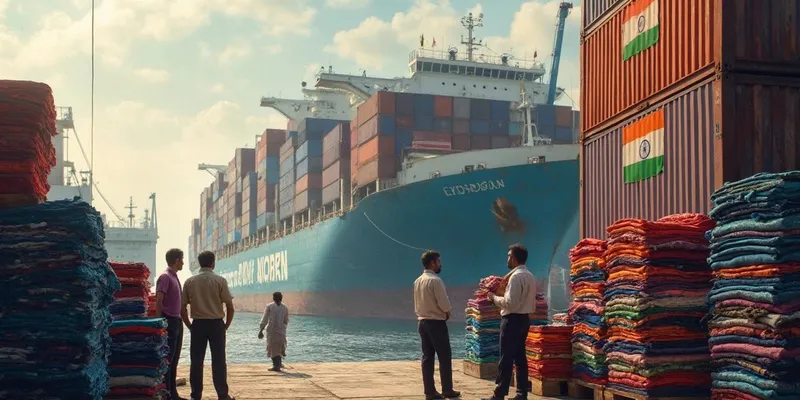
Government says 45% of Indian exports remain outside the scope of the additional 10% US duty while negotiations on a textile-specific mechanism continue.
The Government of India has said it is continuing discussions with the United States on establishing a mechanism for concessional access for Indian textile goods. The statement comes after the US imposed an additional 10% tariff on India and 16 other countries under measures related to imports linked to forced labour.
The Government has stated that it remains engaged with the United States to establish a mechanism for concessional access for Indian textile goods. At the same time, it said that 45% of India's exports to the US remain outside the scope of the newly announced tariffs and highlighted that India has been placed in the lower tier of additional tariff measures.
According to a statement issued by the commerce department, India's sustained engagement with the US resulted in the country being included in the lower tariff category under the final measures, providing what it described as a relative advantage to Indian exports in key sectors.
The statement was issued a day after the US imposed an additional 10% tariff on India and 16 other countries over concerns related to imports produced using forced labour. Nearly 40 other countries face an additional tariff of 12.5%.
The government noted that while India had earlier questioned the USTR investigation and maintained that domestic laws do not permit the use of forced labour, the latest statement focused on the government's continued engagement with the US throughout the Section 301 investigation conducted under the US Trade Act.
It further stated that 45% of Indian goods exported to the US are not covered by the additional tariffs. Products such as generic pharmaceuticals, smartphones, and certain other specified items continue to remain outside the scope of the additional 10% duty.
The statement also clarified that products already covered under Section 232 measures, including steel, aluminium and auto parts, are not subject to the additional 10% duty.
According to the government, the remaining 55% of exports will attract the additional 10% tariff. However, it noted that India's tariff incidence remains comparatively lower than that of most other economies covered by the investigation.
Responding to concerns over the absence of a textile and apparel tariff-rate quota (TRQ) exemption for India under the new Section 301 tariffs, the government said the textile-specific mechanism mentioned in the final measures has not yet been established or operationalised.
The statement added that India will continue discussions with the United States on this issue as part of the ongoing negotiations for the India-US Bilateral Trade Agreement.
It also noted that the announced exemption applies to specified quantities of textile and apparel exports from Bangladesh, Cambodia, Indonesia, and Malaysia that use US-origin cotton and fibre.