India, Canada Resume CEPA Talks, Focus on Trade Cooperation and Market Access
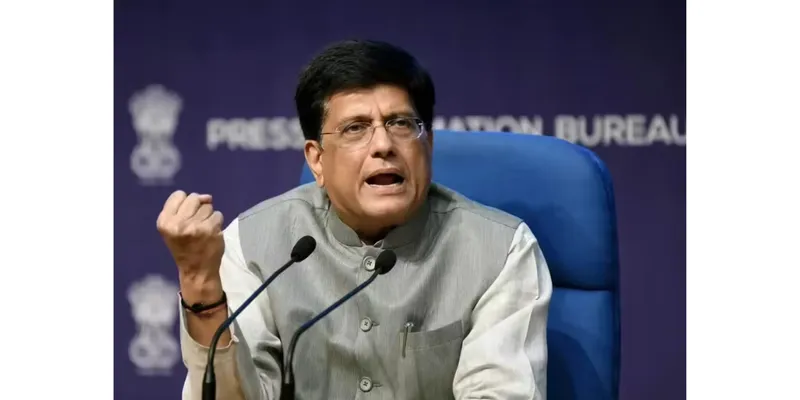
India and Canada focus on ‘low-hanging fruit’ and convergence areas as third round of CEPA negotiations continues in Ottawa
India and Canada have decided to prioritise areas of mutual agreement and avoid sensitive sectors during discussions on the proposed free trade agreement between the two countries. Commerce and Industry Minister Piyush Goyal said the negotiations are currently focused on “low-hanging fruit” and sectors where convergence is possible.
The two countries are negotiating a Comprehensive Economic Partnership Agreement (CEPA), with the third round of talks underway in Ottawa. Piyush Goyal made the remarks during his three-day official visit to Canada.
Focus on Areas of Convergence
“I remember when I was talking to Mr Maninder Sidhu (Canada’s trade minister) about speeding up CEPA negotiations, one of the first elementary decisions we both took was that we won’t make perfect the enemy of the good.
“Let’s capture the low-hanging fruit. Let’s look at areas of convergence. Let’s leave the sensitive things out of the agreement. If something is sensitive for Canada, no sense in trying to egg on and trying to get that into the CEPA. Likewise, if something is sensitive for India or the Indian public or Indian businesses, no sense that we break our heads trying to navigate that path,” Goyal said while addressing the Ontario Centre of Innovation on May 27.
Under such agreements, India does not grant market access in areas such as agri-commodities and dairy.
Bilateral Trade Target Set at $50 Billion
Both countries are working to conclude the negotiations for the proposed agreement by year-end. India and Canada have also set a target to increase bilateral trade from the current $17 billion to $50 billion by 2030.
Trade agreements of this nature generally reduce or eliminate import duties on a large number of products traded between partner countries. They also simplify norms for services trade and encourage investments.
Investment and Infrastructure Discussions
During his visit, Goyal met government representatives, businesses, investment companies, pension funds, and insurance firms.
Speaking about investment opportunities, he said India is recognised for protecting intellectual property rights and currently has the third-largest startup ecosystem globally, with about 2.3 lakh entities registered as startups.
“The digital public infrastructure is another area where India has demonstrated tremendous capabilities to the world, as well as offered itself and these technologies for wider public good across the world,” Goyal said, adding that sectors such as AI, cleantech, agritech, and deep tech hold significant potential for bilateral cooperation.
During meetings with Jo Taylor, President and CEO of Ontario Teachers’ Pension Plan, and John Graham, President and CEO of CPP Investments, discussions focused on expanding long-term institutional investments in India across infrastructure, logistics, renewable energy, transportation, financial services, and digital infrastructure.