Why Fashion Brands Are Scaling Apparel Manufacturing to Vietnam and India
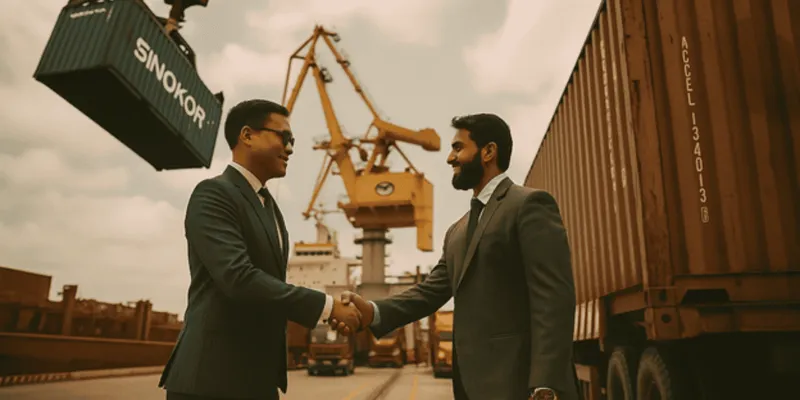
In a post-pandemic world where fashion supply chains move faster, brands can no longer rely on a single sourcing country. After COVID and tariffs, fashion brands have learned the hard truth: building a supply chain around China alone is too fragile to sustain long-term growth. Smart sourcing now means China+2 or even China+3 models.
For fashion entrepreneurs looking to scale production or launch a clothing line, finding reliable apparel manufacturers in Asia often leads to Vietnam or India—two of the region’s most competitive hubs for fabric sourcing and garment production. With India’s sprawling spinner base and Vietnam’s thousands of cut-and-sew factories, you’re not tied to one vendor. If one region floods or delays, backup exists.
Fashion Brands Diversify Supply Chains with India–Vietnam Production
As the largest exporter of raw materials, particularly cotton and cotton yarn, India stands to gain from a more structured engagement with Vietnam’s textile and garment exporters, where vertical integration in apparel manufacturing can unlock greater economic value for both parties. India’s strength lies upstream—in growing and spinning. Vietnam shines downstream—in cutting, sewing, finishing, and logistics. When paired, the two create a natural flow of value that avoids over-reliance on a single market.
China-Dependent Inputs in Vietnam Garment Factories Slow Down India–Vietnam Sourcing Models
Vietnam’s continued reliance on Chinese suppliers limits the resilience fashion brands seek. China still supplies more than half of all textile raw materials used in Vietnam’s textile and garment manufacturing sector. As highlighted in a recent Business NewsWire analysis of post-China OEM/ODM supplier trends, brands shifting away from China often underestimate how deeply integrated Chinese components remain in Vietnam’s garment manufacturing model. A deeper understanding of Vietnam’s garment manufacturing ecosystem can give fashion entrepreneurs a strategic edge in planning multi-step production workflows. Diversifying to India or Bangladesh—both for raw materials and trims, is becoming an imperative strategy, and not merely a backup plan.
However, even when you source Indian yarn, Vietnam’s cut-and-sew factories may still be using Chinese lining, zippers, or blended fabrics. Vietnam’s factories are optimized for inputs from China or Korea—meaning Indian-origin materials may need adjustments in dyeing, cutting, or finishing lines, which also takes time. But if raw material logistics are handled strategically, Vietnam’s garment factories deliver unmatched production speed. Once raw materials reach Vietnam, things move fast. Vietnam’s well-oiled garment factories are known for their efficiency, workforce reliability, and fast sampling-to-shipping cycles, especially for sportswear, fast fashion, and high-MOQ basics.
How India–Vietnam Collaboration Can Offset Rising Garment Export Tariffs
The new U.S. import tariffs are expected to raise export costs for textile and garment products from both Vietnam and India. Bilateral agreements could unlock the next stage of India–Vietnam textile cooperation. Stronger India–Vietnam relations in the textile industry could protect both nations from rising global tariffs and supply disruptions.
India’s raw materials increasingly comply with BCI, GOTS, and Fair Trade standards. Vietnam’s Tier 1 factories are aligned with SLCP, Higg Index, and global audit frameworks. With the right structuring, your India-Vietnam supply chain can optimize duty savings, origin rules, and tariff exemptions.
Why India–Vietnam Garment Supply Chains Are Still Hard to Coordinate
In practice, fast fashion retailers need more than cost savings—they need predictable delivery across India–Vietnam textile routes. Despite their complementary roles, logistics between Indian ports and Vietnamese factories remains inefficient. And unless supply chain friction is smoothed, fashion brands may start looking elsewhere for speed and certainty.
What was once a strategic edge can quickly become a persistent risk in the eyes of global procurement executives. Which is why some experts are calling for government-backed investment in bilateral logistics corridors. India’s export logistics remain clunky, with port congestion, poor rail freight integration, and regulatory paperwork adding days. Vietnam’s garment lead times are fast—but only once the fabric is actually there.
Managing two supply chains means double the headaches: multiple time zones, different QC standards, separate inspections, and unsynced production calendars. Your purchase order spans two countries, two currencies, and three cultures. When delivery is delayed or a defect surfaces, who’s liable? The Indian spinner blames the Vietnamese mill. The mill blames your shipping agent. Multi-region sourcing kills ownership. When everyone’s responsible, no one is. However, with the right partners and logistics strategy, coordination becomes a strength.
Real-World Brand Examples of India–Vietnam Supply Chain Partnerships That Reduce Risk and Improve Speed
Global fashion companies are proving that India–Vietnam manufacturing integration is not only viable but scalable. Both countries offer the capacity to scale—without sacrificing control over production stages. From athleisure brands using Indian modal-blend fabric stitched in Binh Duong, to luxury cotton shirts spun in Coimbatore and assembled in Da Nang—or sneakers produced in a shoes factory in Vietnam using Indian synthetic uppers—real-world case studies show this hybrid model is more than theory. This is not just an experiment—it's evolution.
Take a look at the brands dominating the global apparel sector, and it becomes clear that this dual-country sourcing model is being actively implemented by industry leaders—including Nike, Adidas, H&M, Gap, Puma, Uniqlo, Levi’s, Lululemon, and Under Armour. Even regional players like Tex Corp and SEVEN have operations in both countries to serve global buyers. These cross-border sourcing models rely on India for upstream raw materials—while leveraging Vietnam for high-volume apparel production.
Tomorrow’s Top Brands Are Already Sourcing From India and Vietnam
Want lower costs without sacrificing speed? China is no longer the safest bet. One port shuts down. One policy changes. That’s all it takes to halt your supply chain—unless, like top brands, you engineer redundancy at the foundation. Fashion’s next sourcing revolution is already here: India grows it, Vietnam sews it. However, to tap into India’s textile strengths and Vietnam’s manufacturing speed, it requires tight logistics control, vetted partners in both countries, contingency planning at every stage, and a clear roadmap. This is exactly how leading global fashion brands are restructuring supply chains post-China. These brands no longer gamble on single-country dependencies—they build redundancies into their sourcing DNA.