India’s Textile Sector Moves Toward a Circular, Data-Driven Future
MISSION SUSTAINABLE–BHARAT–2047
Data Is the New Thread: Weaving India’s Textile Sector Into a Circular Powerhouse
As India’s textile industry navigates a period of deep transformation, one element has become indispensable to the sector’s sustainable future: data. Robust, transparent and traceable data systems are now central to linking climate commitments with commercial realities—especially as global markets tighten their sustainability rules. The four-year InTex India project, led by UNEP with support from Denmark, is pushing the industry toward circularity, making structured data the foundation for long-term competitiveness.
In this evolving landscape, HEWA (Home Textile Exporters' Welfare Association) has pledged to work closely with industry bodies to support the adoption of UNEP’s Product Environmental Footprint (PEF) methodology. The PEF framework, which assesses a product’s total ecological footprint from raw material procurement to disposal, is increasingly viewed as essential to advancing the nation’s vision of VIKSIT BHARAT–2047.
Although the announcement was made earlier, it remains an important leadership development for the company and the industry.
The New Data Imperative
A wave of regulatory change is reshaping the global textile marketplace. The European Union’s proposed Ecodesign for Sustainable Products Regulation (ESPR) and the Digital Product Passport (DPP) framework introduce stringent reporting expectations for all textile imports. These rules demand granular information on product composition, environmental impact, sourcing, and end-of-life pathways.
For India—whose textile and apparel exports touched $37.7 billion in 2024—these rules offer both risk and opportunity. The adoption of PEF will be especially critical for India’s SME-driven clusters such as Surat and Karur, which must now document the entire lifecycle of their products, including raw materials, manufacturing, logistics, usage, and waste streams.
Industry bodies including AEPC, CITI, and regional associations such as the Tiruppur Exporters’ Association are already working to decode these new expectations for exporters.
Yet the challenge falls heaviest on SMEs, which form the backbone of India’s textile ecosystem but often lack the technical and financial bandwidth to build sophisticated data systems.
The SME Challenge: Bridging the Data Divide
Across textile hubs like Surat, Karur, Salem, Dindigul, and Perundurai, small manufacturers face a steep climb. They grapple with:
- Limited budgets for advanced data-management tools
- Shortages of trained personnel familiar with PEF and carbon accounting
- Complex multi-tier supply chains
- Weak digital infrastructure
Industry associations have responded with targeted support. AEPC is rolling out training programmes on sustainability reporting, while bodies like KTMEA are building peer-learning networks where early adopters mentor other cluster members.
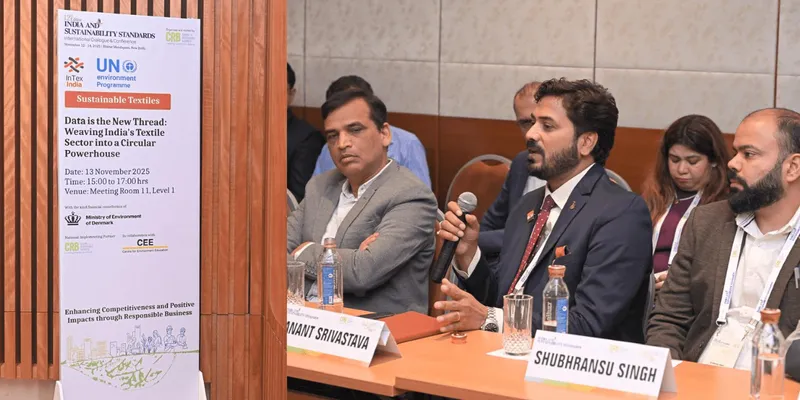
During the 12th Edition of the India and Sustainability Standards (ISS) International Dialogue and Conference at Bharat Mandapam, New Delhi (12–14 November 2025), HEWA President Anant Srivastava exhorted all big brands and manufacturing companies to share their experiences and success stories of implemention of UNEP's Product Environmental Footprint (PEF) methodology of data collection further to be used by MSME's of textile industry.
Brand-Level Transformation
Forward-looking Indian brands that supply global markets are already reshaping their data ecosystems. Many are moving toward blockchain or cloud-based traceability solutions that document a product’s journey from fibre to finished output with immutable records.
Rather than shifting the entire burden onto suppliers, these brands are co-investing in capability-building—funding software solutions, developing shared platforms, deploying sustainability teams, and linking data compliance to commercial rewards such as better pricing or long-term contracts.
This collaborative approach is helping strengthen data maturity across the supply chain.
Engaging Tier 2 and Tier 3 Suppliers
The environmental hotspots of the textile chain—dyeing units, yarn producers, fabric mills—often operate with limited visibility. Reaching them requires collective, cluster-level engagement.
SMEs in deeper supply tiers need:
- Simplified tools
- Mobile-based interfaces
- Vernacular language support
- Automated calculations for key metrics
Associations play a critical role here as trusted intermediaries, helping suppliers understand requirements without fear of losing business. Cluster-level aggregated reporting can also ease the burden while maintaining clarity.
Stakeholder Collaboration: Defining Roles
The shift toward circular textiles hinges on coordinated, multilevel cooperation:
Government
Must set transparent sustainability policies, align Indian standards with global norms, provide incentives, and invest in infrastructure such as CETPs and renewable energy.
Industry Associations
Bridge policy and practice, interpret regulations, run training programmes, and build tools tailored to Indian MSMEs.
Brands & Buyers
Need to operate as development partners by harmonising data requirements, offering technical support, and committing to long-term relationships.
Technology Providers
Should deliver cost-effective, interoperable solutions compatible with local constraints, including open-source systems.
Financial Institutions
Can accelerate progress by linking climate performance with financing terms and offering green credit lines.
Immediate Actions to Build Momentum
Even without fully matured systems, clusters can begin with simple steps such as:
- Tracking basic metrics like energy and water use
- Creating early-adopter case studies
- Organising existing operational data for sustainability reporting
- Investing in shared cluster-level tools, testing labs, and reporting systems
- Producing multilingual video tutorials and implementation guides
A strong emphasis on showing SMEs the tangible business benefits—lower resource costs, global market access—will help build long-term buy-in.
The Path Forward
As India positions itself for a circular future, data will become one of its most valuable strategic assets. The transition demands sustained investment, cluster-level cooperation, and support for SMEs operating in deeper supply tiers. Technology must remain people-centric, and data must translate into measurable action rather than mere documentation.
For India’s 45 million textile workers and the communities that rely on them, this shift represents a vital opportunity to secure a competitive, sustainable, and globally relevant future. With inclusive, practical, and transparent data systems, India can weave its rich textile legacy into a resilient circular economy.