Flying Electric Ferries to Revolutionize Maldives Travel
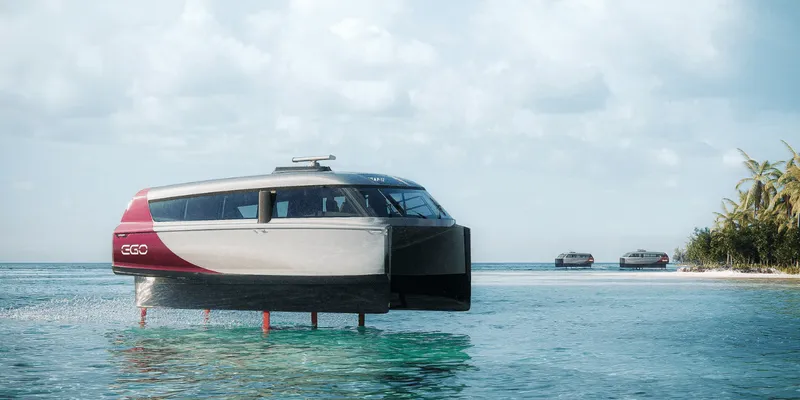
Sweden’s Candela P-12 hydrofoil ferries to transform Maldivian transport with zero emissions and a smooth, seasickness-free ride.
The Maldives is set to welcome the world’s first fleet of “flying” electric ferries in 2026. Built by Swedish innovator Candela, the P-12 electric hydrofoil vessels will drastically reduce marine pollution and deliver smooth, quiet travel — redefining how tourists experience island transfers.
A new era of sustainable travel is on the horizon for the Maldives. In 2026, tourists will be able to board the Candela P-12, the world’s first electric “flying ferry,” replacing the nation’s traditional gasoline-powered speedboats with a clean, high-speed, and seasickness-free alternative.
Developed in Sweden, the Candela P-12 has been hailed as a breakthrough in maritime engineering. The Maldivian transport company Ego Shuttle has ordered ten of these advanced vessels, each capable of “flying” 1.5 meters above the ocean surface at speeds unmatched by any other electric ship. The P-12’s efficiency comes from two computer-controlled hydrofoils that lift the hull out of the water, reducing drag and cutting energy use by 80% — enabling long-distance, high-speed trips between Malé International Airport and the outer island atolls.
The introduction of the P-12 addresses one of the Maldives’ most pressing sustainability issues — pollution from the conventional twin-outboard speedboats that serve its tourism industry. These boats consume up to five liters of gasoline per mile, nearly 15 times more than a bus, making them among the largest sources of CO₂ emissions in the country. In addition, their strong wakes damage coral reefs, and their noisy engines disturb marine life.
“Until now, electrifying water transport wasn’t feasible because traditional hulls were too inefficient for battery power,” explains Shabir Walji, CEO of Ego Shuttle. “The Candela P-12 changes that — offering the speed, range, and efficiency to replace fossil-fuel boats while preserving this unique marine ecosystem.”
Once airborne, the P-12 glides quietly, displacing almost no water and producing a wake of less than 10 centimeters — comparable to that of a small dinghy. Its near-silent electric propulsion system eliminates both emissions and noise, protecting coral habitats and coastal areas from erosion.
For travelers, the experience is as luxurious as it is sustainable. The P-12 promises to transform one of the least pleasant parts of a Maldivian vacation — the rough, noisy, and fuel-scented speedboat ride. Using a real-time Flight Controller that continuously adjusts the hydrofoils, the ferry ensures an ultra-smooth ride, earning it the nickname of a “digital pill against seasickness.”
Passengers will also enjoy a host of onboard comforts, including Wi-Fi, entertainment screens, refreshments, accessibility for strollers and wheelchairs, and charging ports for electronic devices.
“It’s a win-win for passengers and the planet,” says Gustav Hasselskog, founder and CEO of Candela. “We’re proud to partner with Ego Shuttles to bring our hydrofoil innovation to the Maldives — one of the world’s most cherished and biodiverse regions — and make a real impact on sustainable tourism.”
The first fleet of Ego’s Candela P-12 ferries will begin operations in 2026, connecting Malé with nearby islands. In addition, Ego Shuttles plans to establish a local logistics and service hub, which will train Maldivian technicians and create new green jobs.
The Candela P-12’s success is already proven in Stockholm’s public transport network, where it has halved commuting times and earned widespread passenger approval.
“We’re proud to introduce this world-first innovation to the Maldives,” adds Walji. “Supported by the government’s ambitious net-zero by 2030 goal, this project reinforces the Maldives’ global leadership in climate action. It’s a powerful example of how small island nations can drive meaningful change.”