EU’s AUTOLOOP Project Advances Integrated Textile Recycling
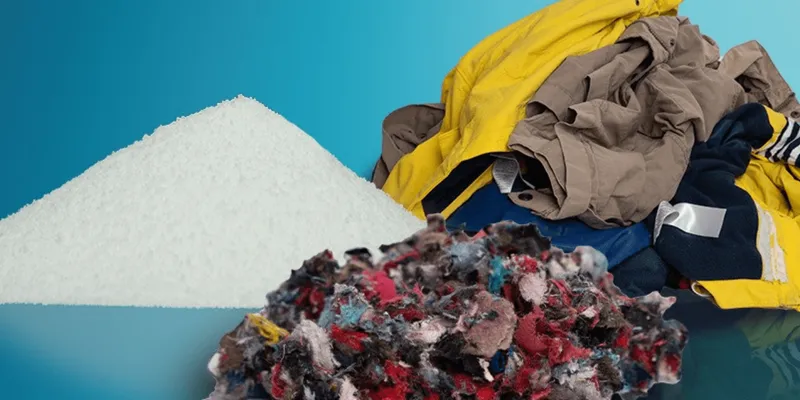
A major European initiative driving automated, closed-loop textile recycling.
Europe has launched the AUTOLOOP project to revolutionise textile waste management through automated sorting, chemical-free recycling, and digital traceability technologies. The initiative aims to recycle 1.24 million tonnes annually and support a strong circular economy.
A major European research initiative led by Fraunhofer UMSICHT has officially begun, focusing on developing integrated solutions for large-scale textile waste recycling. The AUTOLOOP project aims to build a comprehensive recycling system capable of processing up to 1.24 million tonnes of textile waste each year by 2050 and creating more than 130,000 green jobs across the EU. Its core mission is to advance automated sorting, tracing, and closed-loop recycling technologies for polyester-based textiles (NRT), addressing Europe’s urgent textile waste challenge.
The project partners of the Autoloop Project at the kick-off meeting in Oct 2025 at Fraunhofer UMSICHT in Sulzbach-Rosenberg.
Project Partners
The AUTOLOOP consortium, comprising leading research institutions and industry organisations, gathered for its kick-off meeting in October 2025 at Fraunhofer UMSICHT in Sulzbach-Rosenberg. As part of the project, researchers are advancing technologies that enable the chemical recycling of synthetic fibres (PET) back into new raw materials.
Europe’s textile and apparel sector employs 1.3 million people and contributes approximately EUR 170 billion each year. Yet, it generates around 10.9 million tonnes of post-consumer textile waste annually, with less than 1% currently recycled back into new textiles through closed-loop processes.
“The textile industry is at a critical turning point,” says Dr. Thomas Fehn, Coordinator of AUTOLOOP at Fraunhofer UMSICHT. “This project shifts the perspective from waste to resource, converting discarded textiles into valuable materials for new garments.”
The chemical recycling of synthetic fibres (PET) into new basic chemicals is a technological building block being researched in the AUTOLOOP project.
Technological Innovations and Work Packages
AUTOLOOP includes a series of advanced technologies designed to enable complete recycling of polyester-based (PET) textiles. These innovations are being jointly developed, tested, and validated by the project partners:
- AI-Driven Sorting: ZORITEX’s AI technology identifies more than 15 fibre types and blends using hyperspectral near-infrared imaging. This automation could boost sorting capacity tenfold while cutting costs by 50–75%.
- Chemical-Free Recycling: AALTO University’s Ioncell® process uses ionic liquid solvents to extract cellulose fibres from textile blends, achieving over 95% recycling efficiency without hazardous chemicals.
- Advanced Synthetic Fibre Recovery: ReSyn technology, developed by Fraunhofer UMSICHT and SKZ, depolymerises synthetic fibres into high-purity building blocks, even when materials are contaminated.
- Smart Fibre Identification: TLX’s IntegriTEX® technology integrates invisible markers in fibres, enabling contactless tracking and full supply chain transparency.
- Digital Integration: TEXROAD’s cloud-based Data Hub harmonises information across the recycling chain and supports compliance with upcoming regulations such as the Digital Product Passport.
Expected Impact By 2050
If implemented at scale, AUTOLOOP could deliver:
- Annual recycling of 1.24 million tonnes of textile waste
- Up to 96% material recovery efficiency
- Creation of 130,000+ green jobs in the EU
- Lower municipal waste management costs (currently EUR 60–110 per tonne)
- Reduced dependence on virgin raw materials in textile production
A Europe-Wide Collaboration
The project unites 14 partners from seven countries, bringing together research, industrial expertise, and technological innovation. Key partners include ZORITEX (UK), AALTO University (Finland), Fraunhofer UMSICHT (Germany), TLX (Germany), and TEXROAD (Netherlands) along with ELT, TRASBORG, VTT, SKZ, S4L, LEEDS, NORION, TEMASOL, and LGI.
Looking Forward
As the EU strengthens waste and circularity regulations and demand for sustainable textiles increases, AUTOLOOP sets a strong scientific and technological foundation for advancing circular systems in the textile industry. By integrating state-of-the-art recycling technologies, the project supports Europe’s transition from a linear to a circular textile economy. AUTOLOOP is funded through the EU’s Horizon2020 research and innovation programme under Grant Agreement No 101181624.