Data is the New Thread: Weaving India's Textile Sector into a Circular Powerhouse
How robust data systems and stakeholder collaboration are transforming Indian textiles toward circularity
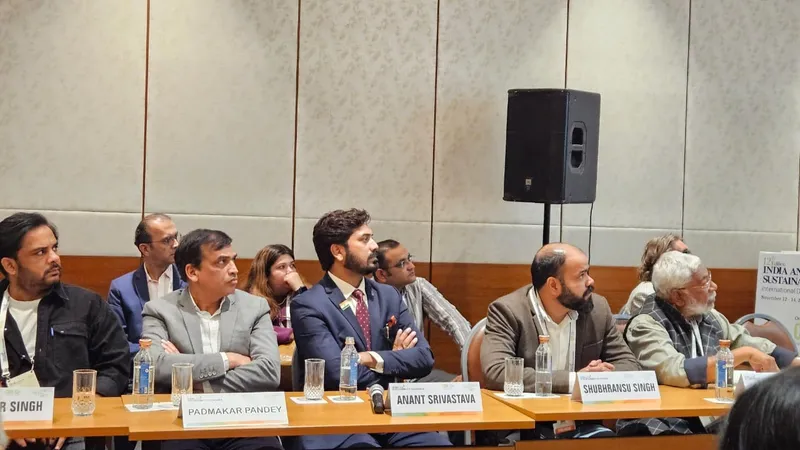
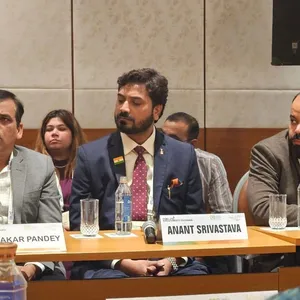
On November 13, 2025, at the 12th Edition of the India and Sustainability Standards (ISS) International Dialogue and Conference held at Bharat Mandapam in New Delhi, representatives from the Home Exporters Welfare Association of India (HEWA) joined industry leaders, policymakers, and international organizations to address a pressing question: How can India's textile sector meet emerging global data requirements while supporting its MSME backbone? The event, supported by the Ministry of MSME, Department of Public Enterprises, and NITI Aayog, and co-hosted by the United Nations Environment Programme (UNEP) and the Centre for Responsible Business (CRB), alongside the Ministry of Environment of Denmark, InTex India, and the Centre for Environment Education (CEE), highlighted that data has emerged as the critical thread connecting sustainability ambitions with market realities.
The New Data Imperative
The global textile landscape is undergoing a regulatory revolution. European Union directives, including the proposed Ecodesign for Sustainable Products Regulation (ESPR) and the Digital Product Passport (DPP) initiative, are establishing unprecedented data requirements for textile products entering European markets. These regulations mandate comprehensive information about environmental footprints, material composition, supply chain origins, and end-of-life options. For India's textile sector—which exported approximately $37.7 billion worth of textiles and apparel in 2024—these requirements represent both a challenge and an opportunity. The Product Environmental Footprint (PEF) methodology, which the InTex India project is helping SMEs implement in clusters like Surat and Karur, requires detailed lifecycle data covering raw material extraction, manufacturing processes, transportation, product use, and disposal. Industry associations, including AEPC, CITI, KTMEA, and HEWA, are working to decode these requirements for their members. The challenge is particularly acute for Small and Medium Enterprises, which constitute the backbone of India's textile sector but often lack the resources and expertise to handle complex data-collection and reporting frameworks.
The SME Challenge and Brand Transformation
SMEs operating in textile clusters face formidable obstacles: financial constraints for implementing data management systems, technical capacity gaps in understanding PEF methodologies, supply chain complexity involving multiple tiers of suppliers, and inadequate digital infrastructure. Industry associations are responding through capacity-building programs and peer-learning networks where early adopters share experiences with other cluster members. Meanwhile, leading Indian brands serving international markets are pioneering traceability approaches. Progressive companies are implementing blockchain-based or cloud-based systems that track materials from fibre to finished product. Rather than simply demanding data from suppliers, forward-thinking brands are investing in supplier development—providing technical assistance, co-funding software implementations, and creating shared data platforms. Smart brands are linking data transparency to commercial benefits, offering longer-term contracts to suppliers who demonstrate robust data systems.
Engaging Tier 2 and Tier 3 Suppliers
The deeper tiers of the textile supply chain—fabric suppliers, yarn manufacturers, dye houses—are often invisible to brands yet account for the majority of environmental impacts. Discussions at the ISS Conference emphasised that effective engagement requires cluster-based approaches that provide training and technical support to multiple suppliers simultaneously. Tier 2 and Tier 3 suppliers need simplified, mobile-friendly tools in vernacular languages. Progressive solutions include smartphone apps that automate calculations, translating basic inputs such as energy bills and water consumption into standardised environmental metrics. Local cluster associations and industry bodies can act as trusted intermediaries, helping small suppliers understand requirements and collect data. Aggregated reporting at the cluster level for certain metrics can reduce individual burden while maintaining transparency.
Stakeholder Collaboration and Immediate Actions
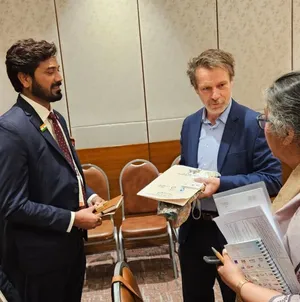
The conference underscored that transitioning to circular textiles demands unprecedented collaboration. The government must develop enabling policy frameworks that mandate transparency without overwhelming SMEs and provide fiscal incentives for circular practices. Industry associations serve as translation layers—converting policy language into practical guidance and developing sector-specific tools. Brands must become genuine partners in supplier development, while technology providers must design affordable, user-friendly systems. Several actions can begin immediately. Clusters can start with energy consumption and water usage—metrics that are easier to measure and have clear cost-saving implications. Many SMEs already collect data for operational purposes but don't recognise its value for sustainability reporting. Simple workshops can help them organise existing data. Investing in cluster-level shared infrastructure reduces individual company costs. Creating video tutorials in local languages provides step-by-step implementation guidance.
The Path Forward
As India's textile sector transitions toward circularity, data emerges as a strategic asset connecting environmental responsibility, economic competitiveness, and market access. The InTex India project, supported by UNEP and the Government of India's Ministry of Textiles, demonstrates, through its work in clusters such as Surat and Karur, that this transformation is achievable. For India's forty-five million textile workers, the circular transition represents an opportunity to secure their place in tomorrow's global markets.