3D Printing in Textiles Manufacturing: A Game-Changer in Design, Sustainability, and Efficiency

Milind Khangan Marketing Head, Vertex Market Research
The global textile and apparel industry is undergoing a radical transformation due to the convergence of digital design, advanced material technology, and next-generation manufacturing. Of the latter, few have greater potential to change how textiles are made today than additive manufacturing, better known as 3D printing. From its origins in prototyping and product design, 3D printing has evolved to become a robust industrial technology-one that can create customised, complex, and sustainable textile elements. With a growing requirement for minimal waste, increased speed to market, and personalisation, brands are redefining how fabrics will be envisioned, engineered, and manufactured with 3D printing.
Design and Material Innovation: Engineering Textiles with Digital Precision
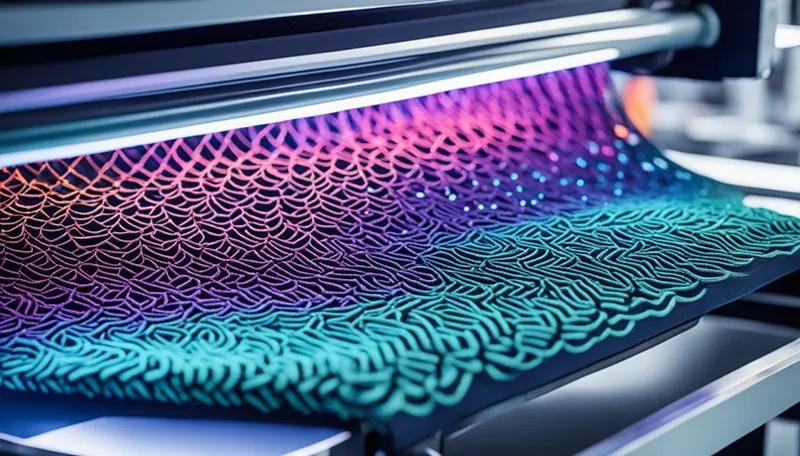
Unlike traditional weaving, knitting, or stitching, 3D printing enables the direct creation of textile structures from digital models. This layer-by-layer fabrication process, powered by computer-aided design, enables the designer to fully control every geometric and material aspect of the textile. Such digitally engineered fabrics form a new category in which precision, performance, and artistic creativity are combined. Designers can now create lattice geometries, variable-density structures, and integrated functionalities for ventilation, support, or compression within one print. This degree of control in design opens up possibilities that are not achievable by conventional methods in textiles. As per Vertex Market Research, a leading market research firm, the global 3D printing materials market was valued at approximately USD 3 billion in 2024 and is expected to exceed USD 10 billion by 2030, growing at a CAGR of about 20%. Much of this growth emanates from the adoption of advanced polymers, including thermoplastic polyurethane (TPU) and polylactic acid (PLA), both renowned for their elasticity, biodegradability, and comfort. Designers at the forefront of architected textiles, Iris van Herpen and Julia Koerner, merge material science with digital design to produce high-performance fabrics that are aesthetically unique. Other researchers are working on hybrid composites: combining natural fibres with printed polymers to enhance flexibility, strength, and durability. Innovations in soft elastomers and bio-based filaments have made printed garments more comfortable and wearable. Sustainability-driven research is looking toward material development made from recycled materials, including ocean plastics, to meet environmental considerations.
Sustainability and Efficiency: Advancing Toward Zero-Waste Manufacturing
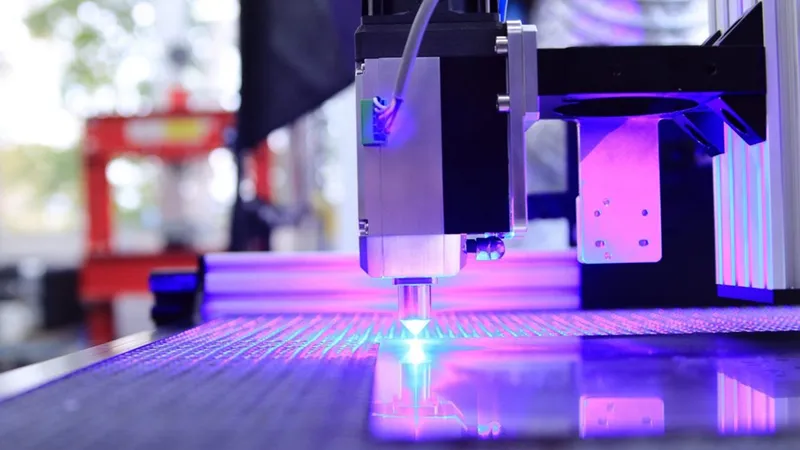
The textile industry has, by tradition, been one of the most resource-intensive industries, generating an immense amount of waste and high emissions. For sustainability to be achieved, conventional cut-and-sew productions often face up to 10 to 20 percent material loss. This is an area where 3D printing directly addresses through additive deposition, since only the material required for making the final product will be used. According to studies by the European Commission, additive manufacturing in specific applications could reduce raw material consumption by up to 90%. This efficiency allows for decentralised and more localised production, wherein brands can manufacture products closer to end consumers. Shortened transportation distances would cut logistics costs and lower carbon emissions while stimulating more agile models of production. The greater 3D printing market, ranging from hardware to materials and services, was estimated at about USD 19 billion in 2024 and is expected to reach up to USD 150 billion by 2035, while growing at over 20% CAGR. Such rapid growth is a reflection of increased additive technology adoption across industries, textiles included. Key sustainability advantages include:
- Localised Manufacturing: Distributed production means less reliance on global supply chains and cuts down drastically on over-production common within fast fashion.
- Circular Economy Practices: Products made from recyclable polymers, such as TPU, can be shredded and remade into new filaments, enabling a closed-loop recycling system.
- Energy Savings: With additive manufacturing, energy consumption is often lower compared to the conventional process of textile treatment or dyeing, thereby reducing carbon emissions.
By combining efficiency with circularity, 3D printing supports the fashion industry in its move toward sustainable and ethical production models.
Technology Integration: Bridging Digital Design and Smart Manufacturing
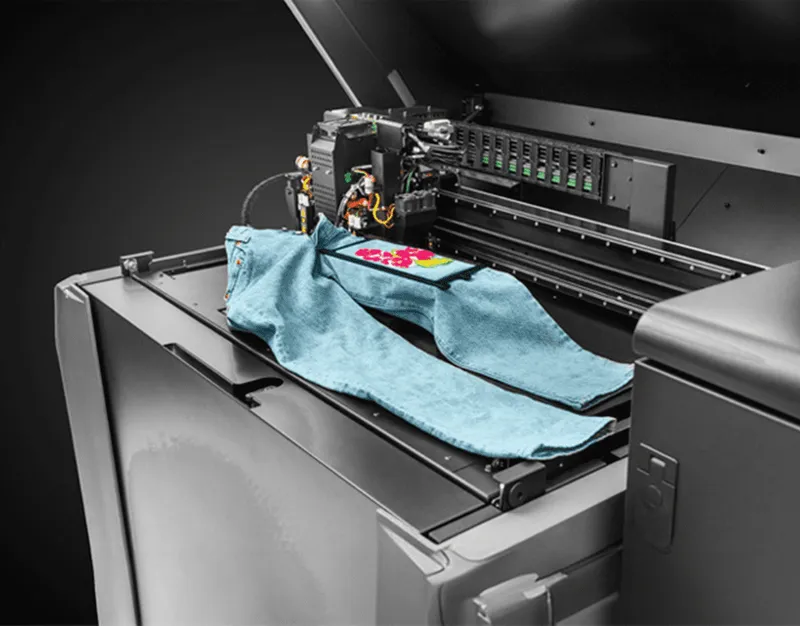
The success of 3D-printed textiles depends on seamless integration between digital design systems and advanced fabrication technologies. Designers now use AI-driven modelling, generative algorithms, and virtual simulation tools to predict mechanical behaviours such as stretch, breathability, and drape before production begins. These digital workflows minimise trial-and-error cycles, reduce waste, and speed up time to market. Advanced software now connects body scanning, parametric design, and virtual prototyping into a unified digital workflow. Meanwhile, multi-material 3D printers capable of processing flexible polymers have expanded the scope of printable textiles. New manufacturing approaches, such as Direct-to-Textile Printing, allow polymer layers to be printed directly onto fabric substrates. This capability supports the creation of functional surfaces such as embedded reinforcements, sensors, and logos without compromising flexibility or comfort. Emerging technologies like Continuous Digital Light Processing (cDLP) and multi-nozzle extrusion systems are being developed to achieve high-speed output that matches or surpasses conventional digital textile printing rates of more than 1,800 meters per hour. The vision of a digital textile factory integrates scanning, design, print preparation, and finishing into a connected workflow. This approach enables large-scale customisation and faster design iteration, providing a foundation for a new era of smart and efficient textile manufacturing.
Market Adaptation and Scalability: From Niche Innovation to Industrial Adoption
Though an emergent segment, 3D printing is finding rapid adoption for textile and apparel production. The market value of the 3D-printed wearables business, including footwear, accessories, and apparel parts, stood at $5 billion in 2024 and was projected to reach $9 billion by 2030, driven by a CAGR of around 10 percent. Commercial adoption follows a few key pathways:
- Adidas Revolutionises Footwear: Adidas, in collaboration with Carbon Inc., created the midsole of the Futurecraft 4D using DLS. This complex lattice offers precision-tuned cushioning and can be printed out in days, not months.
- Luxury Fashion Applications: Companies like Louis Vuitton and Coach employ 3D printing to create rapid prototypes of accessories and hardware, which greatly reduces product development timelines.
- On-demand manufacturing models: Small batches and customised production reduce inventory holding to the minimum, reducing unsold stock and improving efficiency throughout the value chain.
Ongoing challenges with print speed, material performance, and post-processing are being overcome, while continuous advances in polymer chemistry and automation are driving the industry closer to scalable, mass-market production.
Case Studies and Research Innovations
Wilson Sporting Goods: Wilson introduced the world’s first 3D-printed airless basketball, which replaces traditional inflatable bladders with a precision-engineered lattice framework that replicates the bounce and feel of a conventional ball. ZER Collective: This sustainable fashion brand demonstrates a zero-waste model by recycling old polymers into new filaments, achieving near-total circularity in production. MIT Media Lab’s DefeXtiles Project: Researchers created sheer, tulle-like fabrics using standard FDM printers through controlled under-extrusion, producing lightweight materials as thin as 0.3 mm. Academic Research in 4D Textiles: Global universities are pioneering responsive materials that change shape or texture under environmental stimuli, enabling integration with wearable electronics and smart clothing applications. The number of R&D initiatives focused on 3D-printed textiles has tripled in the last five years. Innovation hubs in Europe, North America, and the Asia-Pacific region are accelerating adoption, supported by strong material supply chains and favourable sustainability policies.
Future Outlook & Conclusion: The Next Phase of Textile Manufacturing
3D printing represents a structural transformation in textile production rather than a gradual improvement. By merging digital fabrication, sustainable materials, and localised production, additive manufacturing aligns directly with the fashion industry’s emerging priorities of personalisation, circularity, and speed to market. As the market matures, companies that invest in digital infrastructure, polymer research, and smart design ecosystems will gain a decisive competitive advantage. Over the next decade, 3D printing is expected to move from niche applications and couture fashion to widespread use in industrial-scale textile production. The future of textiles will be shaped by the integration of artificial intelligence, multi-axis printing technologies, and bio-based materials. These innovations will allow designers and manufacturers to create high-performance, sustainable fabrics with previously unimaginable levels of precision and efficiency. 3D printing is no longer just a tool for experimentation; it is becoming a cornerstone of modern textile manufacturing. By bridging creativity, computation, and sustainability, this technology is transforming imagination into material reality and setting the foundation for the next generation of textile innovation.