3D Printing in Textile Production: Weaving the Future, Layer by Layer
Tanvi Munjal
What if someone told you that the future of fashion might not rely on scissors, sewing machines, or piles of fabric scraps? That instead of cutting patterns from rolls of cloth, we could simply print a dress, a shoe, or an entire outfit directly from a digital file? It might sound futuristic, but in many textile innovation labs around the world, it’s already happening. 3D printing in textile production isn’t a distant dream anymore; it’s quietly reshaping how we make the things we wear and use.
From Weaving to Printing: A New Chapter in Textiles
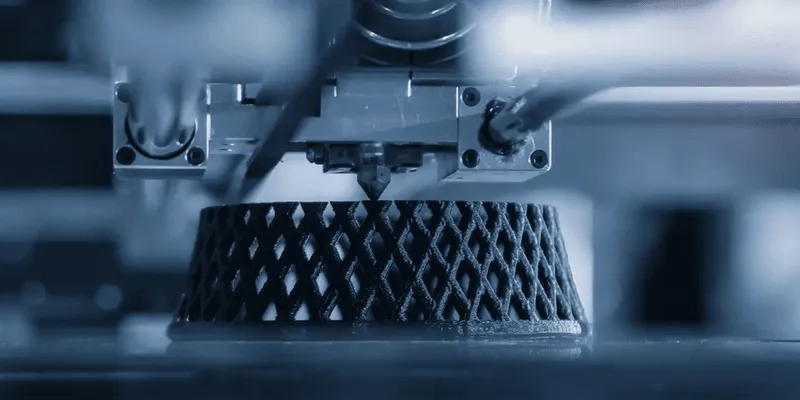
For centuries, textiles have been woven, knitted, dyed, and cut. Now, we’re adding a new verb to that list: printed. Not printed with ink or dye, but printed layer by layer to create fabric-like structures themselves. This transformation, moving from manual or mechanical weaving to digital fabrication, is as significant as the industrial revolution was to handloom weaving. It offers immense potential for efficiency, creativity, and sustainability, but it also raises questions about how it might affect millions who depend on traditional textile manufacturing. In simple terms, 3D printing in textiles is the process of creating fabric structures, garments, or textile components by depositing materials layer by layer, guided by digital design. Unlike weaving or knitting, which work from rolls of yarn or fabric, 3D printing builds the product from scratch, precise, customisable, and largely waste-free.
How the World Is Embracing 3D-Printed Textiles
Globally, many companies are investing heavily in this technology.

Adidas is one of the best-known examples. Its Futurecraft 4D shoes feature midsoles made using 3D printing technology developed with the Silicon Valley company Carbon. These shoes aren’t just prototypes; they’re sold commercially and used by athletes worldwide.

U.S. brand Ministry of Supply introduced a 3D-knitted blazer that drastically reduces production waste compared to traditional tailoring. In Germany, companies like Stratasys are testing industrial-grade printers that can produce intricate textile structures for fashion and technical applications. Japan has been experimenting with robotic automation and digital manufacturing for apparel, while China is scaling production of 3D-printed footwear components and accessories, though primarily in pilot projects rather than at full industrial scale. Beyond fashion, 3D-printed textiles are making inroads into other industries as well. In automotive manufacturing, they are used for custom seat covers and interior panels. In medical textiles, researchers are printing orthopaedic braces and wound dressings with precise, patient-specific structures. Sportswear companies are exploring 3D-printed gear that enhances ventilation and body-zone support.
India's Textile Industry Enters the Third Dimension
India, home to one of the world’s largest and oldest textile industries, is gradually exploring 3D printing as part of its modernisation journey. The textile sector contributes about 2.3% to India’s GDP and employs over 45 million people, according to government estimates, so even small technological shifts carry large implications. Institutions like the National Institute of Fashion Technology (NIFT) and IITs in Delhi and Mumbai are researching how to integrate 3D printing into design, material science, and production. Several Indian designers are also experimenting with 3D-printed couture pieces for fashion weeks and exhibitions. While India’s adoption is still in its early stages compared to Europe or the U.S., analysts expect steady growth. Market observers suggest that India’s 3D printing market in textiles could grow significantly, driven by demand for customised, sustainable products.
The Numbers Don't Lie: Market Insights and Trends
Globally, the 3D printing market in textiles was estimated at USD 20.37 billion, with forecasts suggesting a 23.5% compound annual growth rate (CAGR) through 2030, depending on material categories. The main growth drivers are clear:
- Sustainability: Traditional textile manufacturing wastes 10–15% of material through cutting and trimming. 3D printing uses only the material required, reducing waste dramatically.
- Customisation: Consumers increasingly seek personalised clothing and accessories, and 3D printing delivers this flexibility.
- Speed to market: Brands can move from digital design to prototype to finished product much faster.
However, several challenges persist. The cost of industrial 3D printers and raw materials remains high, particularly for smaller firms. The range of printable materials still can’t match the comfort or breathability of cotton, silk, or wool. And scalability, the ability to produce at mass-market speed and cost, remains a major hurdle. Consumer behaviour also plays a role. Gen Z and millennials are more open to buying tech-driven, eco-friendly fashion, while older consumers tend to prefer familiar fabrics. The shift will take time.
Technologies and Materials: The Building Blocks
So how does this actually work? Several 3D printing technologies are being adapted for textiles, each with its strengths.
- FDM (Fused Deposition Modelling): Melts and deposits thermoplastic filaments layer by layer. It’s affordable and ideal for semi-flexible designs.
- SLS (Selective Laser Sintering): Fuses powdered material with lasers, allowing intricate and durable textile patterns.
- SLA (Stereolithography) and Material Jetting: Offer higher resolution and surface quality, suitable for detailed fashion pieces and accessories.
TPU (Thermoplastic Polyurethane) remains the most popular material because it’s flexible and durable, mimicking certain fabric-like behaviours. PLA (Polylactic Acid), a biodegradable, plant-based plastic, is being tested for sustainable fashion applications. Nylon and other flexible polymers are used for footwear and performance wear.

Designers like Julia Koerner, who created 3D-printed costumes for films like Black Panther, have shown what's possible when creativity meets technology. Her intricate, lattice-like designs would be nearly impossible to create using traditional methods.
What's New in 2024-2025?
The latest advances in 3D printing for textiles include bio-based filaments made from algae, mycelium, and recycled plastics. These materials aim to address both performance and sustainability challenges. Smart textiles are also emerging as researchers are embedding sensors and conductive filaments into printed fabrics to create garments that can monitor body temperature, heart rate, or adapt to environmental conditions. Globally, 3D-printed fashion is moving beyond concept stages. Major fashion events in Paris, Milan, and New York are now showcasing 3D-printed accessories and garments, signalling gradual mainstream adoption.
Opportunities: What's Possible?
The potential here is enormous. Imagine supply chains that produce goods on-demand, eliminating the need for massive inventories and reducing overproduction. Local manufacturing could become viable again, with small workshops capable of producing customised products without massive capital investment. For India specifically, 3D printing could complement rather than replace traditional textile manufacturing. It could handle specialised, high-value products while conventional methods continue to serve mass-market needs. This hybrid approach could preserve employment while adding technological capability. But let's address the elephant in the room: Can 3D printing replace traditional weaving and knitting? The honest answer is—not entirely, at least not anytime soon. Traditional methods remain superior for producing soft, comfortable fabrics at scale. 3D printing excels in areas where customisation, structural complexity, or waste reduction are priorities. Will 3D-printed clothes become mainstream? Probably not completely, but we'll likely see increasing integration. Components like shoe soles, decorative elements, structured parts of garments, and specialised athletic wear are ripe for 3D printing adoption. For India's labour-intensive textile economy, this doesn't spell doom. Instead, it signals evolution. Workers can be retrained for digital design and machine operation. The industry can maintain its employment capacity while becoming more technologically sophisticated and competitive globally.
The Roadblocks We Can't Ignore
Let's be realistic about the challenges. The technology is still expensive for widespread adoption. A quality industrial 3D printer suitable for textiles can cost hundreds of thousands of dollars, putting it out of reach for most small businesses. The texture and feel of 3D-printed textiles often can't match traditional fabrics. They tend to be less soft, less breathable, and sometimes less durable. Design constraints exist too, as you can't yet print something with the drape and flow of silk or the comfort of cotton jersey. Market readiness is another factor. Consumers are accustomed to traditional fabrics, and changing those preferences takes time. There's also a learning curve for designers and manufacturers who must acquire new skills to work with this technology. And about sustainability—yes, 3D printing reduces waste, but the energy consumption can be significant, and not all printing materials are biodegradable or easily recyclable. The full lifecycle environmental impact is still being studied.
Conclusion
3D printing isn't going to replace traditional textile manufacturing. But it is going to reshape it. We're looking at a future where these technologies coexist, each playing to its strengths. Over the next decade, as material costs fall and printing speeds improve, adoption will accelerate. For India, this represents an opportunity to leapfrog in certain areas while maintaining its textile heritage. Policymakers, industry leaders, and educational institutions all have roles to play in ensuring this transition benefits workers, businesses, and consumers alike. The future of textiles isn't just woven or knitted; it's also printed, layer by layer, with precision, creativity, and possibility. And that future is unfolding right now.