IDTechEx: Mycelium, Microbes Lead Leather Alternatives
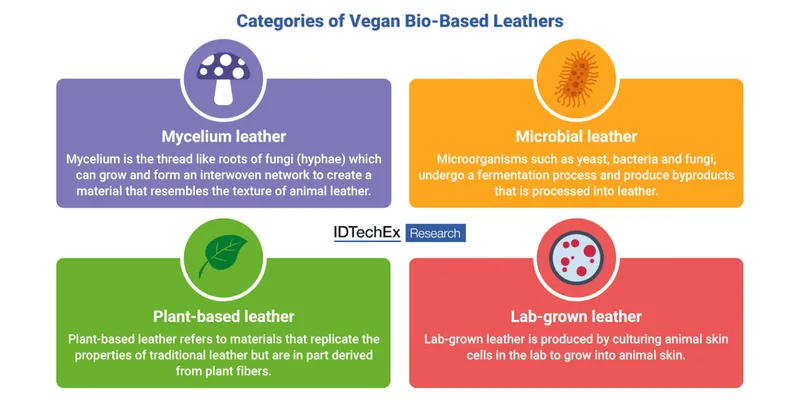
As global industries seek greener alternatives to traditional animal-based leather, IDTechEx's latest report, "Emerging Alternative Leathers 2024–2034: Technologies, Trends, Players", sheds light on over 70 companies innovating in this space and provides detailed forecasts and insights into future market growth. Traditional leather, despite its durability and versatility in fashion, automotive interiors, and furnishings, is now under scrutiny due to its substantial environmental footprint. The leather industry produces over 20 billion square feet annually, contributing significantly to greenhouse gas emissions and large-scale deforestation driven by livestock farming.
Environmental Imperatives and Rising Alternatives
In response, the push for sustainable materials has intensified. While synthetic "vegan" leathers made from plastic have been widely adopted, concerns around petrochemical origins, non-biodegradability, and microplastic pollution are leading companies to seek more sustainable substitutes. New-generation alternatives—ranging from mycelium (fungal), plant-based, microbial, to lab-grown leathers—are rising in prominence due to their potential to reduce ecological impact while replicating leather’s functional and aesthetic qualities.
Mycelium Leather: Sustainable Growth with Structural Promise
Mycelium-based leather is gaining traction as one of the most viable eco-friendly options. It grows in mat-like networks that can be treated to resemble traditional leather in look and feel. It is biodegradable, requires very little water, and doesn’t encroach on farmland. IDTechEx notes that while the material has promising scalability and cost potential due to low-cost feedstocks, large investments are still needed to develop sterile, climate-controlled growth environments and adapt current production methods.
Plant-Based Leathers: Diverse Inputs, Compatible Production
Plant-based leathers leverage agricultural waste and natural fibers, often mixed with polymers to mimic leather's texture. These blends differ in their plastic content, impacting both performance and compostability. Still, their relatively low emissions, reduced water use, and compatibility with existing leather processing systems make them a practical transitional solution. The challenge remains to fully match traditional leather’s luxurious appeal and feel.
Microbial and Lab-Grown Leathers: High Potential, High Complexity
Microbial leathers use microbes to convert waste into natural biopolymers like cellulose or collagen, forming sheets that emulate leather. These products often contain little to no fossil-based content and can be compostable depending on formulation. Lab-grown leather, derived from animal cells, holds ethical and waste-reduction appeal by replicating real leather without animal harm. However, its production is highly resource-intensive—demanding significant water, energy, and chemical inputs—making it currently more viable for premium markets rather than mass-scale use.
Despite the range in cost and scalability, mycelium and microbial-based leathers stand out as current industry favorites. According to IDTechEx, the vegan, bio-based leather market is projected to grow at a staggering CAGR of 37.4% through 2034, driven by consumer demand and brand commitments to sustainable innovation.