ICAC 83rd Plenary Meeting Concludes in Bremen with Focus on Sustainability and Market Outlook
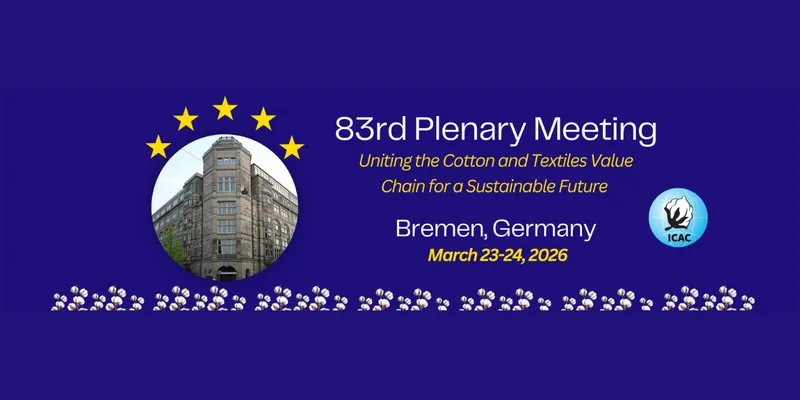
The 83rd Plenary Meeting of the International Cotton Advisory Committee (ICAC) took place on March 23–24, 2026, at the Bremen Parliament Building in Bremen, Germany. The event was organized with support from the European Union, the Federal Republic of Germany, and the Bremen Cotton Exchange, bringing together stakeholders from across the cotton and textile value chain.
Executive Director’s Report
Executive Director Eric Trachtenberg presented the Secretariat’s strategic direction, highlighting a shift toward regenerative agriculture, investment promotion, advocacy, and innovation. The report noted challenges including climate change and competition from synthetic fibers, while identifying cotton’s role in rural economic development and sustainability. Priorities include improving yields through agricultural technology, advancing carbon-related initiatives, and strengthening communication about the industry.
Government Reports
Member countries shared updates on production, policies, and sector conditions. Discussions addressed issues such as input cost increases, climate variability, productivity improvements, and support for smallholder farmers. Delegates also emphasized domestic value addition and improved export market access.
Secretariat Reports
The Secretariat outlined progress in data systems, research activities, and stakeholder engagement. Updates focused on alignment with global priorities such as sustainability, climate resilience, and value chain integration.
World Cotton Market Outlook
Global cotton production for the 2026/27 season is projected to decline by 4% to 24.9 million tonnes. The reduction is attributed to lower prices and weaker demand in key markets. China and India remain leading producers, while output declines are expected in Brazil and Australia. Global consumption is projected to remain stable at approximately 25 million tonnes. In the United States, planting trends indicate a shift toward crops such as corn and soybeans.
Communications and Outreach
The Secretariat reported initiatives aimed at improving communication and addressing misinformation. Engagement with the World Wildlife Fund resulted in the removal of inaccurate water-use data from its website. Ongoing efforts include the #TruthTuesday campaign, the publication “The Book of Cotton,” and a planned video project titled “A World Without Cotton.”
Facilitating Investment in Emerging Markets
Discussions highlighted the importance of integrated textile manufacturing ecosystems. India’s PM MITRA initiative and opportunities in Africa were referenced, particularly in linking cotton production with downstream manufacturing. Participants noted the need for financial support from brands and retailers to sustain investments, especially for smallholder farmers.
National Textiles Policies
This session examined policy frameworks supporting innovation and competitiveness. Topics included EU regulations on textile waste and the growing importance of traceability systems. The discussion emphasized balancing innovation with accessibility, particularly for SMEs.
Technical Seminar: AI and Sensor Technologies
The 2026 Technical Seminar addressed “Deep Learning and Sensor Technologies for Automated Detection and Monitoring of Cotton Diseases and Insect Pests.” Presentations included developments such as the Cotton Microclimate and Insect Monitoring System (C-MIMS). A case study on jassid infestations in Egypt demonstrated the role of early detection technologies in preventing crop loss. The session highlighted integration with Integrated Pest Management (IPM) systems.
Steering Committee Decisions
The Steering Committee addressed administrative matters including:
- Election of Officers: Mr. Shreyans Gupta (India) was elected Chair of the Standing Committee for 2026/27, and Mr. Igor Moreira Moraes (Brazil) was elected Vice-Chair.
- 2027 Technical Seminar Topic: “Climate-resilient cotton varieties” was selected.
- Membership and Assessments: The Committee reviewed outstanding contributions and emphasized timely payments for financial stability.
Key Themes and Outcomes
Several themes were identified across sessions:
- Sustainability as a priority, including regenerative practices
- Value chain integration from production to finished products
- Increased focus on traceability and transparency
- Investment in climate resilience and technological innovation
- Global advocacy to support cotton demand
- Financial sustainability of ICAC through diversified funding models
Recognition of the Host
The Committee acknowledged the European Union, the Bremen Cotton Exchange, and the Government of Germany for hosting the meeting and supporting its organization.