ICAC 83rd Plenary Highlights AI and Sensor Technologies for Cotton Pest Management
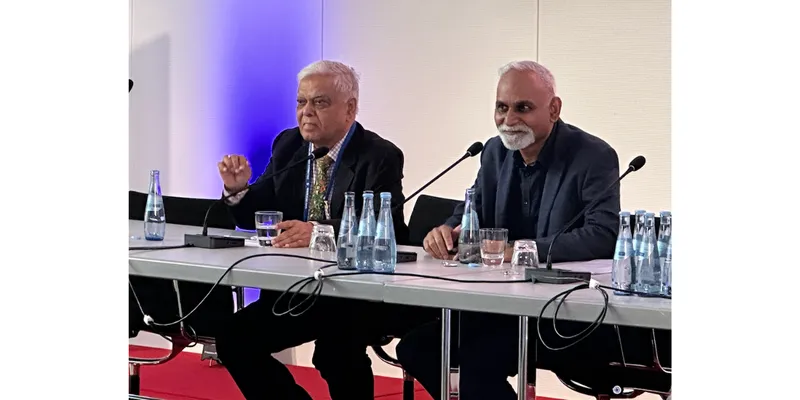
The 83rd ICAC Plenary Meeting, held March 23-24 in Bremen, Germany, featured a Technical Seminar focused on advanced technologies for managing cotton pests and diseases. The session explored the role of deep learning and sensor-based systems in detection and monitoring.
Pests and diseases remain a persistent issue in cotton farming, requiring continuous monitoring and management. During the Third Open Session, held from 9:00–10:30 am on March 24, 2025 ICAC Researcher of the Year Dr Charudatta Mayee and ICAC Chief Scientist Dr Keshav Kranthi, winner of the inaugural Researcher of the Year award in 2009, discussed various approaches to addressing these challenges.
The session covered multiple topics, including current chemical and non-chemical management practices, traditional detection and warning systems, and the application of sensor and AI-based technologies. Additional areas of discussion included new research programs, robotic and radar monitoring, and mating disruption techniques.
Dr Kranthi emphasized that while technological tools are advancing, they are not a substitute for established pest management strategies.
“These sophisticated tools are very helpful, but they really should be supporting IPM decisions, not replacing them,” he said. “Technology will probably never be able to replace a farmer’s agronomic experience.”
The 83rd ICAC Plenary Meeting took place on March 23-24, 2026, in Bremen, Germany, ahead of the International Cotton Conference Bremen. The theme of the Plenary, “Uniting the Cotton and Textiles Value Chain for a Sustainable Future,” reflects the ICAC’s role as an international organization covering the cotton value chain from production to end-of-life.