How Veo 4 Is Changing the Way E-Commerce Brands Create Product Videos Without Hiring a Film Crew
Running a product-based business today means you're constantly under pressure to produce visual content — and not just any content. You need videos that look professional, feel authentic, and actually move people toward buying something. The problem is that traditional video production is expensive, slow, and requires coordinating a lot of moving parts: a studio, a crew, a director, models, lighting equipment, post-production editing. For small and medium-sized e-commerce brands, that pipeline is often out of reach.
That's where the conversation around AI video generation has gotten genuinely interesting. Tools like Veo 4 are starting to shift what's possible for brands that need to produce high-quality video content without the overhead of a production company.
The Real Cost of Product Video Production
Anyone who has tried to produce professional product videos knows the math doesn't always work. A single day of commercial video production can run into the thousands, and that doesn't include post-production, music licensing, or revisions. For brands with a large catalog — say, 50 or 100 SKUs — producing a dedicated video for every product simply isn't viable.
The alternative most brands land on is picking a handful of hero products to showcase and leaving the rest with just static imagery. That's a reasonable compromise, but it's one that limits reach. Product pages with video consistently outperform those without, so leaving the majority of your catalog video-free is a real conversion gap.
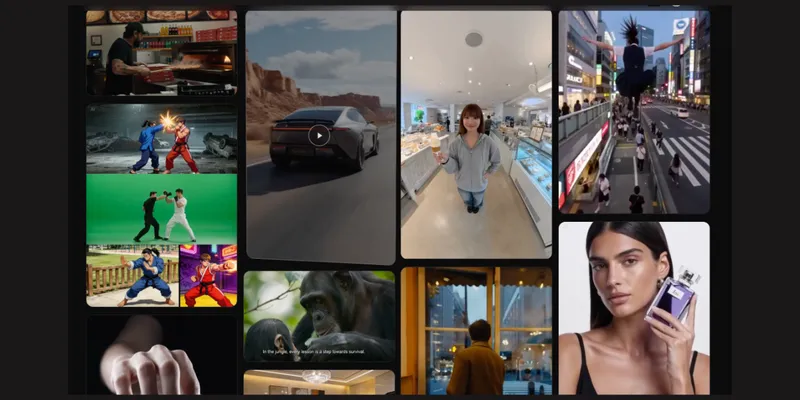
What Veo 4 offers is a different kind of entry point. Instead of choosing between a massive production budget and no video at all, brands can generate short, cinematic product videos from text prompts, reference images, or a combination of both. The turnaround is dramatically faster, and the output quality has reached a point where it's genuinely usable in commercial contexts.
From Static Image to Cinematic Clip
The workflow that makes the most sense for e-commerce is starting with product photography you already have. Most brands have decent product shots — clean backgrounds, multiple angles, consistent lighting. Veo 4 can take a reference image and animate it into a video with smooth, realistic motion.
What's notable about how the model works is that it's not just panning across your photo or adding a fake zoom effect. The generation actually builds motion dynamics into the scene — a handbag might catch light differently as it rotates, a skincare product might have subtle reflections that shift realistically, a piece of clothing might drape and move as if it's being handled. The result looks considerably more polished than what you'd get from basic image-to-video tools that only add parallax effects.
For brands that want more control, Veo 4 also accepts detailed text prompts describing how the product should be presented — the camera angle, the lighting mood, the pace of movement. You can describe a slow-motion reveal with dramatic side lighting and the model interprets that creative direction without needing you to configure technical settings manually.
Maintaining Consistency Across a Product Catalog
One of the underrated challenges in e-commerce video is maintaining visual consistency. If you produce product videos over time, or across different product categories, the look and feel can drift — different lighting styles, different motion speeds, different color grading. On a product page level, this might seem minor, but across an entire brand it creates a scattered, unprofessional impression.
Veo 4's reference system helps address this. By uploading a sample video that represents the visual style you want — whether that's something you've produced before or a reference from another source — you can ask the model to replicate that look when generating new content. The camera movement, the color temperature, the overall rhythm of the video can be anchored to that reference. This means that even if you're generating product videos across 80 different SKUs over several months, there's a consistent creative thread running through them.
That level of consistency used to require either a very disciplined in-house team or a retainer with a production company. For growing brands operating with lean teams, it's a real practical advantage.
Handling Seasonal and Campaign-Based Content
E-commerce brands deal with a constant cycle of seasonal promotions and campaign refreshes. Black Friday, the holiday season, Valentine's Day, back-to-school — each one requires a wave of new creative assets. Under a traditional production model, this means booking shoots in advance, which requires predicting what you'll want to show weeks or months before the campaign actually goes live.
With Veo 4, the turnaround time compresses significantly. You can generate new video content based on updated prompts or reference materials in a much shorter window, which means you can adapt to trends or adjust your creative direction closer to the actual campaign date. If a particular product is moving faster than expected, you can prioritize its video content without waiting for a production slot to open up.
This flexibility is especially useful for brands that test a lot of ad variations. Instead of committing to one creative execution and hoping it performs, you can generate multiple versions — different lighting moods, different camera angles, different product presentations — and test which one resonates before scaling spend behind it.
Native Audio as Part of the Package
Something that doesn't get discussed enough in the context of product videos is audio. A video with generic background music or no sound at all feels noticeably cheaper than one with well-matched audio. Traditionally, sourcing music for commercial use is another cost and licensing headache.
Veo 4 generates audio alongside the video as part of the same generation pass. The background music that gets produced is matched to the visual mood and pacing of the clip. For a luxury skincare product with slow, elegant motion, the audio reflects that. For a fast-paced athletic gear video, the audio matches the energy. This doesn't eliminate the need for custom music in high-end productions, but for the majority of e-commerce use cases it closes a meaningful gap.
What This Looks Like in Practice
The practical implication for a small e-commerce brand is significant. You don't need a dedicated video production budget to have professional video content for your product pages, ads, and social media channels. A founder running a direct-to-consumer brand can generate a dozen product videos in the time it would have taken to coordinate a single half-day shoot.
It also changes what's worth trying. When the cost of producing a video was high, brands had to be fairly confident something would work before committing to it. When that cost drops substantially, experimentation becomes more rational. You can generate videos for products that wouldn't have justified a production budget before, discover which ones drive meaningful engagement, and adjust your content strategy based on actual data rather than educated guesses.
The gap between what a well-resourced brand can produce and what a scrappy startup can produce has always been partially a function of video budget. Veo 4 doesn't eliminate that gap entirely, but it moves the needle in a real and meaningful way for brands willing to integrate AI into their content workflow.
A Shift Worth Taking Seriously
AI video generation is still maturing, and there are scenarios where results can be inconsistent — certain types of complex product interactions or highly specific physical behaviors can still produce imperfect outputs. But the overall trajectory is clear, and for practical e-commerce use cases — product showcases, social ads, catalog videos — the output quality is genuinely usable today.
For brands that have been waiting on the sideline to see how AI video tools develop, this feels like a reasonable point to start experimenting. The tools are capable enough that the time invested in learning them pays off, and the competitive advantage of moving faster on video content is real in a landscape where visual production volume is increasingly tied to organic and paid performance.