How to Increase Your Reach on Facebook: Complete Guide
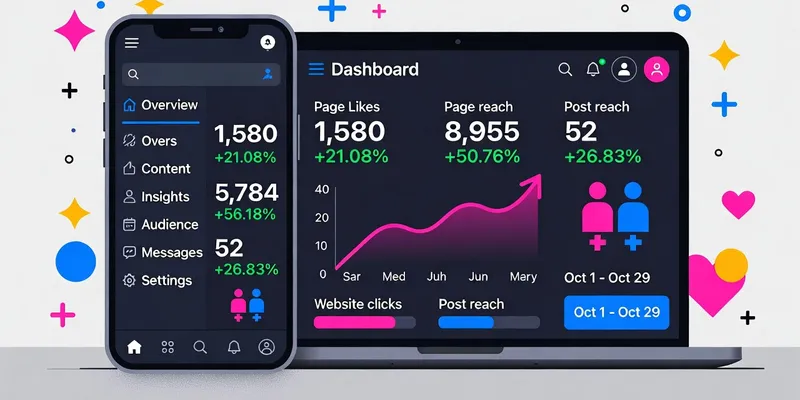
Facebook organic reach has dropped to an average of 5.5% for most business pages. This means if you have 1,000 followers, only about 55 people see your posts without paid promotion.
The decline isn't accidental. Facebook's algorithm prioritizes content that keeps users engaged on the platform longer. Understanding how this system works and adapting your strategy accordingly makes the difference between content that spreads and content that dies in the feed.
This guide covers everything from algorithm mechanics to advanced reach optimization tactics. You'll learn which content formats perform best, when to post for maximum visibility, and how to measure what actually works for your audience.
Understanding Facebook Reach
Facebook reach measures how many unique users see your content within a specific timeframe. If 100 unique users scroll past your post, your reach is 100, regardless of engagement.
Types of Facebook Reach
Facebook categorizes reach into three distinct types:
Organic reach measures unpaid content visibility through regular news feeds. Most businesses see 1-7% organic reach rates. Viral reach counts visibility from others' engagement when someone likes your post; their connections may see it. Paid reach refers to Facebook ads or boosted posts, controlled by your budget and targeting. For businesses running campaigns at scale, Facebook agency accounts provide the infrastructure needed to manage multiple advertising initiatives effectively.
While organic strategies take time, social media growth services can help establish initial engagement that signals quality to the algorithm.
How Facebook's Algorithm Determines Reach
Facebook's algorithm evaluates thousands of signals to decide which posts deserve space in each user's feed. The system prioritizes content that generates "meaningful interactions," the kind of engagement that sparks conversations rather than passive scrolling.
The algorithm weighs these factors heavily:
Comment frequency and depth: Posts that generate multiple-reply conversations rank higher than those with only likes
Share velocity: Content shared quickly after posting signals a high value
Time spent viewing: The algorithm tracks how long users pause on your content
Relationship strength: Posts from pages users interact with regularly get priority
Content type: Native videos and Facebook-hosted content outperform external links
Recency: Newer posts generally reach more people than older ones
The system penalizes certain behaviors. External links that take users off Facebook typically see reduced reach. Content that violates community standards or appears to be engagement bait ("Tag a friend who...") gets suppressed. Inconsistent posting patterns also signal low-quality pages to the algorithm.
Understanding these mechanics explains why some posts inexplicably reach 10x more people than others. The algorithm isn't random; it's responding to engagement signals that indicate content quality.
Facebook Reach Benchmarks by Industry
Reach rates vary dramatically across sectors. Food and entertainment brands achieve higher reach due to shareable, visual content. Financial services and B2B companies face lower rates due to specialized audiences.
Don't compare yourself to brands in different industries. A 2% reach rate for B2B software might be excellent, while restaurants need higher rates.
Content Optimization Strategies
Content format determines reach more than almost any other factor. The algorithm rewards specific content types that keep users engaged on Facebook.
Create Platform-Native Content
Cross-posting content from Instagram or X (formerly Twitter) kills your Facebook reach. The algorithm detects content formatted for other platforms and suppresses it.
External links are particularly damaging. When you share a link that takes users off Facebook, the algorithm interprets this as you sending its users away. Your reach drops accordingly. Posts with external links typically see 50-70% less reach than native content.
Instead, upload videos directly to Facebook rather than sharing YouTube links. Write captions specifically for Facebook's audience rather than copying Instagram captions with excessive hashtags. Create graphics sized for Facebook's feed dimensions (1200 x 630 pixels for links, 1080 x 1080 for standard posts).
When you must include links, use the first comment technique. Post your content without a link, then immediately add a comment containing the URL. This approach gives the algorithm less reason to suppress your post since the initial content keeps users on Facebook.
Leverage High-Performing Content Formats
Facebook rewards specific content types with significantly better reach. Video content consistently outperforms static images and text posts.
Short-form videos (under 90 seconds) work best for most brands. These videos capture attention quickly and have high completion rates, which signals quality to the algorithm. Facebook's autoplay feature means videos start playing as users scroll, grabbing attention more effectively than static content.
Facebook Reels receive aggressive algorithm promotion as the platform competes with TikTok and Instagram Reels. Brands publishing Reels regularly report 2-3x higher reach compared to standard posts. The Reels feed gives your content exposure beyond just your followers.
Live video creates urgency and generates notifications to followers, driving immediate engagement. Facebook prioritizes Live content in the news feed, often showing it before recorded videos. The real-time nature encourages comments and reactions, which further boost reach.
Carousel posts that let users swipe through multiple images or videos keep users engaged longer. The algorithm interprets this extended interaction as a quality signal. Carousels work particularly well for product showcases, step-by-step tutorials, or before-and-after transformations.
For businesses building a content strategy across multiple platforms, influencer marketing platforms provide helpful frameworks for influencer profile optimization and consistent branding that support your Facebook reach efforts.
Craft Engagement-Driven Captions
Your caption determines whether users scroll past or stop to engage. The first sentence matters most since Facebook truncates longer captions behind a "See more" link.
Start with a question or a surprising statement that makes users curious. "Want to know why 70% of small businesses fail at Facebook marketing?" works better than "Here are some Facebook marketing tips."
Include a clear call-to-action that prompts specific responses:
- "What's your experience with this?" (encourages comment sharing)
- "Tag someone who needs to see this" (increases reach through tags)
- "Which option do you prefer, A or B?" (drives engagement through choices)
- "Share your best tip in the comments" (creates community discussion)
Keep captions between 40 and 80 words for optimal performance. Shorter captions get read more often, but extremely short captions (under 20 words) lack the context needed to drive meaningful engagement.
Break up text into short paragraphs of 1-2 sentences. Use line breaks to create visual breathing room. This formatting makes captions scannable on mobile devices, where most users browse Facebook.
Visual Content Best Practices
Visual quality directly impacts scroll-stopping power. Blurry, poorly lit, or cluttered images get ignored.
Follow these specifications for maximum impact:
- Images: 1200 x 630 pixels for optimal display across devices
- Videos: 1080 x 1080 pixels (square) or 1080 x 1920 pixels (vertical) for mobile viewing
- File size: Under 4MB for images, under 4GB for videos
- Video length: 30-90 seconds for standard posts, up to 3 minutes for Reels
Use bold, contrasting colors that stand out in the feed. Facebook's interface uses blue and gray tones, so warm colors like red, orange, and yellow create visual contrast that catches attention.
Include faces in images whenever possible. Research shows posts with human faces receive 38% more engagement than those without. Eyes create an emotional connection that abstract graphics can't match.
Add text overlays to videos since 85% of Facebook videos are watched with sound off. Make sure text is large enough to read on mobile screens, with at least a 24-point font.
Strategic Posting and Timing
When you post, matters as much as what you post. The algorithm gives newer content priority, but only if users are active to engage with it.
Optimal Posting Times for Maximum Reach
General best times across industries:
- Weekdays: 9-11 am and 1-3 pm
- Weekends: 12-1 pm on Saturday
Avoid before 6 am, after 10 pm, commute times (7-8 am, 5-6 pm), and late Friday afternoons.
Test different times with your specific audience. Track your top 10 posts and identify when they were published to reveal your audience's unique engagement windows.
Posting Frequency and Consistency
The algorithm rewards consistent publishing schedules. Posting once per day typically yields better results than publishing 7 posts on Monday and nothing the rest of the week.
Aim for this frequency based on your resources:
- Minimum: 3-4 posts per week to maintain algorithm visibility
- Optimal: 1-2 posts per day for most business types
- Maximum: 3-4 posts per day before experiencing diminishing returns
More posts don't automatically mean more reach. Five mediocre posts per day will underperform two excellent posts. Quality beats quantity when each post competes for limited news feed space.
Consistency matters more than frequency. If you can only commit to three posts weekly, publish on the same days each week (Monday, Wednesday, Friday at 10 am, for example). Regular patterns train the algorithm to expect and prioritize your content.
Engagement Acceleration Tactics
The algorithm prioritizes content that sparks conversations. Posts with active comment threads reach exponentially more people than those with passive likes.
Encourage Meaningful Interactions
Facebook defines "meaningful interactions" as comments, shares, and multi-person conversations, not single-tap likes or reactions.
Structure posts to invite specific responses:
Ask open-ended questions that require more than yes/no answers. "What's the biggest challenge you face with Facebook marketing?" generates detailed responses. "Do you struggle with Facebook marketing?" gets simple yes/no replies.
Create fill-in-the-blank prompts that make responding easy. "My favorite thing about summer is _____" lowers the barrier to commenting. Users type quick answers without needing to craft full sentences.
Share polarizing (but appropriate) opinions that invite friendly debate. "Pineapple belongs on pizza, do you agree or disagree?" sparks discussions. Avoid genuinely divisive political or social topics that could alienate your audience.
Respond to every comment within the first hour of posting. Your replies create additional comment activity, which signals engagement to the algorithm. Quick responses also encourage others to join the conversation when they see an active discussion.
Create Shareable Content
Shares dramatically expand reach by exposing your content to entirely new audiences. Each share introduces your brand to a user's friend network, people who don't already follow your page.
Content gets shared when it provides clear value:
- Educational: 5 tax deductions most small businesses miss
- Entertaining: Humorous takes on industry-specific situations
- Inspirational: Success stories and transformation narratives
- Helpful: Free templates, checklists, or resources
- Controversial: Well-reasoned positions on industry debates
Include an explicit ask in your caption: "Find this helpful? Share it with another business owner who could use these tips." This direct request increases share rates by 15-20%.
Create content formatted specifically for sharing. Infographics, quote graphics, and short tutorial videos are shared more frequently than text-only posts. Make sure your branding is clearly visible so shares drive awareness even without direct attribution.
While organic strategies build sustainable reach, many businesses accelerate initial growth through social media growth services that establish social proof and encourage organic sharing from real users.
Leverage Facebook Groups
Facebook Groups receive algorithmic priority over page posts. Content shared in engaged groups often reaches more people than posts on your business page.
Create a branded Facebook Group around your niche rather than just promoting from your page. A fitness brand might create a group for "30-Day Fitness Challenges" where members support each other. This community building creates multiple touchpoints where your brand appears in members' feeds.
Cross-promote between your page and group strategically. Share your best page content in your group, but contribute genuine value rather than just broadcasting. Participate in conversations, answer questions, and establish expertise.
Join relevant industry groups and participate authentically. Avoid spamming promotional content, which gets removed and damages your reputation. Instead, answer questions thoughtfully and become a recognized expert. Your page visibility increases when group members check out who provided valuable advice.
Paid Strategies to Amplify Organic Reach
Organic reach has natural limits. Strategic paid promotion extends your content's visibility and accelerates growth.
When to Use Facebook Ads for Reach
Paid advertising makes sense in specific scenarios rather than as a default strategy for every post.
Consider paid promotion when:
- Launching a new page that lacks initial followers
- Promoting time-sensitive content (event announcements, limited offers)
- Reaching audiences outside your existing follower base
- Testing content concepts before investing in full campaigns
- Retargeting engaged users who showed interest but didn't convert
Before launching reach campaigns, ensure your advertising infrastructure is properly configured. Businesses scaling their Facebook advertising often need a proper Business Manager setup to organize campaigns effectively across different brands or clients.
Balance organic and paid efforts. Allocate 70-80% of resources to creating quality organic content and 20-30% to strategic paid amplification. This ratio ensures sustainable growth rather than becoming dependent on paid reach.
Boosted Posts vs. Dedicated Reach Campaigns
Facebook offers two main options for paid reach: boosting existing posts or creating dedicated reach campaigns in Ads Manager.
Boosted posts work best for:
- Content already performing well organically
- Quick promotion without complex setup
- Engagement objectives (comments, shares, reactions)
- Reaching existing followers and their friends
The "Boost Post" button offers limited targeting options but gets campaigns running in under 2 minutes. Use boosting for posts that are already gaining traction organically, as this amplifies existing momentum.
Dedicated reach campaigns through Ads Manager provide:
- Granular audience targeting by demographics, interests, and behaviors
- Frequency capping to avoid overwhelming the same users
- Precise budget control and optimization options
- Detailed performance analytics and attribution tracking
- A/B testing capabilities for audience and creative variations
Create reach campaigns when you need sophisticated targeting. The campaign objective "Awareness > Reach" tells Facebook to show your ad to as many unique people as possible within your budget, rather than showing the same people multiple times.
Overcoming Ad Account Restrictions
Account restrictions severely limit your reach potential. Facebook's automated systems sometimes flag accounts incorrectly, leaving businesses unable to advertise.
Common reasons for restrictions include:
- Perceived policy violations (even if unintentional)
- Sudden increases in ad spending
- Multiple payment method failures
- Running ads for restricted industries without proper verification
If your advertising capabilities have been restricted due to policy violations or errors, Uproas services can help restore full functionality and get your reach campaigns back on track.
Prevent restrictions by:
- Reading Facebook's advertising policies before launching campaigns
- Gradually increasing ad budgets rather than jumping from $50/day to $500/day
- Keeping backup payment methods on file
- Avoiding clickbait headlines or misleading claims
- Running ads through verified Business Manager accounts
Appeal restrictions through the Account Quality page in Business Settings. Provide clear explanations of your business model and how your ads comply with policies. Most legitimate appeals receive responses within 2-3 business days.
Analytics and Continuous Optimization
Measuring reach without understanding the context provides meaningless data. Effective analytics connects reach metrics to business outcomes.
How to Measure Facebook Reach
Access reach data through Meta Business Suite's Insights tab under "Insights" > "Overview."
Key metrics to track:
- Reach rate = (Reach ÷ Total Followers) × 100
- Engagement rate = (Total Engagements ÷ Reach) × 100
- Click-through rate = (Link Clicks ÷ Reach) × 100
- Follower growth rate = (New Followers ÷ Total Followers) × 100
Export data monthly for trend tracking. Focus on 5-6 metrics aligned with your business goals rather than drowning in data.
Identifying High-Performing Content Patterns
Audit your top 20 posts quarterly. Track format, topic, posting time, caption length, and engagement metrics.
Look for patterns: Do videos outperform images? Does educational content beat promotional? Apply insights systematically if Tuesday posts perform best, schedule important content then.
A/B Testing for Reach Optimization
Test one variable at a time: caption length, posting time, visual style, CTA type, or video length. Run tests over 2-3 weeks to account for fluctuations.
Document winning variations to build a playbook for your audience.
While Facebook reach focuses on social visibility, link building services drive website traffic that can be retargeted through Facebook campaigns, creating synergistic growth. Professional SEO strategies combined with Facebook reach optimization create comprehensive digital visibility that captures audiences across multiple touchpoints.
Common Mistakes Killing Your Reach
Avoiding these errors is as important as implementing best practices. Small mistakes compound over time to severely limit your reach potential.
Over-Reliance on External Links
Posting links to your website, blog, or external resources dramatically reduces reach. Facebook wants users to stay on Facebook, not click away to other sites.
The algorithm penalizes link posts because they represent lost engagement time. A typical link post reaches 30-50% fewer people than native content.
Work around this limitation:
- Upload videos directly rather than sharing YouTube links
- Post image carousels with information instead of linking to blog posts
- Use the "first comment" technique: post native content first, then add the link in a comment
- Reserve external links for only your most important traffic goals
When you must post links, create compelling native content alongside them. Add a relevant video or eye-catching image that makes the post worth engaging with, even if people don't click through.
Inconsistent Posting Patterns
The algorithm interprets inconsistent publishing as a signal of low-quality or abandoned pages. Posting daily for two weeks, then disappearing for two weeks, hurts your reach when you return.
Brands that post sporadically see 25-40% lower reach on individual posts compared to those maintaining consistent schedules. The algorithm essentially forgets about you during inactive periods.
If you can't maintain daily posting, commit to 3-4 posts weekly on consistent days. Monday-Wednesday-Friday at 10 am beats random posting whenever you remember.
Build a content buffer of 10-15 pre-created posts. This backlog ensures you can maintain consistency during busy periods or vacations. Tools like Spotify downloader help maintain content variety by enabling audio content repurposing across formats.
Ignoring Engagement Signals
Failing to respond to comments wastes the most valuable reach signal available. When you reply to comments, you add to the total comment count one of the strongest engagement signals.
Each reply extends the conversation and keeps the post active in commenters' feeds. Your response also signals to the algorithm that this post is generating ongoing discussion worth promoting.
Respond to comments within the first 60 minutes of posting when possible. This "golden hour" is when the algorithm most actively evaluates content for reach expansion.
Turn on post notifications so you're alerted immediately when comments arrive. Quick responses during the initial engagement window significantly impact reach.
Publishing Low-Quality Content
Desperation to post daily sometimes leads to sharing mediocre content. Five average posts per week underperform two excellent posts.
The algorithm evaluates quality through user behavior:
- How long do people pause to view your content?
- Do they watch videos to completion?
- Do they save or share your posts?
- Do they click "Hide post" or "Hide all from this page"?
Negative signals (hiding posts, reporting spam) severely damage future reach. The algorithm interprets these actions as strong quality warnings.
Quality indicators to maintain:
- Clear, focused message in each post
- Professional visual quality (proper lighting, sharp focus, clean graphics)
- Error-free writing and captions
- Value provided (education, entertainment, inspiration, or information)
Cut posting frequency before sacrificing quality. Three outstanding posts beat seven mediocre ones for algorithm performance and audience perception. For brands in visual-heavy industries like fashion or lifestyle, maintaining quality standards similar to men's grooming brands ensures every post reflects professional standards that build audience trust.
30-Day Facebook Reach Growth Plan
This structured approach provides a roadmap for systematic reach improvement over one month.
Week 1: Audit and Benchmark
Days 1-2: Export your last 90 days of post data from Meta Business Suite. Identify your top 10 posts by reach and your bottom 10 posts.
Days 3-4: Analyze patterns in high-performing content. Create a spreadsheet documenting format, topic, posting time, and engagement type for each top post.
Days 5-7: Establish baseline metrics:
- Current average reach per post
- Current reach rate (reach ÷ followers)
- Current engagement rate
- Current follower count
Document these numbers as your starting point for measuring improvement.
Week 2: Optimize Content Format and Timing
Days 8-10: Shift your content mix toward formats that performed best in your audit. If videos outperformed images 3:1, plan 3 video posts for every 1 image post.
Days 11-12: Test different posting times. Schedule identical content types at morning (9 am), midday (1 pm), and evening (7 pm) to identify your audience's peak engagement windows.
Days 13-14: Create a 2-week content calendar using your optimal formats and times. Prepare content in advance to ensure consistency. For video content creation, tools like Instagram video downloader enable efficient content repurposing across platforms.
Week 3: Implement Engagement Tactics
Days 15-17: Focus on engagement-driven captions. Every post should include a clear question or call-to-action that invites comments.
Days 18-19: Set up post notifications and commit to responding to every comment within 60 minutes during business hours.
Days 20-21: Create one piece of highly shareable content (educational, entertaining, or inspirational). Explicitly ask your audience to share if they found it valuable. Leverage influencer marketing insights to understand what content types drive maximum shares in your industry.
Week 4: Test Paid Amplification and Measure Results
Days 22-24: Select your best organic post from Week 3. Create a boosted post or reach campaign with a modest budget ($20-50) targeting your ideal audience.
Days 25-27: Monitor paid campaign performance. Compare cost per thousand impressions (CPM) and engagement rate between organic and paid reach.
Days 28-30: Compare Week 4 metrics to your Week 1 baseline:
- Average reach per post (percentage change)
- Reach rate improvement
- Engagement rate change
- New followers gained
Document what worked and what didn't. Use these insights to plan your next 30-day cycle with refined tactics.
Conclusion
Increasing your Facebook reach requires understanding algorithm mechanics, consistently publishing optimized content, and strategically amplifying your best posts through paid promotion.
The fundamentals remain constant: create native content that sparks conversations, post consistently when your audience is active, and measure what actually drives results for your specific page. Industry benchmarks provide context, but your own historical performance data reveals what works for your unique audience.
Start with the 30-day growth plan to establish baseline metrics and identify your highest-performing content patterns. Double down on formats and topics that resonate rather than trying to master every tactic simultaneously.
Facebook reach continues evolving as the platform adjusts its algorithm. The principles covered here, prioritizing engagement, optimizing for native content, and balancing organic with paid strategies, adapt to these changes better than chasing temporary hacks.
Test one new tactic weekly. Track results systematically. Build on what works and eliminate what doesn't. This disciplined approach to optimization compounds over time into significant reach improvements that translate to real business outcomes.
For creating distinctive brand identities that increase memorability and shareability, resources like Unique Nicknames Generator help develop naming strategies that enhance cross-platform recognition. Adult content creators can study how platforms like Erome maximize reach within specialized communities through strategic content optimization and audience engagement techniques applicable across industries.