How to Evaluate Seamless Pantyhose Samples Before a Private Label Order
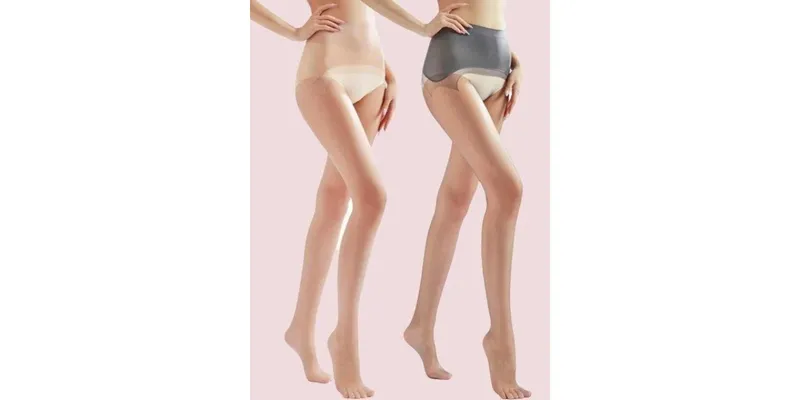
As with most private label requests, "seamless" will appear somewhere in the supplier's catalogue and isn't sufficient information to proceed with a quote comparison. It is important to first establish the elements of the panty hose style which will be knit seamlessly and the elements that will continue to have some form of seam or closing detail.
A good assessment of a sample will involve reference to a set of fixed written dimensions, testing the fit and resilience of the product and evaluating the look and associated packing. You want to create a process that you can apply to each subsequent sample, enabling your buying team to assess the different suppliers and provide a clear benchmark to the factory.
Defining the level of "Seamless" Required
Before requesting a quotation, shortlist suitable seamless tights styles and ask the supplier to confirm the knit, seams and closures for each candidate. In particular, identify the construction of the foot, crotch, waist and leg. A style may omit a side seam while retaining a closed toe, so call out each feature in the brief.
Ask for an Illustration of the Key Features
Where the location of any seam(s) will affect the fit, consumer perception and potentially your sales message, it is advisable to obtain a sample annotated to show these features, or an illustration detailing them. Once established, you should ensure that these terms and callouts are used when communicating to your buying team and the factory with subsequent samples and orders.
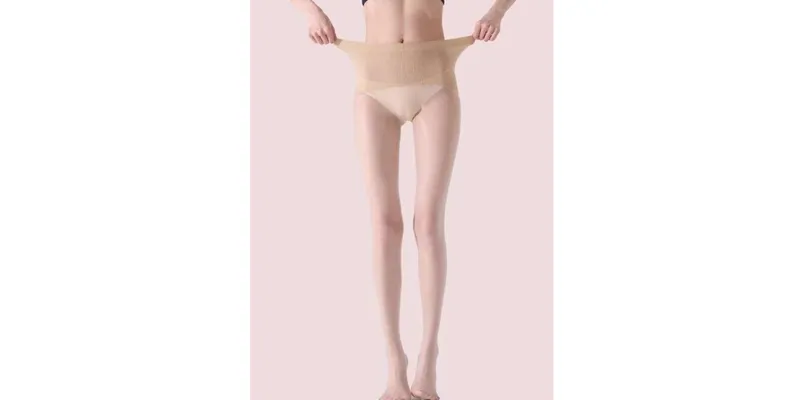
Produce a Robust Written Sample Specification
By setting out a comprehensive list of parameters that will be used to assess your sample, you will ensure consistency between the factory operatives and your buyers. These should include:
Style and application - Style number, customer application, customer profile and the relevant knit, seam and closing features.
Fiber and coloration - Detailed breakdown of fiber content, yarn(s)/fabric, color(s), shade(s), degree of sheer and any further coating.
Size and grade - Full list of sizes to be manufactured, master body, garment measurement points and acceptable variance(s).
Additional features - Further instructions for the waist, foot, crotch and leg as appropriate and relevant packaging, warnings and labels.
Sample requirements - List of sample sizes and colors, key person to sign off samples and protocol to log and communicate any amendments to the factory ahead of order.
Ensure you specify on your dimension sheets where all measurement points should be located and if they should be assessed on the laid flat or under a defined degree of stretch. Of course, simply fixing a dimension tag to a product will tell you little about its performance on the human form, so you should carry forward your dimension sheet through the sample and pre-shipment assessments.
Assess Each Sample using the Identical Process
Go through each sample in turn and consider the key aspects in a similar sequence. Start by comparing the features and key dimensions to the specification. Then evaluate the position and fall of the waist, the orientation and feel of the crotch and suitability of the foot for the expected shoe. Identify any obvious defects such as poor knit, stray threads and inconsistencies between L/R. Log these to the individual sample.
Fit the product on a wearer whose measurements correspond to the sample size. Check the garment while standing, seated, walking and bending. Note slippage, excessive tension or discomfort, then repeat the review with samples near both ends of the size range. A single size should not be treated as evidence that every size will fit the same way.
Agree a Standard Method of Testing Resilience
Agree the stretch zone, applied extension or load, number of cycles, recovery interval and measurement condition before testing. Use the same conditions for every sample, and record the initial and post-test readings against the acceptance limits written into the project specification.
For a simple internal comparison, mark an initial gauge length (L0) on the same zone of each sample. After the agreed extension and cycles, measure the recovered length (Lr) at the agreed interval and under the same condition. Record residual elongation as ((Lr - L0) / L0) x 100%. This is a comparison measure, not a universal pass threshold; the buyer and supplier should set acceptable limits for the style in writing.
Fix the Sample to the Final Specification
Clearly annotate the approved sample with the style, size, color and date, and ensure you have a copy of the dimension and feature information and good quality images. You should also instruct the supplier to notify you of any proposed variation to the yarn, construction, dimensions, color and close prior to implementation. Don't forget to verify the sample and proposed pack to your specification if undertaking a private label.
Laseta's Service & Support page states that free samples are available for selected products and that buyers cover freight. Availability and timing for customized sample requests are confirmed according to the design. Before shipment, ask the supplier to confirm the selected style, sample charges, freight and timing in writing.
FAQs
Is a seamless product truly seamless?
The term alone does not confirm which areas are seam-free. Ask the supplier for a construction diagram that identifies the toe closure, crotch, waist and leg details.
Do I only need to approve one size?
While it will give you a good indication of the overall style, it won't allow you to comment on the other sizes within your program. You should therefore assess the full range, paying particular attention to the extreme sizes, using the common set of dimensions and variances.
Are there any other items to lock in prior to placing my order?
Yes, in addition to the above, ensure you receive written confirmation of the sample(s) accepted, color and pack, inspection and quantity and delivery schedule. Make sure you retain the fixed sample for ongoing reference.
Compare Samples Against the Agreed Criteria
Once the samples meet the written criteria, retain the approved reference sample and record its style, size, color and date. To confirm availability, charges and timing for a selected style, send your seamless tights sample brief with the target sizes, measurement sheet, color and packaging requirements before discussing the private-label order.