How Fashion Packaging Connects Brand Presentation With Fulfilment Efficiency
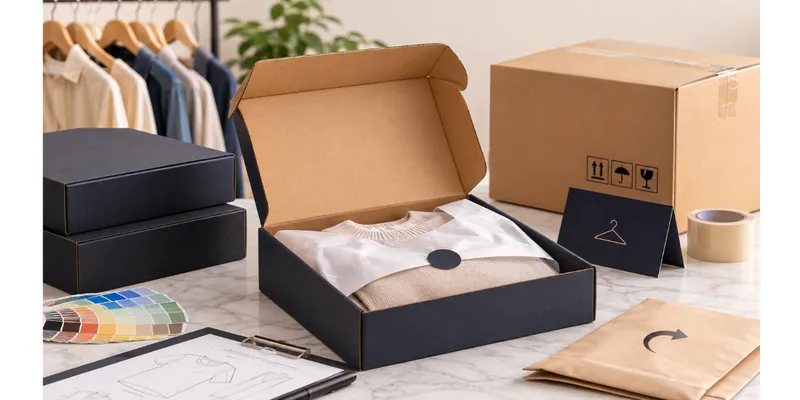
Fashion packaging has to protect a product that may be light in weight but high in perceived value. Creasing, moisture, scuffing and poor presentation can all affect the customer's judgement. At the same time, the pack has to move quickly through fulfilment and make sensible use of storage and shipping space.
Fit Protects Presentation
A fashion packaging design is like a garment pattern. A few unnecessary centimetres can change the final result. Excess space allows products to move, while an undersized case can compress presentation boxes, bend accessories or leave fabric vulnerable to poor folding.
The packaging brief should record the packed product dimensions, not only the garment size. Tissue, product cartons, hangers, inserts and promotional material all affect the final fit. If several product combinations use one format, the design should be tested against the lightest and fullest normal orders.
Purpose-designed fashion packaging can connect product protection with the packing method, brand presentation and shipping route. That joined-up view matters because the pack isn't finished when it leaves the bench. It still has to survive sorting, handling and final delivery.
Print Consistency Supports the Brand
Printed packaging is like a shopfront repeated thousands of times. Small visual variations become obvious when cases sit together or customers share unboxing images. Brand colour management and corporate branding guideline control should therefore be part of production approval.
Artwork teams need to understand the printing process, board surface and practical limits of fine detail. A screen proof is useful, but it can't replace a physical production sample. Barcodes, care information and returns instructions also need sufficient contrast and clear placement.
Structure affects presentation too. A clean print can't compensate for crushed corners, uneven closing or a case that arrives distorted. Precision Quality depends on the artwork, construction and manufacturing tolerances working together.
Fulfilment Speed Changes the Cost
A slow-to-build pack is like a complicated fastening on a high-volume garment. It may look refined, but it becomes frustrating when repeated all day. E-commerce and 3PL teams need packaging that operators can identify, assemble, fill and close consistently.
Trials should measure the complete task rather than one attractive sample. Can the case be formed without searching for the correct fold? Does the closure need extra tape? Are sizes easy to distinguish at the packing station? The answers influence labour and error rates.
This is why unit price isn't the only commercial measure. Total packaging cost includes assembly time, storage, shipping efficiency, damage, rework and returns. A design that removes one awkward step can create value across every order.
Returns Need Their Own Design Decision
Returns packaging is like a second journey ticket. If the original pack can't be reused or closed securely, the customer has to improvise. That can increase damage, create a poor service experience and make returns harder to process.
Brands should decide whether the pack is expected to support a return before approving the structure. Tear strips, secondary closures and clear opening points can help, but they need to be assessed alongside material use and packing speed. They're useful only when they suit the real return process.
Fashion packaging performs best when brand, procurement and fulfilment teams approve it together. A consistent pack that presents the product well, moves efficiently and supports the expected customer journey protects both operational performance and brand value.