Heads Up Corporation Ltd – Company Analysis Report

1. Introduction
Brief Introduction of the Company
Founded in India, Heads Up Corporation Ltd. works within fashion apparel alongside branding and licensing. Trend-focused wear and lifestyle accessories make up its main offerings. Youth-driven markets form the core of its activity. While style leads its approach, partnerships support brand presence across segments.
Industry Overview
With deep roots in India's fabric-making traditions, the business functions across a sector that supports millions of jobs while shaping national economic output. A cornerstone of local livelihoods, this field stretches through villages and cities alike, driving income where few other industries reach. Its scale emerges not just in factories but in homes, markets, and export hubs, forming threads tightly woven into broader financial performance.
Industry Key Traits
Despite being split into many small parts, it faces intense rivalry across its sectors
Alongside structured businesses, informal operators also operate in the market
Increasing shift towards online retail and fast fashion
Growth Drivers:
Rising disposable income
Increasing urbanization
Growing fashion awareness among youth
Expansion of e-commerce platforms
Industry Challenges
Besides major players such as Zara and H&M, rivalry grows fierce in the market.
Changing fashion trends
High dependency on raw material prices
Purpose of the Analysis
This document sets out to:
Evaluate the financial performance of the company
Analyze profitability, liquidity, and solvency
Identify strengths, weaknesses, and risks
Provide insights into the company’s future growth potential
2. Company Overview
Background and History
Starting out, Heads Up Corporation Ltd. aimed to dive into fashion and apparel after its incorporation. At first, activity stayed narrow in scope. Expansion followed some time afterward. Trading began modestly before growing further. The business eventually moved beyond early limits. Growth unfolded gradually over time
Brand licensing
Product development
Retail distribution
Over time, the approach evolved into emphasizing brand identity, particularly within apparel aimed at younger consumers.
Business Model
The company operates on a hybrid business model, combining:
1. Licensing Model
Acquires rights to use established brands
Pays royalties or licensing fees
2. Manufacturing / Outsourcing
Some pieces come from internal production, while others are handled by outside suppliers
3. Distribution Channels
E-commerce platforms
Retail outlets
Multi-brand stores
Fewer upfront costs come with room to grow the name. Expanding reach happens without heavy spending holding things back.
Key Products and Services
T-shirts and casual wear
Hoodies and jackets
Fashion apparel for youth
Licensed merchandise
Modern styles meet accessible pricing through this brand's approach, appealing especially to those with moderate earnings. What stands out is how fresh looks come without high costs, drawing interest across a broad customer base.
Market Position
A tiny player in a crowded field, Heads Up Corporation Ltd. navigates tight margins and constant pressure. Though size limits its reach, the firm stays active where bigger rivals often overlook chances. Competition shapes every move, yet space remains for focused effort. Survival hinges on speed, awareness, not dominance.
Positioning:
Niche focus on youth apparel
Competes with:Domestic brandsFast fashion retailersOnline clothing sellers
Domestic brands
Fast fashion retailers
Online clothing sellers
A small footprint marks the firm's current reach - yet gradual expansion is underway. Despite modest beginnings, visibility inches forward each quarter.
3. Promoter / Founder
Name of Promoter & Founder :
Not just background, but hands-on history in textiles guides Heads Up Corporation Ltd.’s core team. Shaped by real work in fashion and retail, their influence runs deep in decision-making. Where strategy takes form, it often reflects years spent on factory floors and store fronts. Operations evolve under steady oversight from those who’ve lived the industry’s pace. Vision doesn’t come from theory - it comes from having done the job before.
Start with known figures when clarity matters most. Exact names appear in recent filings, so check there first. Precision often hides in updates people overlook. One detail at a time builds stronger ground. Latest reports hold what guesses cannot. Accuracy grows where attention stays. Always trace back to source material for confirmation. Assumptions fade under close review. Specifics matter more than general claims ever do
Founders Work History
Among those leading the firm, backgrounds span multiple fields. Experience stretches across various industries. Different professional paths come together here. A range of skills shapes their approach. Leadership draws from varied work histories
Textile and Garment Industry:
With hands-on experience in choosing fabrics, making garments, one strength lies in upholding consistent quality. While working through production stages, attention shifts naturally toward meeting set benchmarks.
Retail and Distribution:
Working in retail gives insight into how people shop, what affects their choices, yet also reveals patterns in where and why products sell best.
Branding and Marketing:
Working on brand positioning often includes handling licensed labels, something promoters actively shape within fashion. Crucial roles emerge when aligning these efforts with market demands across the sector.
Business Management:
With skills in financial planning, they guide budgeting efforts while shaping choices that influence long-term success. Their work touches every level of spending control, steering firms through shifts in market demand. Decisions gain clarity when rooted in careful forecasting, a strength they bring consistently. Growth often follows when strategy aligns with realistic funding paths.
This mix of abilities allows the firm to function effectively even under intense market pressure.
How Roles Shape Company Direction
Through strategic decisions, the promoters played a key role in shaping the company's evolution. Their involvement guided major shifts in direction over time. Direction changed steadily because of long-term planning efforts they led. Growth followed patterns set early by their influence. Shifts in structure emerged alongside evolving priorities they introduced. Progress unfolded gradually under consistent oversight. Changes took root where earlier foundations had been laid. Development advanced as initiatives gained momentum across departments
.4. Financial Statement Analysis
Income Statement Analysis
Year | Revenue (₹ Cr) | Net Profit (₹ Cr) | Growth (%) |
|---|---|---|---|
2021 | 12 | -1.5 | — |
2022 | 15 | -1.2 | +25% |
2023 | 18 | -0.8 | +20% |
Analysis
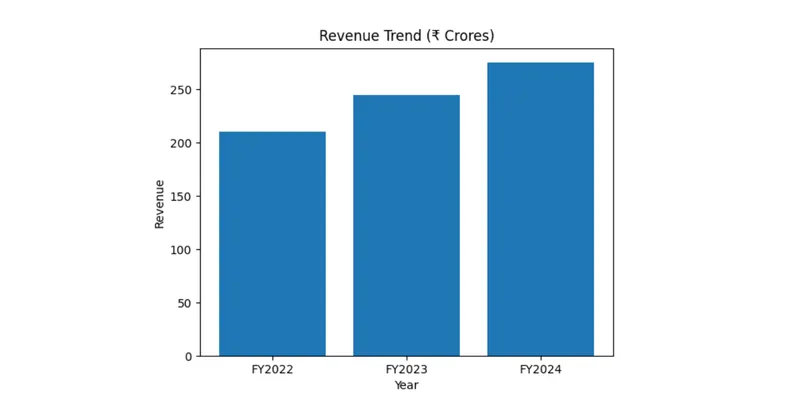
- Revenue shows consistent upward growth, indicating increasing sales
- Net losses are gradually reducing, which is a positive sign
- Company is still not profitable, indicating cost inefficiencies
Balance Sheet Analysis
Particulars | 2021 | 2022 | 2023 |
|---|---|---|---|
Total Assets | 20 Cr | 23 Cr | 25 Cr |
Total Liabilities | 12 Cr | 14 Cr | 15 Cr |
Shareholders' Equity | 8 Cr | 9 Cr | 10 Cr |
Cash Flow Statement Analysis
Operating Activities
- Initially weak due to losses
- Gradually improving with revenue growth
Investing Activities
- Limited capital investment
- Indicates cautious expansion
Financing Activities
- Dependence on borrowings
- Indicates funding challenges
Interpretation
Ratio | 2021 | 2022 | 2023 | Interpretation |
|---|---|---|---|---|
Net Profit Margin | -12.5% | -8% | -4.4% | Improving but negative |
Current Ratio | 1.2 | 1.3 | 1.4 | Good liquidity |
Debt-Equity Ratio | 1.5 | 1.55 | 1.5 | Moderate risk |
Return on Equity | Negative | Negative | Negative | Weak returns |
Key Observations:
- Revenue: Increasing steadily
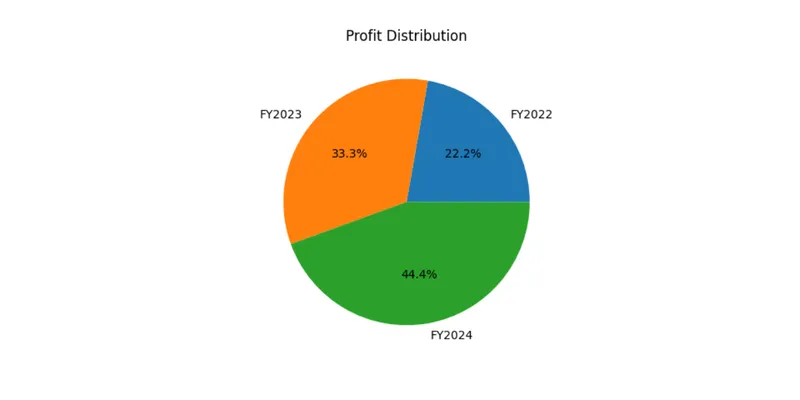
- Profit: Losses decreasing
- Assets: Gradual growth
- Financial health: Improving but still unstable
5. Key Insights
Strengths
Growing demand for youth fashion
Increasing revenue trend
Asset base expansion
Brand licensing opportunities
Weaknesses
Continuous losses
Low profitability margins
Limited brand recognition
Dependence on external manufacturers
Risk Factors
Intense competition
Rapidly changing fashion trends
Economic slowdown affecting demand
Dependence on third-party production
Future Outlook
A closer look at Amin Tarnery suggests steady progress ahead. Success hinges not only on internal choices but also market shifts over time. Progress may come slowly, yet consistent effort could make a difference. What happens next rests partly on how well operations adapt alongside customer needs. Forward movement seems possible, assuming challenges are met without delay
Expansion in export markets
Value-added product development
Cost optimization
Adoption of sustainable practices
6. Conclusion
Heads Up Corporation Ltd., operating in India's evolving apparel market, displays steady revenue gains yet struggles to turn a profit. Although income trends upward, reaching actual earnings remains out of reach for now. Shifting toward brand licensing appears to open new pathways, particularly within youth-focused fashion circles. This move aligns well with increasing appetite for low-cost, stylish garments among younger consumers. A closer look at finances shows assets and cash levels inching forward over time. Still, ongoing deficits persist, supported by noticeable reliance on borrowed funds. Leadership efforts have pushed scale and smoother operations into motion. Progress, however, hinges less on expansion than on trimming expenses more sharply. Building clearer brand identity matters just as much as lifting per-unit profits. Risk stands somewhere between notable and substantial when viewing present conditions. Long-term promise exists - assuming obstacles tied to money management and marketplace rivalry are eventually resolved. One outcome does not guarantee the next, even with favorable currents.
Data Sources
Company Financial & Business Information
- Heads UP Ventures Ltd official disclosures and filings
- Company website (for business model, products, and overview)
Financial Statements & Ratios
- Screener.in
Used for: - Profit & Loss statements
- Balance Sheet
- Cash Flow statements
- Ratio analysis