Gujarat Industries Raise Concerns Over DISCOM Curtailment of Captive Solar Power
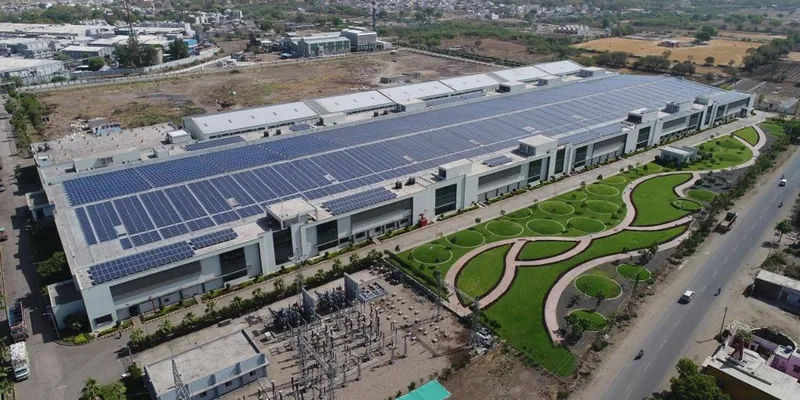
Textile manufacturers say renewable power curtailment is extending project payback periods, affecting production costs and investment plans.
Industrial units across Gujarat that adopted open-access and captive solar power systems under renewable energy initiatives are reporting growing concerns over power curtailment by distribution companies (DISCOMs). According to industry representatives, the reduction in renewable power usage is extending project payback periods, lowering expected returns, and slowing investments in clean energy.
The textile industry, one of the largest users of renewable power in the state, said curtailment has disrupted the economics of projects that were originally planned with fixed investment recovery timelines.
The South Gujarat Textile Processors Association stated that repeated curtailment has reduced the expected benefits of renewable power investments. Industry representatives said many processing units installed captive solar facilities to lower electricity costs, but reduced utilisation has affected financial calculations.
According to the Gujarat Federation of Solar Industries (GFSI), thermal power generation continues to receive preference even when renewable energy is available. The federation said this has created uncertainty for industries that invested in solar generation.
A Gujarat Chamber of Commerce and Industry office-bearer said industrial consumers had expected project returns over approximately 14% but current conditions have reduced investment confidence and affected project bankability.
The report notes that renewable energy producers continue to generate power, but restrictions on evacuation and utilisation have reduced the effective contribution of captive solar projects.
Textile Units Report Longer Payback Periods
Satish Savani, who installed two 1 MW captive solar power plants, said the investment was based on a simple calculation — recover the cost in six years through lower electricity bills. But frequent curtailment has upset those projections. Savani says discoms have been asking him to back down on generation by as much as 60% during specific time slots, mostly when solar output peaks in summer. "The economics of the project have changed completely. How can we recover the investment or bring down manufacturing costs if we are not allowed to use the power we generate?" he asked.
Renewable Curtailment Affects Denim Manufacturer
A leading denim manufacturer commissioned 22 MW of renewable energy capacity — 15 MW of solar and 7.8 MW of wind — to reduce energy costs and emissions. The company is now grappling with frequent curtailment. Director Vinod Mittal says at least 15% of the renewable power generated is being lost, delaying project payback. He also points to operational constraints that require electricity to be consumed in 15-minute blocks, failing which it lapses. "Both curtailment and operational rules are hurting the financial viability of our green energy investments," he said.
Salt Industry Sees Lower Renewable Power Utilisation
For Vijay Jain, who runs a salt refinery near Bhachau in Kutch, captive renewable energy was meant to eliminate his electricity bill. He invested in a solar plant at Samakhiyali and a windmill to power his operations. The windmill generates only about 10% of its capacity because of poor transmission infrastructure. He says officials verbally ask him to shut his solar plant for a few hours every day during peak sunshine. The curbs have reduced solar generation to 50–70% of capacity. "I expected my power bill to become zero. I am still paying Rs 15 lakh– Rs 20 lakh a month," Jain said.
Spinning Mills Report Operational Impact
Curtailment has also affected the textile spinning industry, where cotton spinning mills depend on renewable power to reduce operating costs. Industry representatives said spinning mills have experienced rising losses, longer payback periods and disruption to captive energy planning. The issue has persisted over the past 18 to 20 months, particularly during high wind periods, when curtailment reportedly ranged between 50% and 70%.
The Spinners Association (Gujarat) wrote to the state government in April requesting intervention. The association stated that spinning investments made under the textile growth policy relied on large industrial power consumers. Several mills have installed wind turbines and solar plants to reduce electricity costs and manage supply risks.
Industry's Key Demands
Industry representatives have sought:
- Deploy energy storage quickly to absorb excess solar and wind power instead of curtailing generation.
- Upgrade grid infrastructure and improve power dispatch to accommodate higher renewable energy.
- Compensate industries for curtailed renewable energy output when curtailment is linked to grid constraints.
- Ease restrictive operational norms and introduce captive project viability measures.
- Minimise unnecessary backing down of renewable power in favour of thermal generation.
'Curtailment Lowest'
Gujarat tops the country with an installed renewable energy capacity of 51,340 MW. To maximise solar power use, the state has shifted nearly 99% of agricultural electricity demand to daytime hours, GUVNL officials said. Since renewable energy output depends on weather and demand fluctuations, occasional curtailment is needed to maintain grid stability in the absence of adequate storage. The curtailment accounted for less than 1.5% of total renewable generation last year, among the lowest globally.