Green Financing Workshop in Panipat Guides MSMEs on EU Regulations
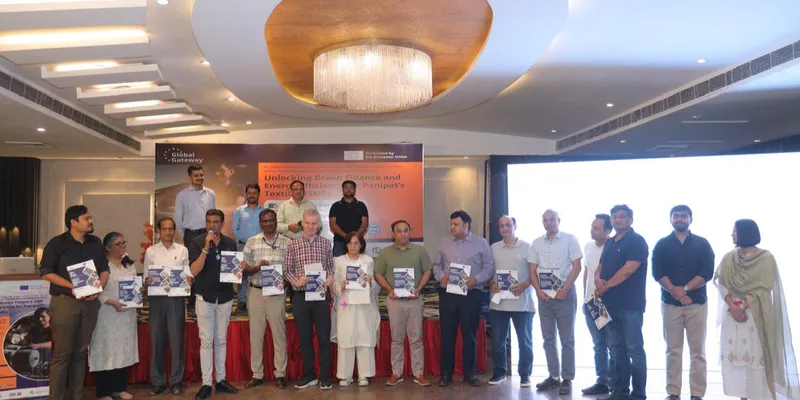
The workshop focused on improving awareness and access to green financing solutions while preparing MSMEs for evolving global sustainability standards. The event was organised by the Foundation for MSME Clusters (FMC) along with consortium partners Copenhagen Business School and Small Industries Development Bank of India (SIDBI).
Participants included representatives from the Bureau of Energy Efficiency (BEE), SIDBI, and the Haryana MSME Department. The session opened with remarks from Rajat Grover, who highlighted the need for MSMEs to align with international sustainability standards.
A key component of the workshop was an overview of SIDBI’s green financing products, including SPICE, EDGE, Working Capital, Machinery Loans, Sthapan, and EV financing. These offerings are designed to support MSMEs in adopting environmentally sustainable practices. Participants were also introduced to the BEE ADEETIE Scheme, which promotes investments in energy efficiency.
Officials from the Haryana Government presented policy support measures under the Haryana Enterprise & Employment Policy (HEEP), covering Freight Assistance, Market Development Assistance (MDA), Testing Equipment support, Quality Certification, Stamp Duty reimbursement, and Electricity Duty exemption. The session also included information on the Haryana Textile Policy and the PADMA Scheme, which addresses pollution control in textile dyeing units.
During the workshop, Sustainable Production Manuals tailored for the Panipat Textile Recycling Cluster were launched. Additionally, a Digital Product Passport (DPP) pilot programme was introduced with support from Green Story, aimed at improving traceability and data readiness for textile waste in the cluster.
The session also covered upcoming European Union regulations, including the Ecodesign for Sustainable Products Regulation (ESPR), Extended Producer Responsibility (EPR), and Waste Shipment Regulation (WSR). Participants were briefed on requirements related to traceability, circularity, and compliance, including the adoption of Digital Product Passports.
Industry representatives from YES, including Rajat Grover and Raman Chhabra, attended the session along with other members, indicating engagement from the Panipat MSME cluster.
Dignitaries present at the workshop included P. Shyam Sundar, Vikas Jangra, Sonica Chabra, Peter Lund Thomsen, Uzma, and Devyani Hari.
The workshop recorded participation from MSMEs interested in financing options, energy efficiency improvements, and sustainability compliance. The event concluded with a vote of thanks by Abhishek Naga.
The Green Threads Project, supported by the EU SWITCH-Asia Programme, focuses on enabling India’s textile and apparel sector to transition toward sustainable and resource-efficient practices. The initiative includes capacity building, policy engagement, and technical support to help MSMEs address regulatory requirements, improve circularity, and strengthen competitiveness in global markets.